Mountain Rose Succulent: How to Grow It and Varieties Explained
The language of roses is love, as everyone knows, but do you know the language of the Mountain Rose Succulent featured today? Since the Mountain Rose Succulent never withers, could we say it represents everlasting love? Let's follow along and see how to grow the Mountain Rose Succulent and what varieties exist.
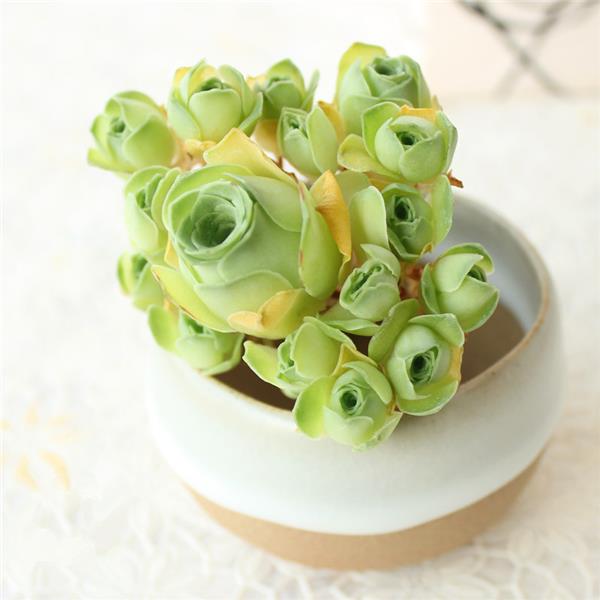
The Mountain Rose Succulent (Greenovia) is a succulent in the Crassulaceae family and the genus Aeonium, with about 5 varieties; common ones include the Mountain Rose, Golden Rose, and Green Rose rosette. It is native to the Canary Islands and nearby islands such as Gran Canaria, Tenerife, El Hierro, La Gomera, and La Palma, growing in rock crevices in ravines and mountainous areas, and in coniferous woodlands. Summers there are dry with little rain, while winters are cool and humid. Based on observation, different varieties choose different ways to get through the summer.
Growth Habits of the Mountain Rose Succulent
The Mountain Rose Succulent prefers a cool, dry, and sunny environment. It tolerates drought and partial shade, and fears waterlogging and muggy, humid conditions. It has the habit of going dormant in high temperatures and growing in cool seasons. Its growing season runs from autumn to late spring, when it should be given plenty of sunlight. Insufficient light will cause the plant to grow leggy, resulting in a loose shape and thinner leaves.
How to Grow the Mountain Rose Succulent
1. Preparing the Substrate
If indoor ventilation is poor, reduce the amount of non-granular material when preparing the substrate; generally keep non-granular material to about one-sixth. Non-granular material includes rice husk and peat, etc. The rest of the substrate should be entirely granular material, including cinders, pumice, expanded clay pellets, orchid stone, and small pebbles. In addition, since the Mountain Rose Succulent's root system is not well developed, when choosing granular material, try to select particles less than 3 mm in diameter.
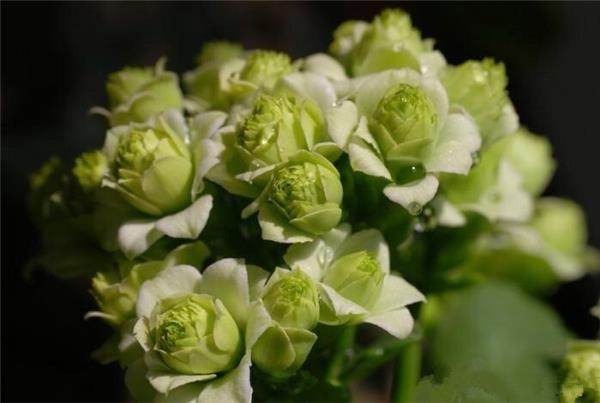
The Mountain Rose Succulent is generally grown by sowing, as this is a relatively simple method. Before sowing, soak the seeds in a low-concentration potassium permanganate solution for about half an hour to eliminate toxins carried by the seeds. After half an hour, pour the seeds together with the disinfecting solution into the pot, and then wait for the seeds to germinate.
3. Watering
When growing the Mountain Rose Succulent, try to raise the indoor air humidity and place it in a ventilated, shady spot. Watering once every four weeks is enough. Since the Mountain Rose Succulent originates from high mountain areas, it is naturally cold- and drought-tolerant, so the pot should be kept relatively dry to prevent the core from rotting.
4. Light
If you want the Mountain Rose Succulent to receive light, it is best to choose a south-facing window or grow it outdoors. For the Mountain Rose Succulent, light has another wonderful effect: it can turn the plant purplish-red, which is very beautiful.
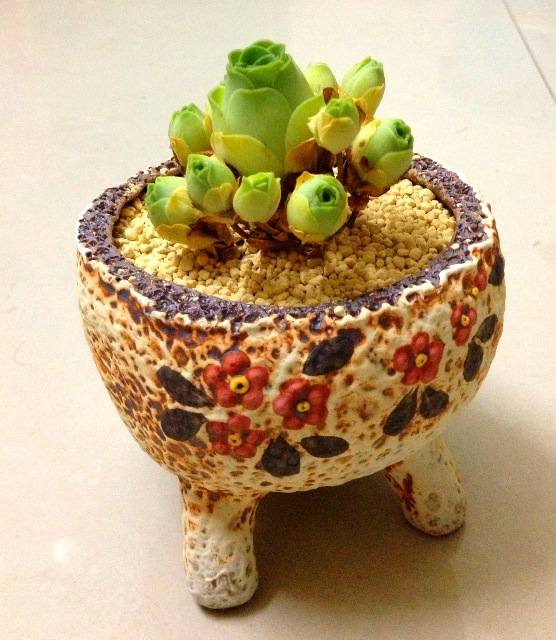
Mountain Rose Succulent variety: Greenovia aizoon
The Greenovia aizoon variety of Mountain Rose Succulent is relatively rare, mainly distributed on the southern high island of Tenerife. "Aizoon" is Greek, meaning "ever-living." The biggest difference between Greenovia aizoon and other varieties is that its whole body is covered in fine green fuzz. It is small in form, with dark green leaves, and the leaf rosette's diameter does not exceed 4 cm.
Mountain Rose Succulent variety: Greenovia aurea
Greenovia aurea is the most common Mountain Rose Succulent variety on the market. Its open leaf rosette is 20 to 25 cm in diameter, light blue in color, with a layer of white powdery substance on the leaf surface.
Mountain Rose Succulent variety: Greenovia diplocycla
This Mountain Rose Succulent variety looks very similar to Greenovia aurea. To tell them apart, you can only do so during the flowering period, because Greenovia diplocycla's flowers are much larger than the former's.
Mountain Rose Succulent variety: Greenovia dodrentalis
Greenovia dodrentalis Mountain Rose Succulents mostly grow in the western part of Tenerife. Their diameter is around 10 cm, and they like to produce side shoots.
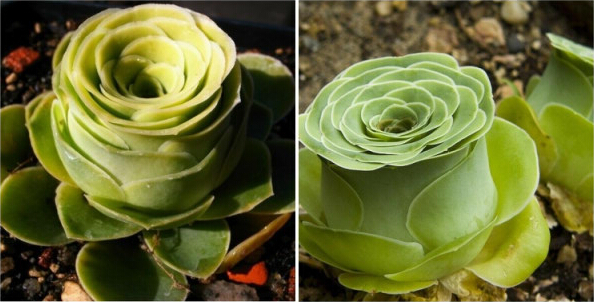
A foreign gardening expert shares how to sow and propagate Mountain Rose Succulent seeds
According to what the foreign expert says, sowing Mountain Rose Succulent seeds is very simple, and the seeds are extremely adaptable to various environments. They usually germinate quickly within 5-10 days (PS: Crassulaceae seeds sometimes germinate later than expected). Therefore, even beginners can try their hand at sowing and raising seedlings. The biggest advantage of sowing the plants yourself is that the plants you sow are best adapted to their environment, and their resistance is definitely better than that of purchased plants.
The sowing temperature for the Mountain Rose Succulent is about 10°C-20°C, but considering the freshness of the seeds, the earlier you sow, the higher the germination rate. Many succulent growers have also proven in practice that Mountain Rose Succulent seedlings are very robust, with not only a high germination rate but also a high survival rate. The substrate is about the same as for adult plants; use 1 mm maifan stone as the top dressing (it can improve the substrate's physical properties and release mineral nutrients), making it easy for seedlings to take root. Try not to use peat, and use rice husk instead. As foreign enthusiasts say, peat easily attracts fungus gnats, and fungus gnat larvae will quickly devour your beloved seedlings within a few days, unless you bury a sufficiently toxic insecticide in the substrate.
In the early stage of sowing the Mountain Rose Succulent, soak the seeds in a low-concentration potassium permanganate solution for 30 minutes. This is because the seeds often contain impurities such as seed coats, and without proper disinfection, they easily become moldy under high humidity. Then pour them onto the substrate together with the potassium permanganate solution; do not cover with soil, as they germinate relying on light. Then put a transparent top cover on the pot (such as the spherical lid of a milk tea cup or plastic wrap with ventilation holes poked in it), place it by a south- or east-facing window indoors, open the cover every evening for 30 minutes of ventilation, and keep it enclosed the rest of the time, until the Mountain Rose Succulent seeds begin to germinate.
According to the above, the Mountain Rose Succulent can germinate in as little as 5 days. After germination, gradually increase the daily ventilation time until it is fully ventilated, to prevent seedling rot. In areas with low humidity, low temperatures, and weak light, you can even keep the seedlings enclosed the whole time; this depends on the specific situation, and enclosed seedlings grow at an astonishing rate. The stems of Mountain Rose Succulent seedlings are relatively long and tend to fall over in summer, so you can gently bury the stems with high-temperature-sterilized 1 mm diameter maifan stone-type granules.
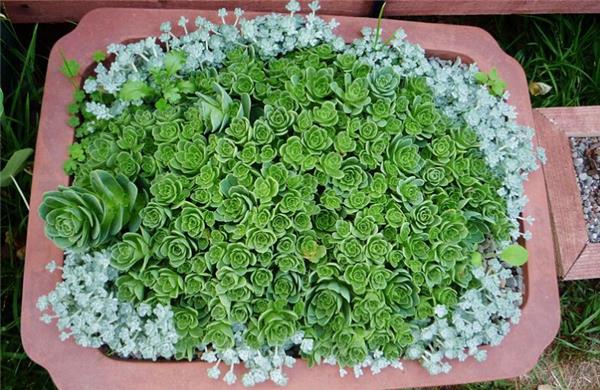
The plants you sow yourself are best adapted to their environment, and their resistance is definitely better than that of purchased plants.
The sowing temperature for the Mountain Rose Succulent is about 10°C-20°C, but considering the freshness of the seeds, the earlier you sow, the higher the germination rate. Many succulent growers have also proven in practice that Mountain Rose Succulent seedlings are very robust, with not only a high germination rate but also a high survival rate. The substrate is about the same as for adult plants; use 1 mm maifan stone as the top dressing (it can improve the substrate's physical properties and release mineral nutrients), making it easy for seedlings to take root. Try not to use peat, and use rice husk instead. As foreign enthusiasts say, peat easily attracts fungus gnats, and fungus gnat larvae will quickly devour your beloved seedlings within a few days, unless you bury a sufficiently toxic insecticide in the substrate.
In the early stage of sowing the Mountain Rose Succulent, soak the seeds in a low-concentration potassium permanganate solution for 30 minutes. This is because the seeds often contain impurities such as seed coats, and without proper disinfection, they easily become moldy under high humidity. Then pour them onto the substrate together with the potassium permanganate solution; do not cover with soil, as they germinate relying on light. Then put a transparent top cover on the pot (such as the spherical lid of a milk tea cup or plastic wrap with ventilation holes poked in it), place it by a south- or east-facing window indoors, open the cover every evening for 30 minutes of ventilation, and keep it enclosed the rest of the time, until the Mountain Rose Succulent seeds begin to germinate.
According to the above, the Mountain Rose Succulent can germinate in as little as 5 days. After germination, gradually increase the daily ventilation time until it is fully ventilated, to prevent seedling rot. In areas with low humidity, low temperatures, and weak light, you can even keep the seedlings enclosed the whole time; this depends on the specific situation, and enclosed seedlings grow at an astonishing rate. The stems of Mountain Rose Succulent seedlings are relatively long and tend to fall over in summer, so you can gently bury the stems with high-temperature-sterilized 1 mm diameter maifan stone-type granules.