Introduction to the cultivation methods of the maidenhair fern, easy for beginners to grow well
The maidenhair fern, also known as tiexiancao or meirenfen, is a plant often grown at home. Let us now take a look at the introduction to its cultivation methods.
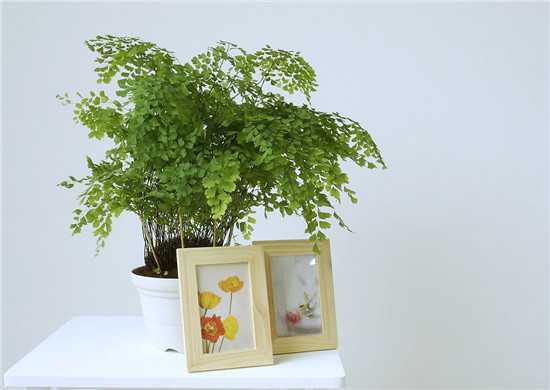
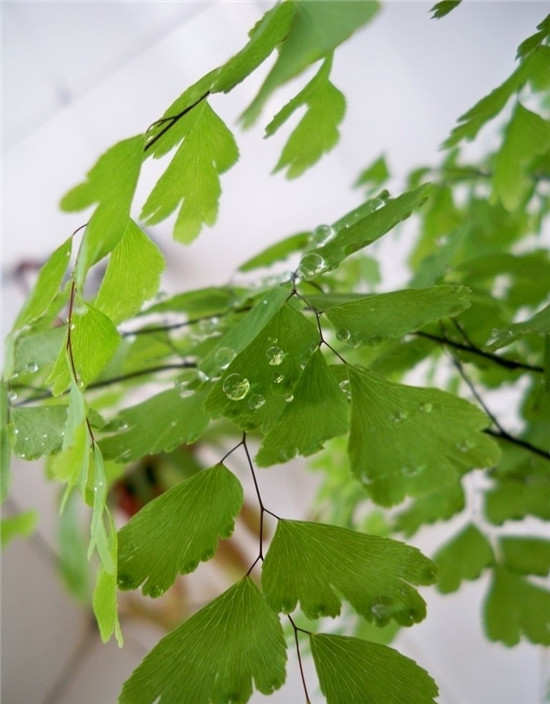
The fronds of the maidenhair fern grow from the base, resembling an opened paper folding fan. The leaf stalk is purple-black, thin and hard like an iron wire, hence the name. It likes a warm, shady and moist environment and acidic soil, and fears strong light.
The maidenhair fern has small, dense fronds that overlap in layer upon layer, elegant and graceful. It likes shade and can be placed indoors in spots with diffused light for growing and viewing. It can also be placed on windowsills without direct sunlight, at the bedside, on desks, dining tables, flower stands, coffee tables, dressing tables, and in bathrooms. When the plant is small, it can be placed on a curio shelf. Below is a detailed introduction to how to grow the maidenhair fern.
Morphological characteristics
The maidenhair fern is a perennial herb with a plant height of 15-40 cm. Its rhizome is slender and creeps horizontally, densely covered with brown lanceolate scales. Its fronds are distant or close together; the stalk is usually 5-20 cm long, about 1 mm thick, rather slender, chestnut-black, glossy on the surface, and its base is covered with the same scales as those on the rhizome. The leaf blade is ovate-triangular, 10-25 cm long and 8-16 cm wide, with a pointed tip.
Growth habits
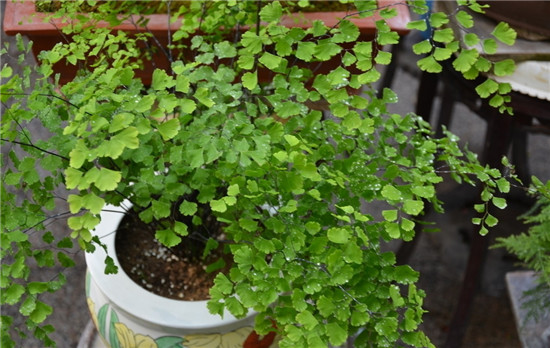
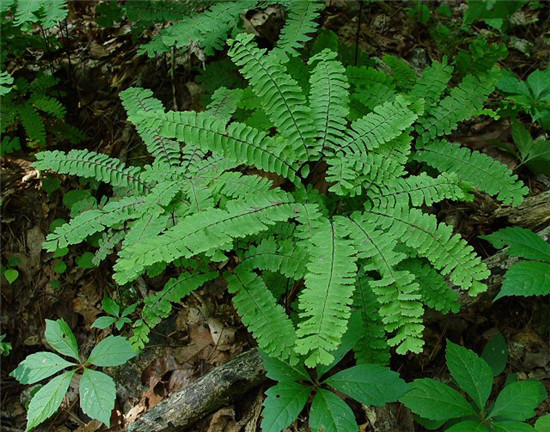
In the wild, the maidenhair fern mostly grows on wet rocks in streamside valleys. It likes warm, humid and semi-shady, cool environments, is not cold-tolerant, and avoids direct sunlight. It likes loose, fertile sandy loam containing lime.
For potting soil, equal parts of loam, leaf mold and river sand can be mixed together. Note that liquid fertilizer should be applied once a week, and the potting soil should be kept moist and the air humidity kept appropriate. In the dry autumn and winter seasons, water can often be sprinkled on the ground around the plant to raise the air humidity.
Soil selection for growing the maidenhair fern
The maidenhair fern likes loose, fertile acidic soil. At home, the following formulas can be used: garden soil : leaf mold : sand = 4:5:1; peat soil : leaf mold : sand = 4:4:2.
Fertilization methods for growing the maidenhair fern
The maidenhair fern does not need much fertilizer; generally, applying a dilute liquid fertilizer once a month is enough. If a small amount of calcium fertilizer is applied, the growth will be even better. But note that when watering and fertilizing, the leaf surface must not be stained, otherwise the leaves are prone to turning yellow, affecting the ornamental effect.
Watering methods for growing the maidenhair fern
The maidenhair fern likes a warm, humid and semi-shady environment. During the growing period, it needs watering once a day. In hot summer, it should be watered once in the morning and once in the evening each day, and at the same time water should be sprayed on the leaf surface and the ground around the flowerpot to raise air humidity. Only in this way can the leaf color stay emerald green. If the water supply is insufficient or the air is dry, the leaves will turn yellow or become curled and scorched at the edges. To keep the leaves emerald green, it is best to place the flowerpot on a moist sand tray for maintenance.
Four-season management for growing the maidenhair fern
(1) Spring management
In April, the maidenhair fern can be repotted; the maidenhair fern is repotted once a year. The maidenhair fern likes shade and moisture, and fears strong light. In early spring, there should be appropriate morning and evening light, and in spring it should be placed indoors with bright diffused light.
After the maidenhair fern begins to grow in spring, attention should be paid to water and fertilizer management. When placing it indoors, special attention should be paid to increasing indoor air humidity. Raising indoor air humidity is the key to growing the maidenhair fern at home. Regularly applying additional ferrous sulfate can not only increase the acidity of the soil and benefit its growth, but also make the leaves more emerald green.
(2) Summer management
The high temperature, strong light and dry climate of summer are not suitable for the growth of the maidenhair fern. It should be placed in a bright indoor spot for cultivation, the potting soil kept moist, and at the same time more misting should be done around it to raise air humidity. Do not fertilize when the weather is hot. The maidenhair fern fears wind, so it should not be placed in front of an electric fan or at an air-conditioner vent. Rooms with air conditioning have lower air humidity, so the number of mistings should be increased.
(3) Autumn management
In autumn, the maidenhair fern can still grow normally, and attention should be paid to water and fertilizer management. After the temperature drops in late autumn, attention should be paid to maintaining indoor temperature, gradually reducing the amount of watering so that the potting soil stays moist, and gradually moving it to a spot with morning and evening light for cultivation.
(4) Winter management
The maidenhair fern is not cold-tolerant, and the room temperature should be kept above 5°C. At this time the maidenhair fern is in a state of stalled growth, and the leaf color is dark green. Morning and evening light can be appropriately increased (avoiding the strong light at noon), watering should be reduced so that the potting soil is on the dry side, and no fertilizer should be applied.
When the indoor temperature is kept above 10%, the maidenhair fern will likewise grow relatively well, with fresh green leaves. The potting soil should be kept moist, but no fertilizer should be applied. When the indoor temperature is higher, the air humidity will accordingly be lower, and attention should be paid to supplementing air humidity.
The above is all the content of the introduction to the cultivation methods of the maidenhair fern that I have summarized for everyone. I hope this article can help everyone. Please also continue to follow us.
but no fertilizer should be applied. When the indoor temperature is higher, the air humidity will accordingly be lower, and attention should be paid to supplementing air humidity.The above is all the content of the introduction to the cultivation methods of the maidenhair fern that I have summarized for everyone. I hope this article can help everyone. Please also continue to follow us.