What are the benefits and uses of palm leaves?
The palm tree, also known as palm or mountain palm, belongs to the same genus (Trachycarpus) as the coconut tree. Let us take a look together at the benefits and uses of palm leaves.

The palm tree is a small evergreen tree with an upright, unbranched trunk and compound leaves forming an umbrella-shaped crown; it is dioecious. The palm tree's flowers are relatively small and pale yellow. The fruit is a berry or drupe, initially green and turning dark brown when ripe, with a white powdery coating on its surface.
Palm (Trachycarpus fortunei), an evergreen tree, up to 10 m tall. The stem is cylindrical, thick and upright, unbranched, about 20 cm in diameter; remnant brown fibrous old leaf sheaths wrap around the stem in layers, and after falling off they form ring-like nodes. The leaves cluster at the top of the stem and spread outward; the petiole is hard, about 1 m long, nearly triangular in cross-section, with small teeth along the edges and a brown fibrous reticulate sheath at the base; new petioles are upright, while old petioles often droop.
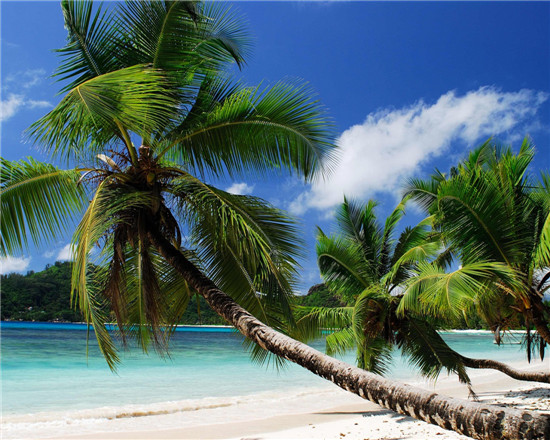
The leaf blade is nearly round and fan-shaped, 70-100 cm in diameter, with many wrinkles, palmately divided to the middle, with 30-50 lobes; the tip of each lobe is shallowly 2-cleft; the upper surface is green, the lower surface has a waxy bloom, and the texture is leathery. The spadix emerges from the leaf axils at the top of the stem, with many large sheath-like bracts at the base, pale yellow, with soft hairs.
Dioecious; male flowers small, numerous, pale yellow, perianth 6 in 2 whorls, broadly ovate, stamens 6, filaments short, free; female flowers with perianth same as male flowers, ovary superior, densely covered with white soft hairs, style 3-cleft. Drupe spherical or nearly kidney-shaped, about 1 cm in diameter; when ripe, the exocarp is grayish blue and covered with a waxy bloom. Flowering period April-May, fruiting period October-December.

The palm tree likes to grow in a warm and humid environment and is relatively cold-tolerant and shade-tolerant. The palm tree has strong stress resistance and low requirements for soil and environment; it can grow well in slightly acidic or slightly alkaline soil or in polluted environments. Its main method of propagation is sowing seeds.
The uses of the palm tree
1. The palm tree has a tall and upright form, lush leaf color, and remains evergreen all year round, and it can absorb harmful substances from the air, so it plays a very good role in purifying the air and beautifying the environment; it is very suitable for planting in courtyards, roadsides, and flower beds.

2. Economic uses: The palm tree is an economic tree species. Palm fiber can be made into palm mats, palm rain capes, and other items; the palm rain cape is the ancient raincoat. Tender leaves can be woven into crafts such as hats, fans, baskets, and bags; the wood can be made into utensils, such as bridge piles; after the seeds are crushed, they can be used as feed for livestock.
3. Medicinal value: The flowers, bark, roots, and seeds of the palm all have certain medicinal value, and have certain therapeutic effects on metrorrhagia, leukorrhea, diarrhea, and dysentery.
The above is the entire content of the benefits and uses of palm leaves that I have summarized for everyone. I hope this article can help everyone. Please also continue to follow us.