How to Grow Cyclamen? Cyclamen Flower Meaning and Care Guide in Detail
Cyclamen (Cyclamen persicum) suggests the meaning of an elegant guest gracefully arriving; its flower shape is distinctive, and its colors are mainly red, pink and purple. It is one of the most common ornamental potted flowers for the home. So do you know what the cyclamen flower meaning is? Below, let us learn about it together, and also take a look at how to grow cyclamen.
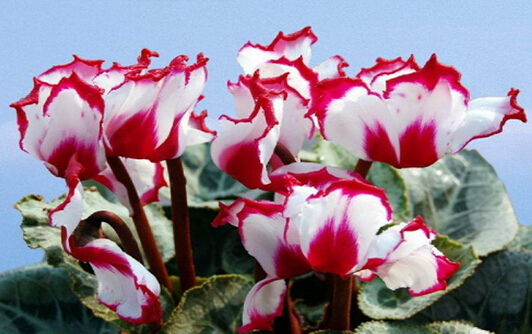
Cyclamen has a rich fragrance, graceful leaves, distinctive flowers and brilliant colors. It is very popular among consumers and is grown in many countries. Opinions on the cyclamen flower meaning also vary widely and are hard to unify.
Cyclamen Flower Meaning 1: Welcoming Honored Guests, Hospitality
Based on its name, cyclamen carries the meaning of an elegant guest gracefully arriving. Moreover, cyclamen in full bloom is highly favored by people, and it is a premium potted flower in winter for decorating living rooms, desks, as well as public places such as shops and restaurants. In Europe and America, it is also an important flower for giving to relatives and friends at Christmas and for expressing good wishes. It is suitable for potted ornamental display and can be placed indoors for decoration, especially suitable for accenting sunny plant stands and desks in the home. Because of its beautiful and distinctive plant shape, abundant blooms and vivid colors, and because some varieties are fragrant, it is deeply favored by people. The cyclamen flower meaning is welcoming honored guests, so it is suitable for placing in the living room.
Cyclamen Flower Meaning 2: Introversion
Cyclamen is the birthday flower of February 7, and its flower meaning is introversion. Cyclamen was mostly wild in the past and only later came to be cultivated in greenhouses. Perhaps because of this, although it is beautiful, its vitality is somewhat fragile. Therefore the cyclamen flower meaning is -- introversion. People born under the blessing of this flower are shy and timid. Because they do not talk much, sometimes even very kind-hearted people are misunderstood. If they are inexplicably misunderstood by someone they love, the loss can be great. Sometimes it is worth overcoming your introversion and showing a cheerful, witty side!
Cyclamen Flower Meaning 3: Beauty, Jealousy, Proving with a Slender, Silent Bearing the Elegance of Being Loved
Catholicism holds that cyclamen is the heart's blood of the Virgin Mary fallen to the ground (or her heart bleeding in the mortal world), and Japanese people regard this flower as the sacred flower of love.
Cyclamen Flower Meaning 4: Gracefulness
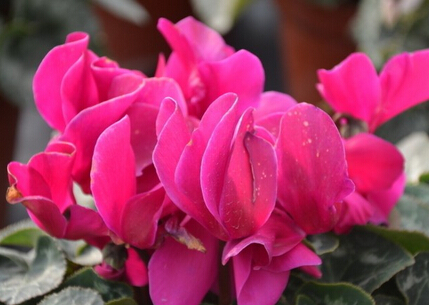
Cyclamen leaves have white markings, with purplish-red undersides; the flowers come in red, white, purple, orange, and red with white centers, with deeply marked beautiful buds, and some flowers are fragrant. Placing a pot of cyclamen in the living room or on a desk instantly makes the whole room shine and adds endless pleasure. Many people have also given it the meaning of gracefulness.
Cyclamen Flower Meaning 5: Parting
Cyclamen has a very wide range of uses in the West and is an important potted flower for Christmas decoration. Cyclamen also conveys the meaning of parting; if it is used to decorate a banquet, it indicates that the banquet is held to see off a friend.
1. Choose plump seeds: Choose plump, glossy brown seeds and carry out seed treatment. Place the seeds in water at about 30°C with added Xin Gao Zhi Mo (new high-fat film); it can be mixed with seed coating agents, can repel underground pests and diseases, isolate viral infection, does not affect the imbibition function for germination, strengthens respiration intensity, and improves the seed germination rate. Soak in water for 3 to 4 hours, then sow; compared with seeds that were not soaked, they bloom about 10 days earlier.
2. Management during the growth process: Cyclamen is a plant that likes moisture but fears waterlogging. Too much water is not conducive to its growth and development and may even cause root rot and death, so reasonable watering is crucial. Therefore, just keep the soil moist every day, and the amount of water should not be too large. Increase fertilizer application: cyclamen is also a fertilizer-loving plant. First, start with the soil and fertilize reasonably according to the needs of the plant; this can make it bloom 15 to 20 days earlier. Spray Xin Gao Zhi Mo (new high-fat film) to retain fertilizer and moisture.
3. Control of temperature and light: Cyclamen is very sensitive to temperature and cannot tolerate high temperatures. Around 20°C during the day is a suitable growing temperature, and under environmental conditions of around 10°C at night, the temperature during the seedling stage can be slightly lower. Cyclamen likes sunlight; extending the light duration can promote earlier flowering. Therefore, cyclamen should be placed in a sunny place for care.
4. Management during the flowering period: When the young buds of cyclamen appear, in addition to giving sufficient sunlight, spray Hua Duo Zhuang Di Ling, which can promote strong buds, plump petals, vivid flower colors, rich fragrance, and a longer flowering period.
5. Prevent diseases and pests: Cyclamen suffers from more diseases than pests. Common problems in cyclamen care include:
① Gray mold, whose main symptom is water-soaked small spots 1 to 2 mm in diameter at the diseased area, which then gradually expand and become brown rot.
② Soft rot, mostly caused by bacterial infection; the diseased part becomes soft and rotten, and the affected area is mostly seen on the corm. Spray targeted medication plus Xin Gao Zhi Mo (new high-fat film) to greatly increase the effective ingredient rate of the medicine.
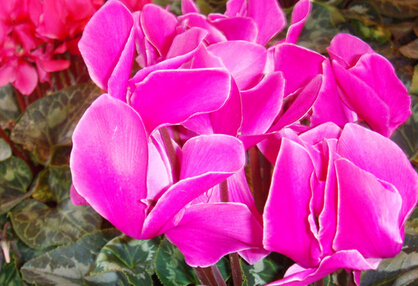
Cyclamen generally blooms once a year. Its flower shape is distinctive, and its colors are mainly red, pink and purple. There are also the flame-pattern and ruffled-edge series that are deeply loved by people. The flowering period of cyclamen runs from November of the current year to March of the following year, with flowers opening successively on the stems. Late November to late January is the peak flowering period, and the flowering period is long.
Is Cyclamen Toxic?
As the saying goes, the more beautiful something is, the more dangerous it is. Although cyclamen is beautiful, it is somewhat toxic. Especially the root and stem parts contain toxic plant alkaloids; accidental ingestion may cause symptoms such as dizziness, vomiting and diarrhea, and skin contact with cyclamen may cause skin redness, swelling and itching. If these symptoms appear, please consult a doctor for guidance. Do not let animals or children accidentally eat the cyclamen plant or its roots and stems. However, as long as you do not touch or eat the roots and stems of cyclamen, there is no problem.
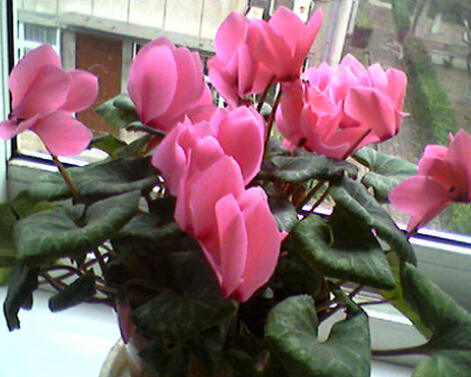
Since cyclamen is toxic, how can it be so popular? Would placing it indoors be harmful? In fact, although cyclamen is toxic, it is only the underground root and stem parts; the flowers and leaves are not toxic, and as long as it is placed in a ventilated indoor spot, there is no problem. So cyclamen can be placed in the bedroom, but because of photosynthesis it is best to move the cyclamen out at night.
Legend has it that Chang'e was in the Moon Palace, but her heart was in the mortal world. She often sat blankly under the osmanthus tree, gazing into the distance at the mortal world and missing her loved ones. One day, she could no longer overcome the pain of longing, so she secretly brought the jade rabbit, who depended on her for survival, to the mortal world to visit her husband Hou Yi. After a long separation, the two were reunited, and their love for each other was deep. Chang'e and her husband Hou Yi were absorbed in pouring out their hearts to each other. The spiritual jade rabbit could not bear to disturb this rare reunion of the ill-fated couple, so it went off by itself to the garden to play with the old gardener.
The jade rabbit and the old gardener were kindred spirits. Although they spent only a short time together, they formed a deep friendship. But as the sky gradually brightened, they had to part. Chang'e and Hou Yi shed tear after tear, and the jade rabbit and the old gardener also found it hard to part. With reddened tearful eyes, the jade rabbit took a seed from its ear and gave it to the old gardener as a keepsake.
After Chang'e and the jade rabbit left, Hou Yi and the old gardener planted this seed in the garden, watering it every day and fertilizing it every night. Day after day, they poured all their longing for Chang'e and the jade rabbit into this seed.
Hard work pays off, and finally the seed sprouted, grew into a seedling, and bloomed with flower after flower shaped like little rabbit heads. Those flowers raised their heads toward the moon, truly arousing both pity and love.
Therefore, cyclamen is also called rabbit flower.
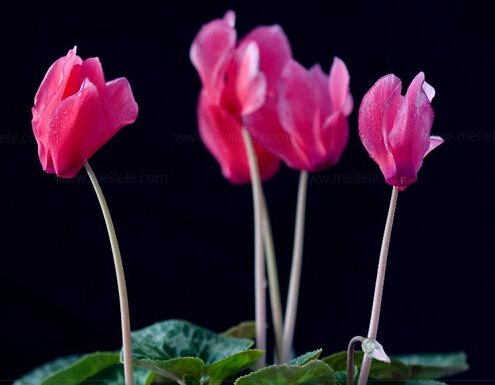
Cyclamen has a very wide range of uses in the West and is an important potted flower for Christmas decoration.
When it was first discovered in Greece and in Algeria and Tunisia in North Africa, it appeared in the books and craft works of monks, and was also often seen around monasteries or cemeteries. Therefore, the cyclamen flower meaning also carries the sense of "steadfast and unchanging love."
Cyclamen, with beauty and jealousy, proves with a slender, silent bearing the elegance of being loved. Catholicism holds that cyclamen is the heart's blood of the Virgin Mary fallen to the ground (or her heart bleeding in the mortal world), and Japanese people regard this flower as the sacred flower of love.
Although cyclamen is beautiful, it is somewhat toxic. Especially the root and stem parts contain toxic plant alkaloids; accidental ingestion may cause symptoms such as dizziness, vomiting and diarrhea, and skin contact with cyclamen may cause skin redness, swelling and itching. If these symptoms appear, please consult a doctor for guidance. Do not let animals or children accidentally eat the cyclamen plant or its roots and stems. However, as long as you do not touch or eat the roots and stems of cyclamen, there is no problem.
Since cyclamen is toxic, how can it be so popular? Would placing it indoors be harmful? In fact, although cyclamen is toxic, it is only the underground root and stem parts; the flowers and leaves are not toxic, and as long as it is placed in a ventilated indoor spot, there is no problem. So cyclamen can be placed in the bedroom, but because of photosynthesis it is best to move the cyclamen out at night.
Legend has it that Chang'e was in the Moon Palace, but her heart was in the mortal world. She often sat blankly under the osmanthus tree, gazing into the distance at the mortal world and missing her loved ones. One day, she could no longer overcome the pain of longing, so she secretly brought the jade rabbit, who depended on her for survival, to the mortal world to visit her husband Hou Yi. After a long separation, the two were reunited, and their love for each other was deep. Chang'e and her husband Hou Yi were absorbed in pouring out their hearts to each other. The spiritual jade rabbit could not bear to disturb this rare reunion of the ill-fated couple, so it went off by itself to the garden to play with the old gardener.
The jade rabbit and the old gardener were kindred spirits. Although they spent only a short time together, they formed a deep friendship. But as the sky gradually brightened, they had to part. Chang'e and Hou Yi shed tear after tear, and the jade rabbit and the old gardener also found it hard to part. With reddened tearful eyes, the jade rabbit took a seed from its ear and gave it to the old gardener as a keepsake.
After Chang'e and the jade rabbit left, Hou Yi and the old gardener planted this seed in the garden, watering it every day and fertilizing it every night. Day after day, they poured all their longing for Chang'e and the jade rabbit into this seed.
Hard work pays off, and finally the seed sprouted, grew into a seedling, and bloomed with flower after flower shaped like little rabbit heads. Those flowers raised their heads toward the moon, truly arousing both pity and love.
Therefore, cyclamen is also called rabbit flower.
Cyclamen has a very wide range of uses in the West and is an important potted flower for Christmas decoration.
When it was first discovered in Greece and in Algeria and Tunisia in North Africa, it appeared in the books and craft works of monks, and was also often seen around monasteries or cemeteries. Therefore, the cyclamen flower meaning also carries the sense of "steadfast and unchanging love."
Cyclamen, with beauty and jealousy, proves with a slender, silent bearing the elegance of being loved. Catholicism holds that cyclamen is the heart's blood of the Virgin Mary fallen to the ground (or her heart bleeding in the mortal world), and Japanese people regard this flower as the sacred flower of love.