What are the nutritional value and health benefits of bayberry?
Do you know the nutritional value of bayberry? The deep red bayberry, with its juicy and delicious flesh, is one of the best summer fruits for cooling off, and is loved by many people. Eating bayberry helps relieve summer heat and quench thirst, stimulate appetite and aid digestion, and it can also inhibit bacteria and stop diarrhea, lower blood lipids, and suppress cancer cells. The benefits of eating bayberry are quite numerous. Besides being eaten as an ordinary fruit, bayberry also has good therapeutic food value.
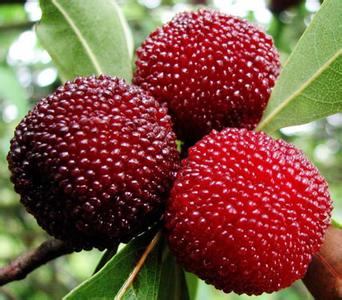
Nutritional value of bayberry
1. Bayberry has a protective and beautifying effect on the skin. The quercetin in bayberry also has antioxidant properties and can eliminate free radicals in the body. It is widely used in medicine, food, health products and cosmetics. Historically, bayberry flavonoids were used to treat and prevent arthritis and various inflammations, and are especially suitable for pregnant women and nursing infants; six-hydroxyflavone. It can also be used as an additive in cosmetics and is a good choice for health products.
2. Bayberry contains relatively many trace elements and can supplement the nutrients the human body needs. The sugar content of high-quality bayberry flesh is 12%-13%, and the acid content is 0.5%-1.1%. It is rich in cellulose, mineral elements, vitamins and a certain amount of protein, fat, pectin and 8 kinds of amino acids beneficial to the human body. Eating more of it can help absorption and supplementation.
3. Bayberry contains substances that aid digestion. Bayberry has the effects of promoting saliva production and quenching thirst, strengthening the spleen and stimulating appetite. Eating more of it not only does not harm the spleen and stomach, but also has the effects of detoxifying and dispelling cold. The fruit, pit, root and bark of bayberry can all be used as medicine; they are neutral in nature and non-toxic. The pit can treat athlete's foot, the root can stop bleeding and regulate qi; soaking the bark in liquor can treat bruises, swelling and pain, etc. Bayberry soaked in baijiu, eaten in midsummer, will immediately make one feel relaxed and refreshed, relieving summer heat and greasiness. When having diarrhea, taking bayberry decocted into a thick soup and drinking it can stop diarrhea, with an astringent effect. Bayberry has multiple medical functions such as aiding digestion, removing dampness, relieving summer heat, promoting saliva and stopping cough, helping digestion, resisting cold, stopping diarrhea, promoting urination, and preventing and treating cholera.
4. Bayberry is also a green family doctor and can treat throat inflammation. The active ingredient in bayberry leaves, bayberry flavonoid, has astringent, stimulant and emetic effects, and is used for diarrhea, jaundice hepatitis, lymphatic tuberculosis, chronic pharyngitis, etc.
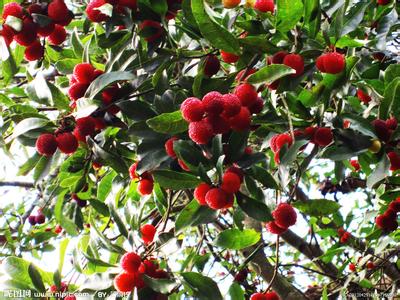
Fruit is a very good food. By eating fruit appropriately and reasonably, we can live more healthily and with more enjoyment.
What are the therapeutic food effects of bayberry?
1. Abdominal distension from gastrointestinal fullness or abdominal pain with vomiting and diarrhea caused by acute enteritis, and dysentery with diarrhea: bayberry pickled with table salt, the longer the better; when using, take several pieces and steep them in boiled water, or take 30-60 grams of bayberry liquor, 3 times a day, or 4-5 liquor-soaked fruits.
2. Dry mouth and tongue, low fever and excessive thirst: wash 50-100 grams of fresh fruit and eat it raw, once in the morning and once in the evening.
3. Difficult urination, urinary tract infection or a burning sensation: take 60-90 grams of fresh fruit, mash it, add 1 cup of cold boiled water and mix well, filter and take the juice, 3 times a day.
4. Dizziness and pain in the muscles and joints of the whole body caused by excessive fatigue: take 30-60 grams of bayberry liquor, once in the morning and once in the evening.
5. Persistent diarrhea: char bayberry until it retains its nature, grind into powder, mix with rice water and take twice a day, 6 grams each time.
6. Head wind pain: grind bayberry into powder, take 9 grams with mint soup after each meal, or decoct and take it together with Qingfeng San.
7. Abdominal pain from summer heatstroke and vomiting and diarrhea: take 1 liang of bayberry liquor, or eat 2-3 bayberry fruits soaked in liquor, and it can be treated.
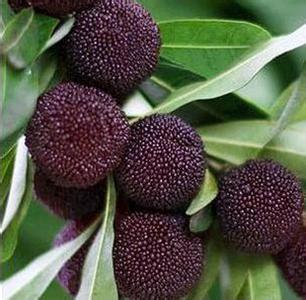
8. Stop bleeding and promote tissue regeneration: mash salt-preserved bayberry and pits into a paste, make into small pieces and store. Whenever there is an injury, grind a small piece into powder and apply it.
9. Malignant sores and scabies: wash with a decoction of bayberry bark and root.
10. Toothache: gargle with a decoction of bayberry bark and root.
11. Bleeding gums and other vitamin C deficiency conditions: use 30-60 grams of half-ripe fresh fruit, wash it, once in the morning and once in the evening.
12. Prevent heatstroke: decoct 30 grams of fresh fruit in water, once in the morning and once in the afternoon.
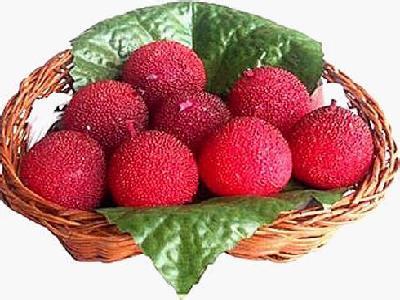
What bayberry should not be eaten with
Bayberry and cucumber should not be eaten together
Bayberry is rich in vitamin C, while cucumber contains a vitamin C decomposing enzyme. If the two are eaten at the same time, the vitamin C in bayberry will be destroyed, losing its original nutritional value.
Bayberry and radish should not be eaten together
Bayberry is rich in plant pigments. If it is eaten with radish, after digestion and decomposition in the gastrointestinal tract, it can produce substances that inhibit thyroid function and induce goiter.
Bayberry and scallion should not be eaten together
Bayberry is incompatible with scallion. Eating the two at the same time will produce complex biochemical reactions and has certain adverse effects on the human body.
Bayberry and milk should not be eaten together
Bayberry is rich in fruit acids, and milk contains a large amount of protein. If the two are eaten at the same time, the fruit acids in bayberry will coagulate the protein in milk, affecting the digestion and absorption of protein.
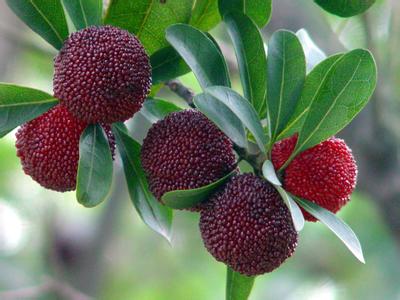
Contraindications for bayberry
Patients with hemoptysis should not eat it
Bayberry is warm in nature and easily helps heat and causes internal heat, promoting worsening of hemoptysis. "Benjing Fengyuan" points out: "People with blood heat and excessive fire should not eat much, for fear of stirring the blood of the meridians and causing epistaxis"; "Suixiju Yinshi Pu" also believes: "Eating much stirs the blood."
Patients with cholecystitis and gallstones should not eat it
Bayberry can stimulate the stomach and duodenum to secrete cholecystokinin, thereby causing gallbladder contraction and inducing biliary colic.
Not suitable to eat too much
Bayberry is warm and hot in nature. Eating too much will cause reactions of internal heat such as general body heat and excessive phlegm. In addition, the fruit acids in bayberry will corrode the teeth, so you should brush your teeth promptly after eating.