How to grow Cymbidium kanran? Detailed guide to cultivation and propagation methods
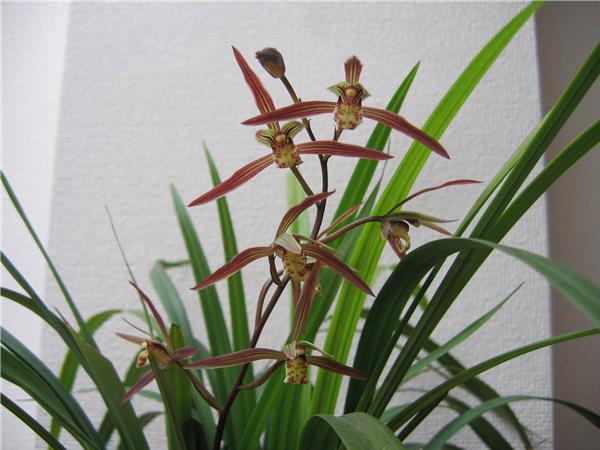
Cymbidium kanran has a slender, graceful plant form, elegant and handsome foliage, brilliantly varied flower colors, and a clear, mellow fragrance that lingers. Its plant form closely resembles that of Cymbidium ensifolium, but its leaves are narrower, especially at the base, and its foliage is unrestrained and elegant, giving it a refined and noble look. Below, the editor introduces the cultivation and propagation of Cymbidium kanran and how to grow it.
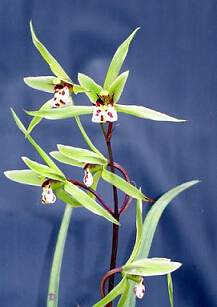
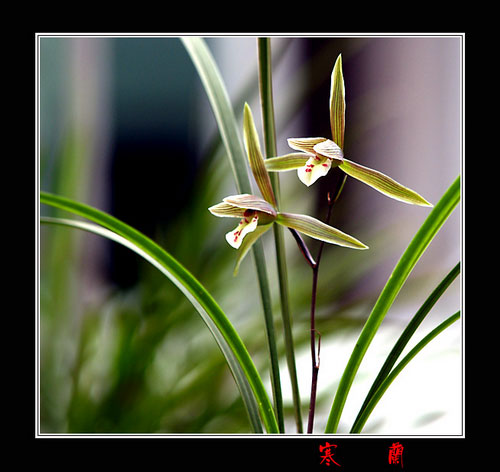
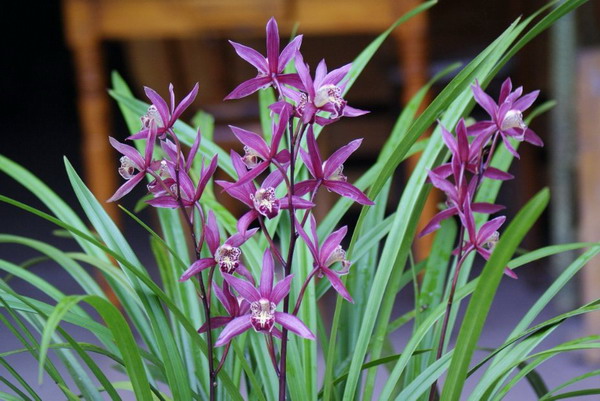
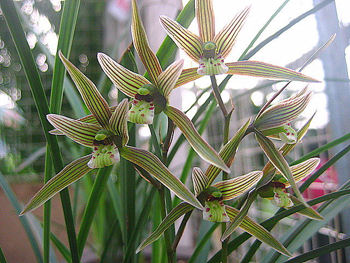
The leaves of Cymbidium kanran are narrower and longer than those of Cymbidium ensifolium, especially at the leaf base, and the foliage is elegant and unrestrained, jade-green and fresh, with large-, medium-, and fine-leaved varieties as well as variegated-edge varieties. Cymbidium kanran has rich flower colors, including yellow, green, purple-red, and deep purple, generally with variegated vein markings and spots, and there are also pure, spotless plain-color flowers. The sepals and petals are both rather narrow and slender, with a distinctive style, delicate and lovely, and a captivating fragrance.
Cultivation and propagation of Cymbidium kanran
1. Choose a good growing medium. Whether the growing medium suits the characteristics of the orchid and whether it favors the orchid's normal growth is the key to growing orchids well. I have tried pond foundation stone and Zhijinshi, and also used potter's clay, Xiantu, crushed brick granules, and mixed media made from several kinds of growing media. Through comparative cultivation trials, I found that Cymbidium kanran grown in a mixed medium blended with a certain amount of mountain soil (leaf mold) grew best; not only was the root system well developed, but the sprouting rate and flowering rate were both higher than those of the control group using other growing media. Therefore the conclusion is: the normal growth and flowering of Cymbidium kanran require relatively comprehensive nutrients of various kinds, and the nutrients that various fertilization methods in soilless culture are hard to satisfy can be supplied from the blended-in mountain soil, so the growth is better. I now recommend a growing medium formula proven by several years of comparative trials to be relatively suitable for cultivating Cymbidium kanran: 40% pond foundation stone or Zhijinshi (other hard growing media or river sand may also be substituted), 35% mountain soil (preferably the black leaf mold from the orchid's native habitat), 15% spent mushroom substrate or waste wood shavings (sun-dried or disinfected), and 10% snake wood (or fern root as a substitute), mixed together.
3. Control watering. Strictly control watering, and as a rule keep the potting soil moist but not wet, slightly dry but not parched; this is the key to growing Cymbidium kanran well. Many beginners in orchid growing are afraid the orchid lacks water and water it whenever they have free time, causing the potting soil to become too wet and the orchid roots to rot; this is the main reason most beginners in orchid growing fail. When Cymbidium kanran is planted in the culture soil mixed in the above proportions, whether in a large pot or a small pot, generally water once every 8-15 days in late spring, once every 4-6 days on sunny days in summer, once every 5-10 days in autumn, and in winter and early spring often do not water for more than 20 days or even more than a month. To make management relatively uniform between large and small pots, reasonably match the pot to the number of shoots and the degree of root development; that is, plant more shoots in large pots and fewer shoots in small pots, use large pots for well-developed roots and small pots for poor roots. You can also use strong seedlings with weak seedlings, and use ordinary varieties to accompany rare famous varieties; this not only conforms to the orchid's habit of liking to grow in clusters, with accumulated orchid fungi benefiting growth, but also basically achieves the same watering cycle for large and small pots. The principle for potting soil is to water when it looks dry and let it be wet when watered, watering thoroughly each time, and keep it slightly dry at ordinary times. Cymbidium kanran grown this way has well-developed roots and robust growth, and very rarely shows root rot or premature root decline.
5. Strictly guard against pollution. The leaves of Cymbidium kanran are long and thin, with many stomata and a large contact area with the air, so it especially needs a fresh, pollution-free growing environment. Cymbidium kanran gardens should try to avoid nearby factories and workshops that emit thick smoke and waste gas and produce large amounts of dust. Household cultivation should be kept as far as possible from chimneys, range hoods, and outdoor vents of air conditioners, and clean watering water that is pollution-free and moderately acidic or alkaline should be chosen. In other words, any environment where people feel the air is fresh, with no smoke, little dust, no peculiar smell, and good ventilation, is suitable for growing orchids. Any water people can drink can be used to water orchids. In addition, try to avoid smoking in the orchid room.
6. Scientific fertilization. Because most Cymbidium kanran have relatively small pseudobulbs, the nutrients stored are limited, and furthermore they bloom easily and have tall scapes with many large flowers, consuming more nutrients. Therefore, when cultivating established plants and strong seedlings of Cymbidium kanran, it is best to add a small amount of base fertilizer when repotting. Trials found that mixing about 1% thoroughly decomposed, fermented, and sterilized pig manure into the growing medium is most beneficial to the growth and flowering of Cymbidium kanran. But freshly collected wild plants, newly purchased plants shipped long distance or by mail, and weak seedlings with incomplete root systems must not be fertilized in a hurry, otherwise they will certainly suffer fertilizer damage. In addition, monopotassium phosphate, Lanjunwang, and the like can be used alternately for foliar feeding, once every seven to ten days; during the new shoot growth period, an appropriate amount of urea may be added, and at the new seedling maturation stage, spray high-potassium fertilizer two to three more times to promote enlargement of the pseudobulbs. To make the various nutrients more balanced, in April-June and September-October a thin organic fertilizer may be applied once more each month, but remember to prefer dilute over concentrated to prevent fertilizer damage.
8. Strictly guard against impatience. Growing orchids is like cultivating one's character; one must be patient and must not seek quick success and instant benefits or be too impatient. Some new orchid friends just beginning to grow orchids lack understanding and knowledge of the orchid's growth characteristics and patterns and are eager for quick results. Or they are overly doting and water the orchid a little whenever they have free time. Today they dig open the soil to see whether new roots have grown, and tomorrow they tip out the pot and replace it with new growing medium, tormenting the orchid half to death; how could it grow well? Some orchid friends, in order to get more shoots, divide the orchid plants too singly, and the result is that they grow weaker and weaker, or even wither and die. Still others are so afraid the orchid lacks fertilizer that they frequently apply all kinds of fertilizers and cause fertilizer damage. These practices all violate the orchid's growth patterns; in mild cases, "first year view the flowers, second year view the seedlings, third year view the pot," and in severe cases, "total annihilation" within a short time. Orchids understand human nature; if you understand her and care for her, she will naturally sprout every year and give forth fragrance year after year, giving you generous returns. Doting, pampering, or being eager for quick success are all unacceptable.
6. Scientific fertilization. Because most Cymbidium kanran have relatively small pseudobulbs, the nutrients stored are limited, and furthermore they bloom easily and have tall scapes with many large flowers, consuming more nutrients. Therefore, when cultivating established plants and strong seedlings of Cymbidium kanran, it is best to add a small amount of base fertilizer when repotting. Trials found that mixing about 1% thoroughly decomposed, fermented, and sterilized pig manure into the growing medium is most beneficial to the growth and flowering of Cymbidium kanran. But freshly collected wild plants, newly purchased plants shipped long distance or by mail, and weak seedlings with incomplete root systems must not be fertilized in a hurry, otherwise they will certainly suffer fertilizer damage. In addition, monopotassium phosphate, Lanjunwang, and the like can be used alternately for foliar feeding, once every seven to ten days; during the new shoot growth period, an appropriate amount of urea may be added, and at the new seedling maturation stage, spray high-potassium fertilizer two to three more times to promote enlargement of the pseudobulbs. To make the various nutrients more balanced, in April-June and September-October a thin organic fertilizer may be applied once more each month, but remember to prefer dilute over concentrated to prevent fertilizer damage.
8. Strictly guard against impatience. Growing orchids is like cultivating one's character; one must be patient and must not seek quick success and instant benefits or be too impatient. Some new orchid friends just beginning to grow orchids lack understanding and knowledge of the orchid's growth characteristics and patterns and are eager for quick results. Or they are overly doting and water the orchid a little whenever they have free time. Today they dig open the soil to see whether new roots have grown, and tomorrow they tip out the pot and replace it with new growing medium, tormenting the orchid half to death; how could it grow well? Some orchid friends, in order to get more shoots, divide the orchid plants too singly, and the result is that they grow weaker and weaker, or even wither and die. Still others are so afraid the orchid lacks fertilizer that they frequently apply all kinds of fertilizers and cause fertilizer damage. These practices all violate the orchid's growth patterns; in mild cases, "first year view the flowers, second year view the seedlings, third year view the pot," and in severe cases, "total annihilation" within a short time. Orchids understand human nature; if you understand her and care for her, she will naturally sprout every year and give forth fragrance year after year, giving you generous returns. Doting, pampering, or being eager for quick success are all unacceptable.