How to Grow Hyacinths in Water? Detailed Methods and Precautions
Hyacinths come in many colors, with neat and orderly flower spikes that look dignified and elegant. Many people like to grow hyacinths to decorate their homes. The most suitable method for growing hyacinths to adorn and beautify the home is water culture. Today, the editor will show you the methods and precautions for growing hyacinths in water.
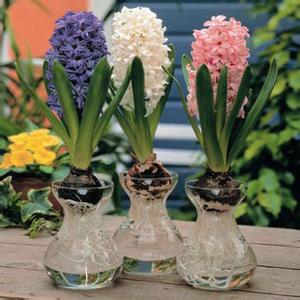
Hyacinths originate from the Mediterranean coast and the Asia Minor region. They prefer sunny and relatively humid environments and are fairly cold-tolerant. In areas with relatively warm winters, they take root in autumn, new shoots emerge in early spring, they bloom in March, the fruit ripens in late May, and the above-ground parts wither in early June and enter dormancy. Flower bud differentiation occurs during the dormant period, with an optimum differentiation temperature of around 25°C, and the differentiation process takes about 1 month. After flower bud differentiation and before elongation growth, there needs to be a low-temperature stage of about two months, and the temperature must not exceed 13°C.
Methods for Growing Hyacinths in Water
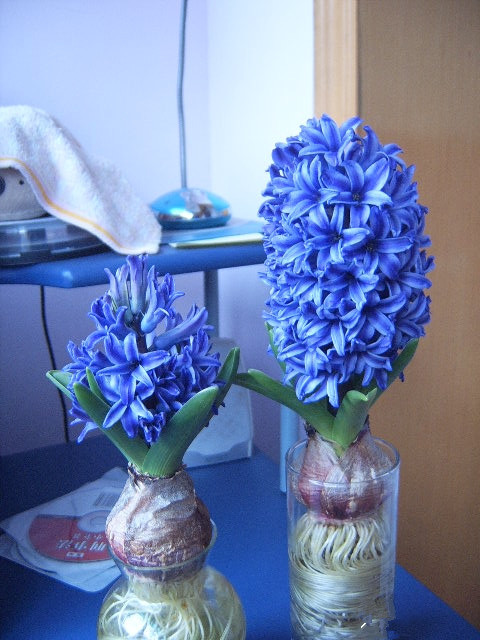
Step 1: In December, place the bulb in a wide-mouthed glass jar with a grid, and add a little charcoal to help disinfect and prevent rot. The water level should be limited so that it does not touch the bottom of the bulb. Then place it in a dark place and cover the jar with black cloth. Room temperature 5-10°C. This is because darkness helps hyacinths develop roots. After more than 20 days like this, the roots will sprout in a completely dark environment. At this point, you can take it outside to receive sunlight, starting with 1-2 hours per day and gradually increasing to 7-8 hours.
Step 2: After the root system has grown sufficiently, move it to a bright place without direct sunlight, keep the temperature above 10°C, and change the water once every 2-3 days to keep the water clean. Let the water reach the roots; there is no need to water or fertilize.
Step 4: After the hyacinth flowers fade, cut off the flower stem, take out the bulb and plant it in a pot so that the bulb can plump up. When the leaves wither, dig out the bulb and store it well. In autumn, it can be planted again in a pot to restore its vigor. If the bulb is stored well, it can still bloom the following year, but the flowers will be smaller and the flower scape will also shrink. This is mainly because the bulb has degenerated. Therefore, for hyacinth cultivation, it is better to buy new bulbs after one year of planting.
Precautions for Growing Hyacinths in Water:
1. Many hyacinth bulbs purchased are already rooted at the flower shop, so the step of sealing the bulb in darkness to sprout can be skipped.
2. There should be a 1cm-2cm space between the water surface and the bottom of the bulb. Never let the water cover the bottom of the bulb.
3. During the shading period, the temperature is best kept at 9-10°C, as this will make the roots grow very quickly.
4. If the "shrinking neck" phenomenon occurs, you can appropriately mist the leaves with water.
5. When blooming, the temperature is best kept above 17°C.
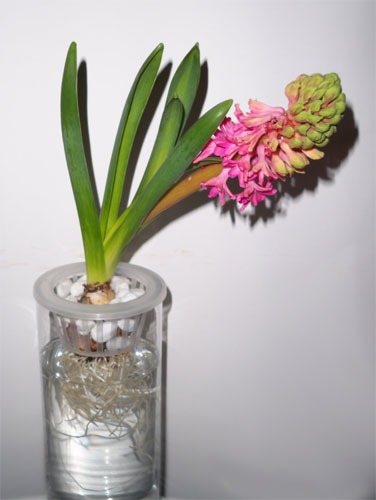
Hyacinths come in many colors. Just like roses, different colors of hyacinths have different flower meanings.
White hyacinth flower meaning: It is humble love, love that dares not be revealed, secret admiration yet lively and adorable.
Yellow hyacinth flower meaning: It represents thanking you, I am very happy.
Red hyacinth flower meaning: It represents that your love fills my heart, and I have accepted your sincerity.
Purple hyacinth flower meaning: The purple hyacinth is sorrowful, melancholic love; it has a romantic sentiment and a gentle temperament.
Pink hyacinth flower meaning: Falling for you, representing a romantic yet elegant fragrance; being with me will surely bring happiness.
Open-Field Cultivation of Hyacinths
If hyacinths are cultivated in the open field, it is best done in October to November, and choosing well-drained soil is the most important condition. Before planting, apply sufficient base fertilizer, add a thin layer of sand on top, then arrange the bulbs with a plant spacing of 15 cm to 18 cm, and cover with 5 cm to 8 cm of soil. Also cover with grass to keep the soil loose and moist. Generally, no other management is needed before flowering. After flowering, if you do not plan to collect seeds, the flower stem should be cut off to promote bulb development, and the cutting position should be as high on the flower stem as possible. In early June, the bulbs can be dug out, spread out, graded, and stored in a cold storage facility. The summer temperature should not exceed 28°C.
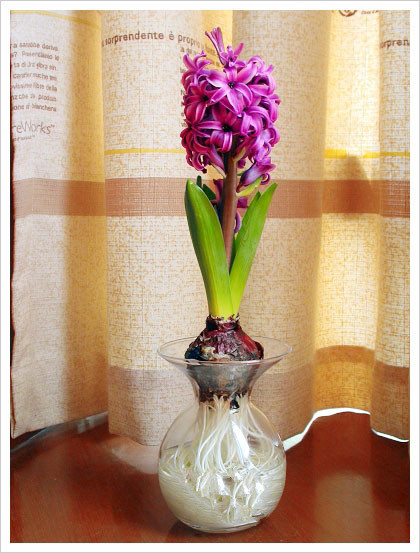
Hyacinth bulbs have the habit of summer dormancy. They take root in autumn and winter, sprout new shoots in early spring, bloom in March, and in early June the above-ground plants wither while the below-ground parts begin dormancy, resuming growth in February.
It should be noted that after the hyacinth flowers fade, the flower stem should be cut off, and the bulb should be taken out and planted in a pot so that the bulb can plump up. When the leaves wither, dig out the bulb and store it well. In autumn, it can be planted again in a pot to restore its vigor. If the bulb is stored well, it can still bloom the following year, but the flowers will be smaller and the flower scape will also shrink. This is mainly because the bulb has degenerated. Therefore, for hyacinth cultivation, it is better to buy new bulbs after one year of planting.
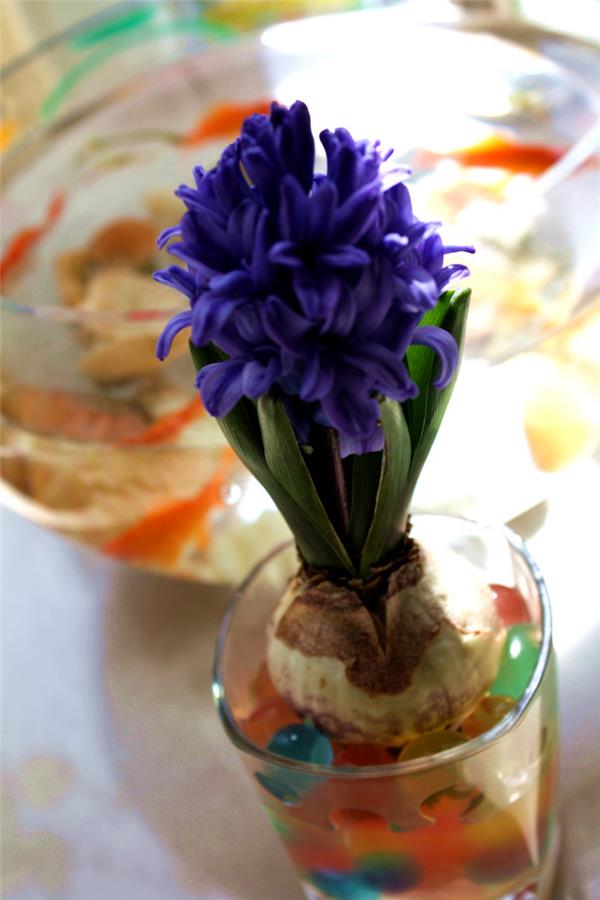
New shoots emerge in early spring, they bloom in March, and in early June the above-ground plants wither while the below-ground parts begin dormancy, resuming growth in February.
It should be noted that after the hyacinth flowers fade, the flower stem should be cut off, and the bulb should be taken out and planted in a pot so that the bulb can plump up. When the leaves wither, dig out the bulb and store it well. In autumn, it can be planted again in a pot to restore its vigor. If the bulb is stored well, it can still bloom the following year, but the flowers will be smaller and the flower scape will also shrink. This is mainly because the bulb has degenerated. Therefore, for hyacinth cultivation, it is better to buy new bulbs after one year of planting.