What are the characteristics of the jade plant? A complete guide to understanding this plant
The jade plant (Crassula ovata) is an evergreen small shrub, very similar to the jade tree, but it is not the jade tree. Let's take a look at the characteristics of this jade plant!
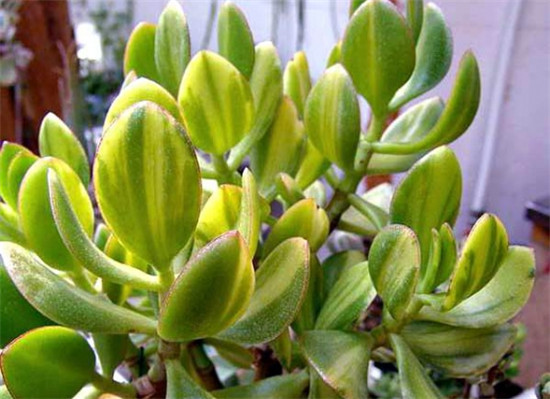
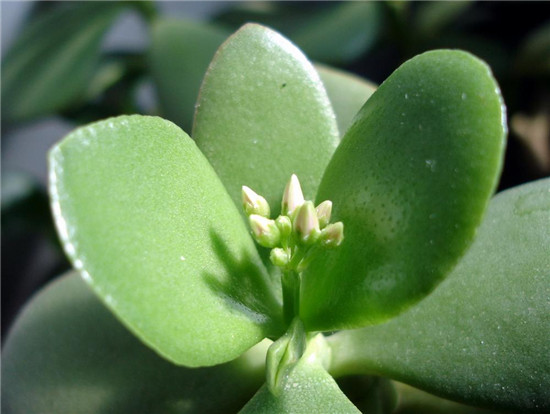
The jade plant has thick, fleshy branches and leaves, remaining green all year round, with unusual leaf shapes and a stately plant form. It is suitable for pot cultivation and can be displayed on a balcony or as an accent on an indoor table, appearing very elegant and refined. The crown is tall and graceful, the stems and leaves are emerald green, and it bears white flowers at the top, making it very elegant and distinctive.
Differences between the jade plant and the jade tree
Jade plant: The jade plant, commonly known as glass emerald, is an evergreen small shrub. The jade plant grows 1-3 m tall, with thick, fleshy branches and leaves, green all year round, and many branches. The leaves are elliptical, 3-5 cm long and 2.5-3 cm wide. The jade plant has a tall and graceful crown, emerald green stems and leaves, and white flowers at the top, making it very elegant and distinctive.
The sap of the jade plant is toxic. Do not let young children accidentally ingest the sap, otherwise it will cause skin redness, swelling, pain, and blistering. If it accidentally splashes into the eyes, it can cause blindness.
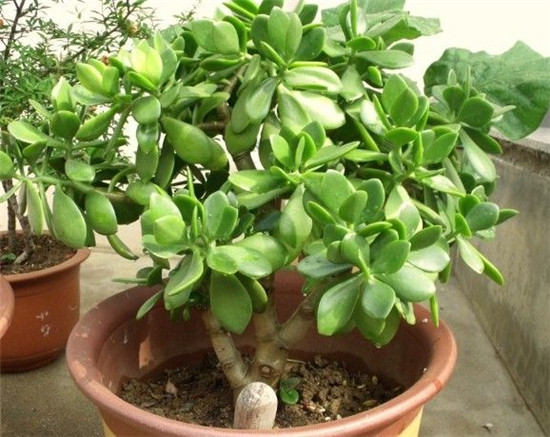
Jade tree: The jade tree is a succulent subshrub. It grows 1-3 m tall. The stem is fleshy and thick, with grayish-white bark that is light in color, many branches, and brownish-green branchlets that are darker in color. The leaves are fleshy, ovate, about 4 cm long and 3 cm wide, grayish-green, with a red tinge along the edges. The flowering period is in late spring and early summer, with tubular flowers 2 cm in diameter, white or light pink.
After reading the above descriptions of the morphology of the jade plant and the jade tree, if you still have not figured it out, below I will compare the jade plant and the jade tree, and the differences between the two can be clearly seen.
The leaf edges of the jade tree have a faint red border, while the jade plant does not have this red border.
The leaves of the jade plant are relatively larger, while the leaves of the jade tree are smaller.
The stems of the jade plant are relatively soft, while the stems of the jade tree are relatively firm and upright.
Is the jade plant toxic?
The sap of the jade plant is toxic. Do not let young children accidentally ingest the sap, otherwise it will cause skin redness, swelling, pain, and blistering. If it accidentally splashes into the eyes, it can cause blindness. Of course, as long as you do not injure the jade plant and cause it to release sap, or even if it releases sap and you avoid contact with it, you will be perfectly fine.
In fact, many plants that can purify the air, such as oleander and Alocasia, are toxic. Of course, the toxic part is limited to their sap and so on. As long as contact is avoided, they will not cause any harm to the human body. Therefore, when growing indoor plants, everyone should understand their habits and know what to expect. Therefore, they must never be grown indoors. Open windows frequently, pay attention to ventilation and air exchange, and move them outdoors at night.
Management methods for the jade plant
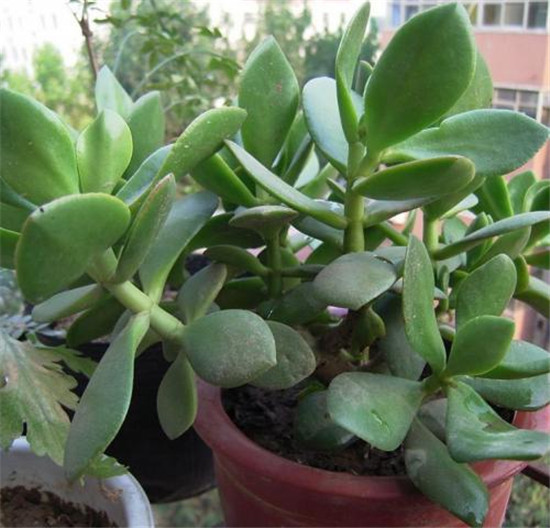
The jade plant prefers a relatively dry air environment. If rainy days last too long, it is susceptible to infection by pathogens. It is afraid of rain, so keep the leaves dry at night. The most suitable relative air humidity is 40-60%. The most suitable growth temperature is 15°C-32°C. It is afraid of high temperatures and stuffiness, and enters a dormant state when the summer heat exceeds 33°C. It is averse to cold and frost, and the overwintering temperature needs to be kept above 10°C. It also enters a dormant state when the winter temperature drops below 7°C. If the ambient temperature approaches 4°C, it will die from frostbite.
The above is all the content I have summarized for you about the characteristics of the jade plant. I hope this article can help everyone. Please also continue to follow us.