Care Methods and Daily Management Tips for Golden Euonymus
Golden Euonymus is an indispensable plant in landscaping, but do you really know it? Want to learn about its planting and care? Let's take a look together!
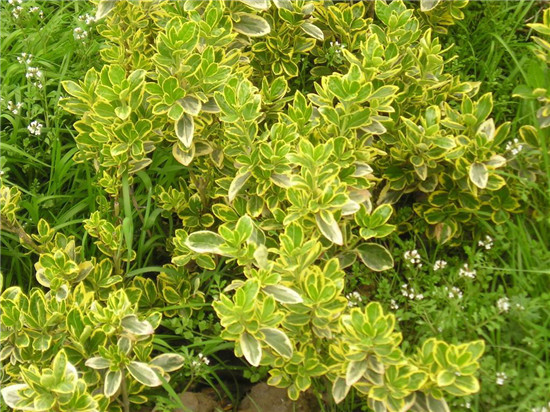
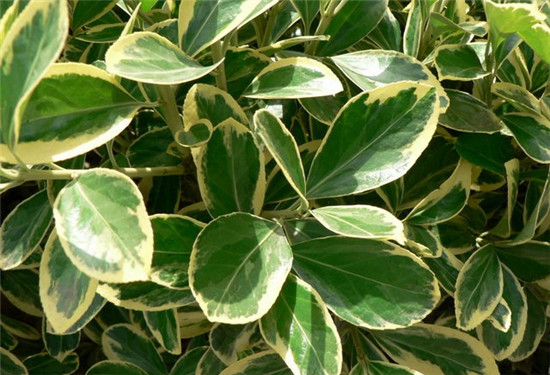
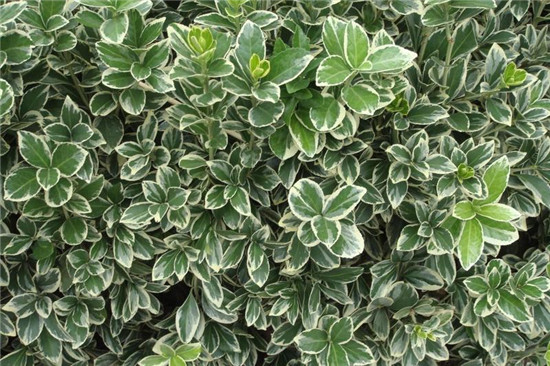
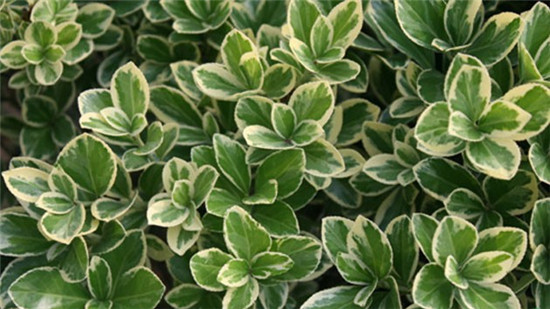
Golden Euonymus belongs to the genus Euonymus, a plant of the Celastraceae family, genus Euonymus, and is one of the varieties of Japanese Euonymus (Euonymus japonicus). It is an evergreen shrub or small tree, with slightly four-angled branchlets, densely growing branches and leaves, and a spherical crown. The leaves are simple and opposite, obovate or elliptical, with blunt teeth along the margins, and the surface is dark green and glossy.
Golden Euonymus mainly grows in the northern subtropical deciduous and evergreen broad-leaved mixed forest zone and the central subtropical evergreen and deciduous broad-leaved forest zone. It likes light and tolerates slight shade. It has strong adaptability and tolerates drought. It likes warmth and tolerates cold. Its sprouting and branching ability is strong, and it tolerates pruning. It tolerates poor soil, but is suitable for growing in fertile, moist, slightly acidic soil.
Golden Euonymus likes a warm and humid environment, has no strict requirements for soil, can tolerate drought, is highly cold-resistant, and is easy to cultivate. Golden Euonymus also has very good pollution resistance, with very strong resistance to sulfur dioxide, making it the preferred evergreen plant for heavily polluted industrial and mining areas. Its landscape use is mainly for foliage, the maintenance cost is very low, and the transplant survival rate is very high; generally, with proper care, it can reach a 97% survival rate. Golden Euonymus is mostly propagated by cuttings, and after cutting it can take root in 30 days.
Cultivation of Golden Euonymus
1. Prepare a sand bed with good drainage, and disinfect the sand bed with potassium permanganate or carbendazim two days in advance. Prepare alcohol and plant rooting powder, and mix the solution according to the instructions.
2. When cutting the cuttings, do not choose too tender shoot tips; those with a high degree of lignification take root and sprout more easily. When pruning, keep the main stem and cut the side branches; after cutting, leave at least one bud as the "base" to facilitate the next cut.
3. Remove the lower leaves of the cuttings, leave 3 to 4 leaves at the top, and after trimming the cuttings, soak them in rooting water. Use a small shovel to make a furrow in the sand bed, place the cuttings at 5 to 10 cm intervals, and after placing them, cover with soil and press firmly. The row spacing is 10 to 20 cm.
4. During the cutting process, maintain appropriate temperature and humidity; watering should be based on temperature and humidity, always keeping the leaves moist. Do not water excessively, as this prolongs the rooting time; after the seedlings take root, watering can be reduced appropriately.
5. After cutting, rooting generally occurs in about 30 days, and they can also be potted at the right time. The potting nutrient soil can be prepared with sand, soil, and peat soil each making up one third, to facilitate air permeability; do not fill the pots too full.
Main Pests and Diseases of Golden Euonymus and Their Control
Boxwood leaf roller moth
The larvae spin silk to connect surrounding leaves and tender branches into temporary nests, then feed inside them; in severe cases, they eat all the leaves, causing the seedlings to die.
Morphological characteristics: The adult's body and wings are grayish white; the front margin, outer margin, and hind margin of the forewings have broad purplish-brown bands; on the purplish-brown band of the front margin there are two white spots; the scales are glossy with a purplish-red sheen. The larval head is black, the body is yellow-green, the dorsal line, subdorsal line, and spiracular upper line are dark green to ink green, and the spiracular line is orange-yellow.
Occurrence pattern: In northern regions, there are 2 to 3 generations per year; it overwinters as larvae in thin cocoons in the bracts, and the adults hide by day and come out at night, with phototaxis.
Control methods: (1) Manual capture and killing: during the adult egg-laying period, combine with seedling pruning to remove egg masses and larval bracts, and burn them in a centralized manner. (2) During the adult stage, use black light traps for light trapping and killing. (3) When larval damage is severe, spray 50% fenitrothion emulsion at 1000 times dilution; or 4.5% beta-cypermethrin at 2000 times dilution; or Bt emulsion at 500 times dilution (note: Bt emulsion must never be used at the same time as fungicides; when spraying, it is more effective after 4 p.m. on cloudy days).
The above is the full content of the Golden Euonymus care we have summarized for everyone. We hope this article can help you. Please also continue to follow us.