How to Grow a Boxwood Bonsai? Detailed Guide to Care Methods and Precautions
Boxwood is a general term for several plants, shrubs or small trees, 1-6 m tall. The trunk of a boxwood bonsai grows especially slowly, but the young branches grow relatively fast. Next, let us take a look at how to grow a potted boxwood.
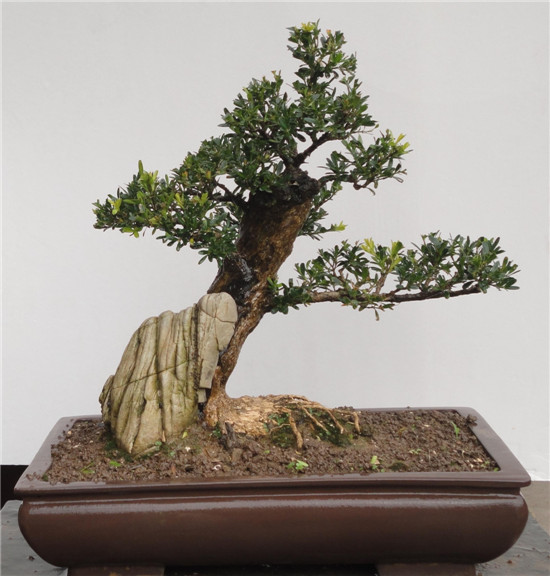
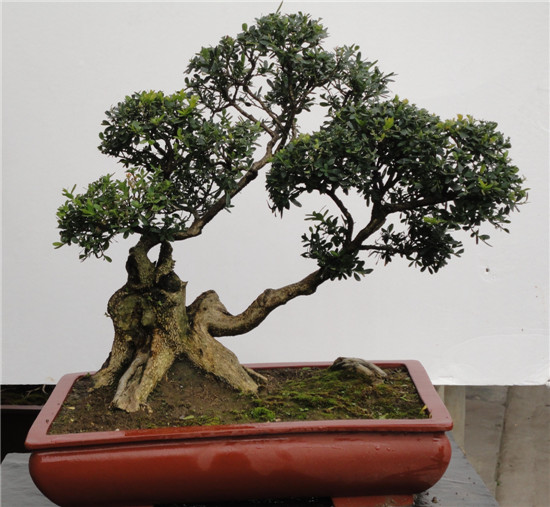
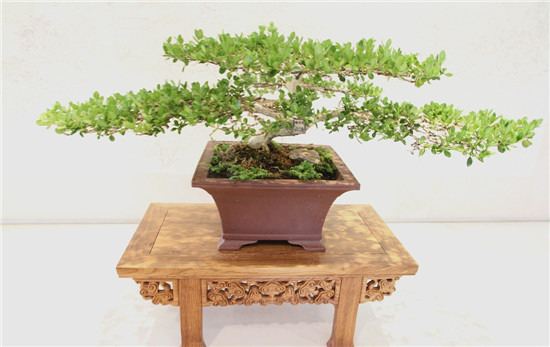
Boxwood bonsai is relatively cold-tolerant and sprouts readily; with coarse wiring and fine pruning, it can be shaped into cloud-pad or steamed-bun forms, or trained into a natural tree shape. The trunk is allowed to follow its natural tendency and shaped into a slanting-trunk or prostrate style. Some boxwood bonsai are accented with ornamental stones, forming what is called a "boxwood leaning over stones."
In spring, when the young leaves of a boxwood bonsai first emerge, the whole tree is tender green and very pleasing to the eye. Among wild-collected boxwood material there is no lack of fine specimens, especially pearl boxwood. Pearl boxwood has made its home for generations on high mountain ridges or in rock crevices; tempered by harsh wind, frost and ice, it naturally grows into a gnarled, twisted, wonderfully varied tree form, making it an excellent material for stump bonsai.
In the Yuan dynasty, Hua Youwu wrote in a poem praising boxwood: "A boxwood tree so near at hand, its branches and trunk thick and gracefully spreading; its leaves deep green like jade, its ancient roots like coiled dragons. Through years of wind and frost unending, often bathed in heavy rain and dew. It should not meet misfortune in a leap year, its firm substance rivals the cold pine." The boxwood bonsai has a graceful tree posture, with leaves as small as broad-bean petals, thick and glossy, evergreen through the four seasons, and can be enjoyed all year round.
In the Yang-style boxwood bonsai, the branches and leaves are processed by pruning and wiring into "cloud pads," flat and thin as if shaved, then accented with mountain stones, elegant and beautiful as a painting. In spring, when the young leaves of boxwood first emerge, the whole tree is tender green and very pleasing to the eye. An ancient poem praises boxwood: "A boxwood tree close at hand, its branches gracefully spreading a thousand layers; its leaves deep green like jade, its ancient roots perched like coiled dragons."
Care and Management of Boxwood Bonsai
Placement: Boxwood is best placed in semi-shade, and in summer special attention must be paid to shading. In winter, except in severely cold regions, it can generally overwinter outdoors; simply bury the pot in a wind-sheltered, sunny spot, but after frost the leaf color often turns red. Watering: Boxwood likes moisture, and the potting soil should be kept slightly on the moist side, but waterlogging is undesirable. In high summer temperatures, in addition to shading, it also needs watering in the morning and evening.
Fertilizing: Boxwood grows slowly and is not demanding about fertilizer. Generally, fertilize 1-2 times in spring and apply one round of decomposed cake-fertilizer water in autumn.
Pruning: Boxwood sprouts relatively quickly and should be pruned frequently. Generally, after each flush of new shoots, cut off the top 1-2 nodes to prevent spindly leggy growth and keep the tree shape attractive. After boxwood sets fruit, it should be removed promptly to avoid consuming nutrients and affecting growth.
Repotting: Carry this out every 2-3 years, preferably in spring before bud break or in autumn after the new shoots have matured. When repotting, it is best to remove some old roots and old soil, and switch to a pot one size larger to benefit root development.
Pest and disease control: Boxwood has relatively few pests and diseases, mainly scale insects, which can cause sooty mold and leaf drop; be sure to brush them off clean by hand, or spray to kill them with 80% dichlorvos at 1500 times dilution. Ordinarily, it is best to spray water on the leaf surface often to wash off dust and keep growth healthy.
Matching Boxwood with Home Decor Styles
When a boxwood bonsai is placed in a courtyard or on a balcony, it is best placed in semi-shade, and in summer special attention must be paid to shading. In winter, except in severely cold regions, it can generally overwinter outdoors; simply bury the pot in a wind-sheltered, sunny spot, but after frost the leaf color often turns red. Watering: Boxwood likes moisture, and the potting soil should be kept slightly on the moist side, but waterlogging is undesirable. In high summer temperatures, in addition to shading, it also needs watering in the morning and evening.
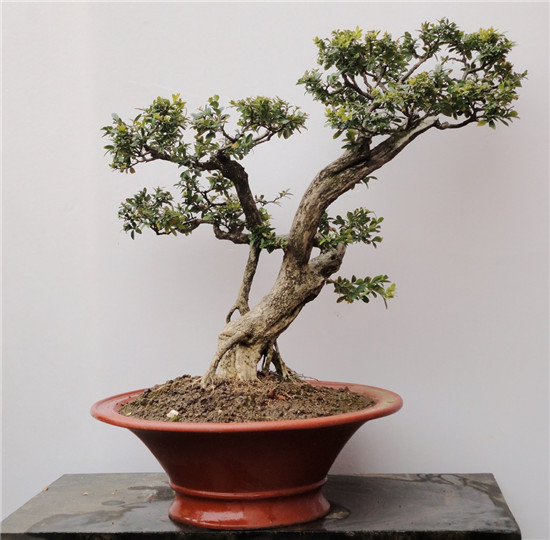
Scientific evidence shows that brightly colored food can greatly increase appetite. As a space for eating, the dining room can be accented with some brightly colored green plants to adjust the color scheme of the dining room style; placing ornamental flowering potted plants can awaken people's appetite. So you can place a small boxwood bonsai in the dining room to feel more relaxed while enjoying your food.
If the living room style is minimalist, boxwood may be a good choice; place it on one side of the sofa, or on both sides of the TV wall. Any blank spot in the home can be accented with a boxwood bonsai; not only will it not feel crowded, it will also add charm to your living room. When combining and arranging them, small and large potted plants should be laid out reasonably according to the space; too large or too many will make the living room look unbalanced.
The above is the complete content I have summarized for you on how to grow a boxwood bonsai. I hope this article can help everyone. Please also continue to follow us.