In 2018, Taiwan's fruit and vegetable exports to Japan grew 49%; the Council of Agriculture heads to the 2019 Tokyo International Food Exhibition to vie for Tokyo Olympics ingredient orders
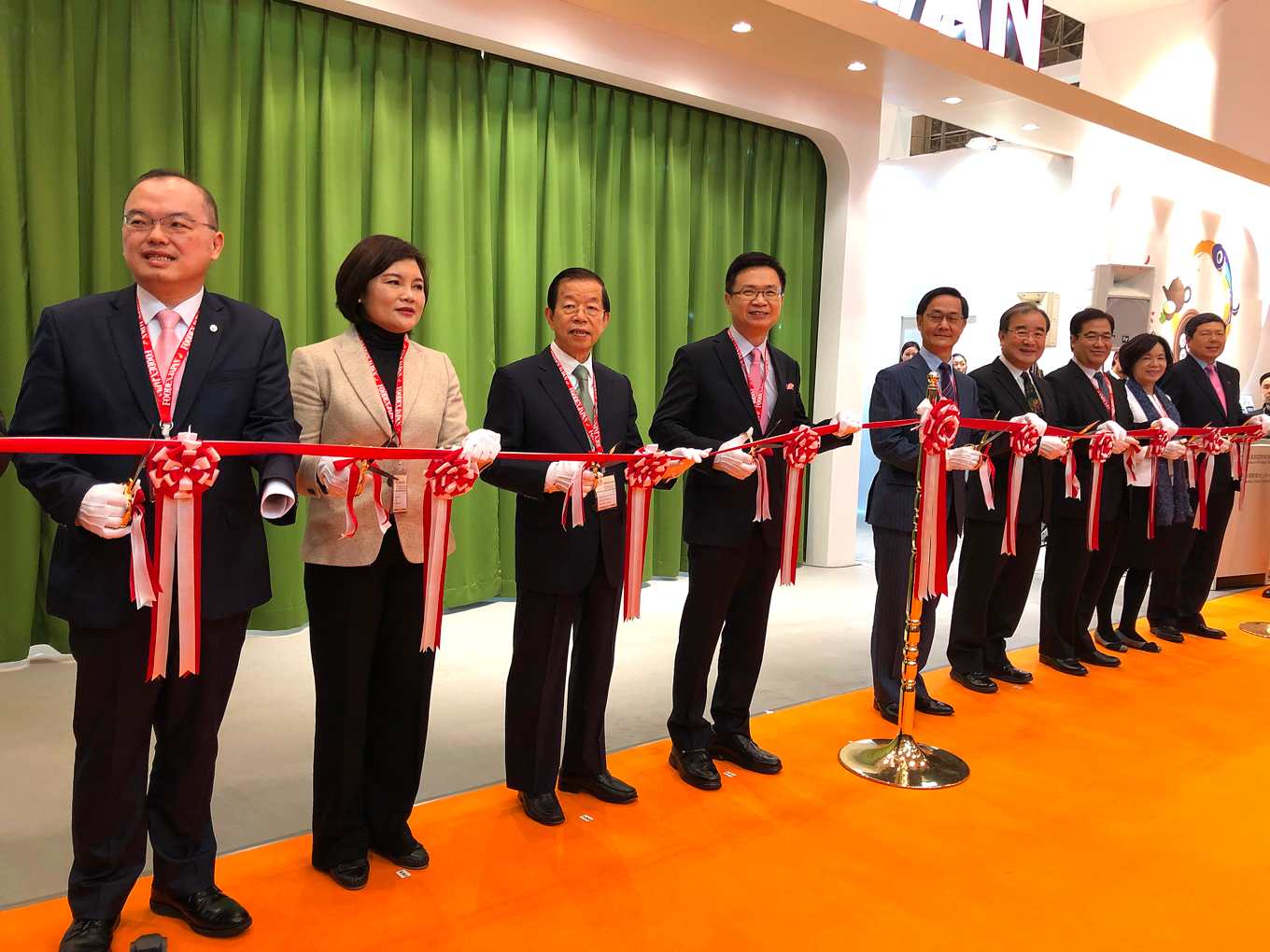
"Foodex Japan 2019" grandly opened yesterday (the 5th) in Chiba, Japan. It is the largest professional food exhibition in Asia, attracting an average of more than 70,000 visitors each year, and ranks alongside Germany's ANUGA and France's SIAL as one of the world's three major food exhibitions. At the opening ceremony of the "Taiwan Agricultural Pavilion," representatives from the Taiwan External Trade Development Council, the Ministry of Economic Affairs, the Agriculture and Food Agency, as well as local governments including Yunlin, Taoyuan, Tainan, Pingtung and Kaohsiung, were also present to deliver speeches.
Facing an event that international food sellers and buyers contest every year, this year's exhibition is even more like a preliminary battle for suppliers of ingredients for the 2020 Tokyo Olympics. Taiwan has specially set up a "Tokyo Olympics Zone" to display high-quality Taiwanese agricultural products certified under "Global Good Agricultural Practices," including carrots, iceberg lettuce, pineapples, bananas, mangoes and other fresh fruits, as well as honey dates and frozen sugar apples, which won praise when they first tested the Japanese market early last year. The aim is to help Taiwan secure a ticket as a Tokyo Olympics supplier, and also to push Taiwan onto the world stage so that more international consumers can taste the deliciousness of Taiwanese agricultural products.
In 2018, the total value of Taiwan's agricultural exports to Japan was 922,489,000 US dollars (about 28,135,914,000 New Taiwan dollars), a sharp increase of 6% over the previous year, accounting for 16.9% of total export value. A detailed breakdown is as follows:
The Tokyo International Food Exhibition attracts global buyers,and the Council of Agriculture sends a team to show Taiwan's strength
"Foodex Japan" brings together local Japanese food channel wholesalers, food service providers, manufacturers and retailers, and also attracts sellers and buyers from around the world to make the pilgrimage. It is an important platform for food businesses from various countries to showcase their agricultural strength. Chen Tien-shou, deputy minister of the Council of Agriculture, said that unlike the past approach of subsidizing county and city governments and businesses to exhibit, this year the Council of Agriculture specially formed a "Taiwan Agricultural Pavilion" to participate, "just like a national team!" to strengthen overall marketing. In addition to introducing the good quality of Taiwanese agricultural products to Japanese and international buyers and expanding export markets for Taiwanese agricultural products, it also hopes to join the list of suppliers of agricultural ingredients for the 2020 Tokyo Olympics.
Huang Chih-fang, chairman of the Taiwan External Trade Development Council, said that the annual "Foodex Japan" has been held 44 times so far, "Taiwan has never been absent, making it one of the most veteran participants," and this year the Taiwanese team is unprecedented in scale, with both exhibition area and number of exhibitors at a record high, emphasizing Taiwan's attention to the Japanese and international markets.
Taiwan's representative to Japan, Ambassador Hsieh Chang-ting, also pointed out that 73% of Japanese people come to know Taiwan through television programs. In the future, there are plans to collect agricultural product introductions and tourism videos from various counties and cities in Taiwan and try to broadcast them on Japanese television channels, to increase more Japanese consumers' curiosity about Taiwanese products and boost their willingness to buy, and to seek more publicity channels for Taiwanese agricultural products.
Edamame successfully exported; frozen green beans preparing to test the waters
"Foodex Japan 2019" runs from the 5th to the 8th. In addition to displaying Taiwanese agricultural products, Taiwanese businesses will also hold trade matchmaking meetings, inviting Japanese buyers and Taiwanese businesses to communicate face to face. Producers can directly introduce their products to the other side, raising Japan's awareness of Taiwanese agricultural products. In the following days, the Taiwanese delegation will also form teams to visit local sales channels and attend the 28th Japan-Taiwan Frozen Agricultural Products Trade Consultation Meeting on the 7th.
Chou Kuo-lung, associate researcher at the Kaohsiung District Agricultural Research and Extension Station, said that through the successful experience of edamame exports, there are also plans this year to produce frozen green beans (snap beans) for export to Japan, developing new frozen vegetable export items. "(Although) green beans are currently only in the preparation stage and cannot yet be exported to Japan in large quantities, including field mechanized harvesting technology and orders still need breakthroughs, but we can first understand the wishes and thoughts of Japanese customers."
Japan is Taiwan's second-largest agricultural export destination, with substantial growth in 2018
According to statistics from the Council of Agriculture, last year (2018) Taiwan's total food exports amounted to 5.4 billion US dollars, with mainland China as the leading destination, followed by Japan and the United States. Japan is Taiwan's second-largest agricultural export destination, with exports to Japan last year reaching 922 million US dollars, up 6% from 2017, clearly showing the importance of the Japanese market to Taiwan.
Lin Chia-jung said that Taiwanese agricultural products are of excellent quality. Although Taiwan is mostly characterized by smallholder farming and higher production costs, "as long as quality is improved, value can be created. Edamame is the best example. Although the price is higher, the quality is good and it is delicious, and Japanese consumers like it just the same." He believes that the Japanese market values texture and reputation, and Taiwanese agricultural products do not need to fight for the low-price market. "Taking good care of quality is more important." In addition, he also stressed that fresh products and processed products must be promoted in parallel in order to pave a broader export path for Taiwanese agricultural products.
Note: In the chart of the proportion of Taiwan's agricultural exports to Japan in 2018, the sub-items under "other agricultural products" are: plant fibers for textiles, microbial products for pest control, soluble or roasted starch, starch for feed, substances for resins, essential oil concentrates, non-alcoholic beverages, mineral water, tablets, capsule-form food preparations, concentrated protein and textured protein, special nutritional products for patients, sauce products, solid or powdered soup preparations, white koji, red yeast, peanuts prepared or preserved by other methods, beeswax or spermaceti, crude glycerol, palm leaves, palm bark, coconut husk, plant grain flour, kapok, plant down, sugarcane, gum arabic, golden grass, other plant materials for weaving
2019 Agricultural Political Trade War