Detailed Introduction to the Giant Water Lily: A Comprehensive Guide to This Aquatic Plant
The giant water lily is a famous tropical aquatic garden ornamental plant in the water lily family (Nymphaeaceae), with the largest leaves of any aquatic plant in the world. Let us learn more about this plant in detail.
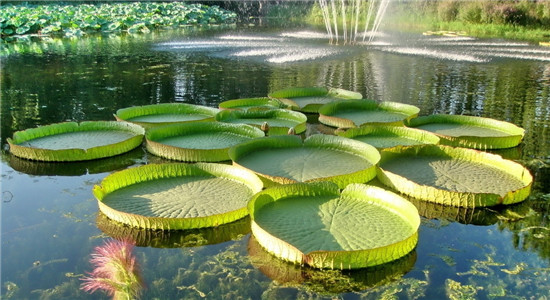
The giant water lily can bear a weight of sixty to seventy kilograms without sinking. This astonishing load-bearing capacity is unmatched by other aquatic plants. If a child sits on the leaf surface, it is just like riding a round little boat, leisurely and carefree, and great fun.
Introduction to the Giant Water Lily
The giant water lily is a plant in the genus Victoria of the water lily family (Nymphaeaceae). It is a large perennial or annual floating-leaf herbaceous plant, with an upright short rhizomatous stem and well-developed adventitious fibrous roots that are white. It has huge, peculiar disc-like leaves floating on the water surface, very spectacular, and is famous worldwide for its delicately changing flower colors and strong fragrance.
It blooms in summer, with solitary flowers floating on the water surface, initially white, turning deep red the next day and then withering. It is native to the tropical regions of South America, mainly produced in Brazil, Bolivia and other countries. It requires a high-temperature, high-humidity environment with plenty of sunlight to grow and develop. The suitable temperature for growth is 25-35°C; when below 20°C, the plant stops growing.
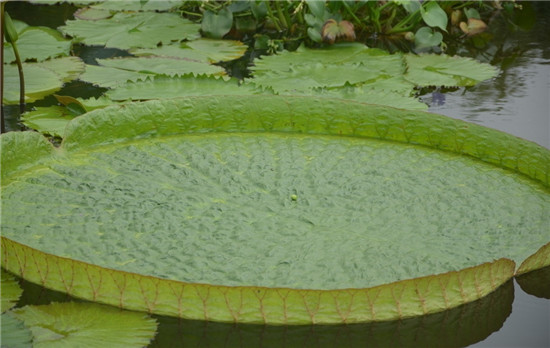
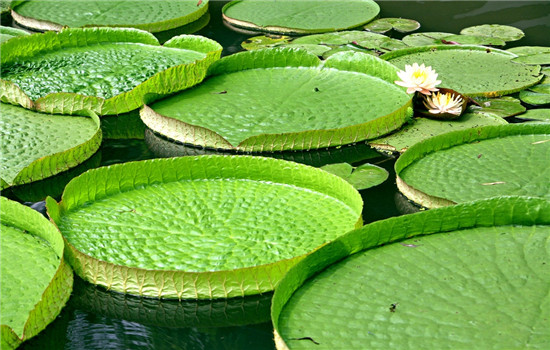
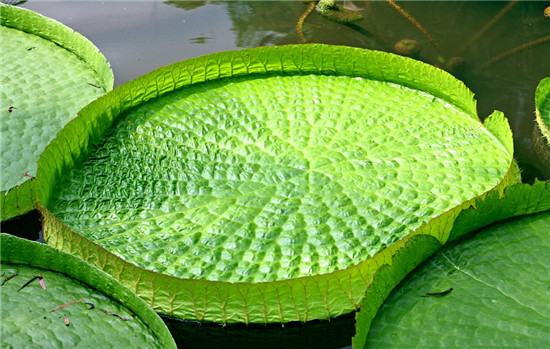
It is also the collective name for plants of the genus Victoria. All plants in this genus are famous tropical aquatic garden ornamental plants, with the largest leaves of any aquatic plant in the world, with a diameter of more than 3 m. The leaf surface is smooth and the leaf margins curl upward, like emerald-green large jade plates floating on the water surface. Because its leaf veins differ in structure from those of ordinary plants, forming rib-like shapes resembling an umbrella frame, it has great buoyancy, and can bear a weight of sixty to seventy kilograms without sinking.
Characteristics of the Giant Water Lily
The giant water lily is a famous tropical aquatic garden ornamental plant in the water lily family (Nymphaeaceae), with the largest leaves of any aquatic plant in the world, with a diameter of more than 3 m. The leaf surface is smooth and the leaf margins curl upward, like emerald-green large jade plates floating on the water surface. Because its leaf veins differ in structure from those of ordinary plants, forming rib-like shapes resembling an umbrella frame, it has great buoyancy.
It is a typical tropical plant, fond of high temperatures and high humidity, with extremely poor cold tolerance. When the temperature drops to 20°C, growth stagnates. When the temperature drops to around 14°C, it suffers cold damage; when the temperature drops to around 8°C, it dies from the cold. In Xishuangbanna in normal years, it can overwinter in the open field and produce seeds, and the seeds produced can propagate offspring, but in particularly cold years it suffers frost damage.
The giant water lily is renowned for its huge, hall-like disc leaves and beautiful, strongly fragrant flowers. The leaf-viewing period is 150 days, and the flower-viewing period is 90 days. If the giant water lily is combined with lotus, water lilies and other aquatic plants in a layout, it will form a perfect and unique water landscape that is unforgettable. Today the giant water lily is an indispensable ornamental plant in modern garden waterscapes, and also a precious flower essential to urban flower exhibitions, possessing both very high ornamental value and the ability to purify water.
How to Grow the Giant Water Lily
Division Propagation
Division time: best done in early spring (February or March) after the soil thaws.
Division method: Take the mother plant out of the flower pot, shake off excess potting soil, separate the tangled root system as much as possible, and cut it open with a sharp knife into two or more plants. Each divided plant must carry a considerable amount of roots, and its leaves should be properly pruned to help it survive.
Potting and disinfection: Soak the divided small plants in a 1500-fold dilution of chlorothalonil for five minutes, then take them out and let them dry, and they can be potted. Alternatively, immediately after potting, drench the roots with chlorothalonil.
Management after division: After dividing and potting, drench the roots or water thoroughly once. Because its root system is greatly damaged and its water-absorbing capacity is very weak, it takes about 3-4 weeks to recover and sprout new roots. Therefore, within 3-4 weeks after division, watering should be controlled to avoid root rot. However, the transpiration of its leaves is not affected, so to maintain the water balance of the leaves, the leaf surface needs to be misted 1-3 times a day (more misting when the temperature is high, less or none when the temperature is low). Do not apply fertilizer during this period either. After division, also beware of excessively strong sunlight, and keep it in a shade shed for care.
Bulb Division Propagation
The underground parts of some flowers include bulbs, corms, tubers, tuberous roots, etc. After these bulbs, corms, tubers or tuberous roots have grown underground for a year, small bulbs will grow around them. Simply separate these small bulbs and plant them. The operation is simple and management is convenient. Just note that when planting, do not plant the small bulbs too deep: usually the thickness of the covering soil should not exceed one times the diameter of the bulb.
Temperature management: Because it is native to temperate or warm temperate regions, its temperature requirements are not too strict. As long as the temperature is not below 0°C, it can overwinter safely; as long as it is not above 33°C, it can get through summer smoothly. The most suitable growth temperature is 15-30°C.
Light management: It needs sufficient direct sunlight to grow normally. If the light is insufficient, or if it is kept in a shaded environment, the leaves will grow thin and yellow, the branches or petioles will be slender and the internodes will elongate, putting it in a state of leggy growth, with small petals, pale flower color, or even no flowers at all.
The above is the entire content of the detailed introduction to the giant water lily that I have summarized for everyone. I hope this article can help you. Please also continue to follow us.
The operation is simple and management is convenient. Just note that when planting, do not plant the small bulbs too deep: usually the thickness of the covering soil should not exceed one times the diameter of the bulb.Temperature management: Because it is native to temperate or warm temperate regions, its temperature requirements are not too strict. As long as the temperature is not below 0°C, it can overwinter safely; as long as it is not above 33°C, it can get through summer smoothly. The most suitable growth temperature is 15-30°C.
Light management: It needs sufficient direct sunlight to grow normally. If the light is insufficient, or if it is kept in a shaded environment, the leaves will grow thin and yellow, the branches or petioles will be slender and the internodes will elongate, putting it in a state of leggy growth, with small petals, pale flower color, or even no flowers at all.
The above is the entire content of the detailed introduction to the giant water lily that I have summarized for everyone. I hope this article can help you. Please also continue to follow us.