A Detailed Guide to Planting and Cultivating Boxwood Trees
Boxwood, also known as Wulongmu or Evergreen, is an evergreen plant and a terrestrial plant. Next, let us take a look at the planting and cultivation of boxwood.
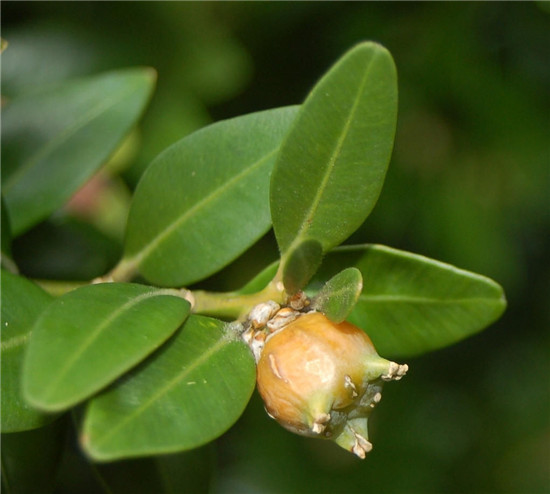
Boxwood is a shrub or small tree, 1-6 m tall; branches cylindrical, with longitudinal ridges, grayish white; branchlets four-angled, entirely covered with short soft hairs or hairless on two opposite sides, internodes 0.5-2 cm long.
Leaves leathery, broadly elliptic, broadly obovate, ovate-elliptic or oblong, mostly 1.5-3.5 cm long, 0.8-2 cm wide, apex rounded or obtuse, often with a small notch, not sharp, base rounded or acute or wedge-shaped, leaf surface glossy, midvein raised, often with fine hairs on the lower half, lateral veins distinct, midvein on the underside flat or slightly raised, often densely covered with white short linear cystoliths on the midvein, lateral veins absent, petiole 1-2 mm long, hairy on the upper side.
Inflorescences axillary, capitate, flowers dense, inflorescence axis 3-4 mm long, hairy, bracts broadly ovate, 2-2.5 mm long, hairy on the back; male flowers about 10, sessile, outer sepals ovate-elliptic, inner sepals nearly circular, 2.5-3 mm long, hairless, stamens including anthers 4 mm long, sterile pistil with a club-shaped stalk, enlarged at the tip, about 2 mm high (about 2/3 the length of the sepals or nearly equal to the sepals); female flower sepals 3 mm long, ovary slightly longer than the style, hairless, style thick and flat, stigma obcordate, extending down to the middle of the style. Flowering period March. Capsule nearly spherical, 6-8 (-10) mm long, persistent style 2-3 mm long. Fruiting period May-July.
Growth Habits of Boxwood
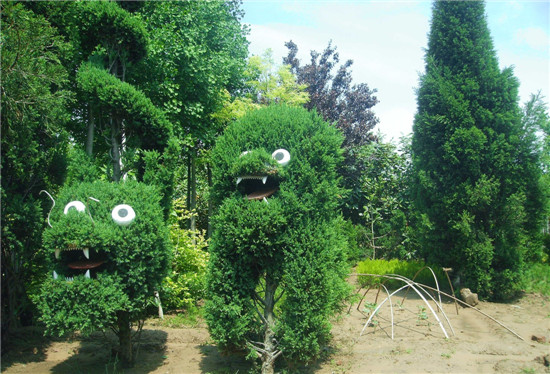
Boxwood mostly grows in high mountains and steep cliffs, as well as in mountainous and rocky places. It is shade-tolerant and prefers a warm, humid climate, mostly growing in valleys, by streams, and under forests, at an altitude of 1200-2600 m, a terrestrial woody plant. Shade-tolerant and light-loving, it can maintain good growth under general indoor and outdoor conditions.
In long-term shaded environments, although the leaves can remain green, it easily leads to leggy or weakened branches. It likes moisture and can tolerate continuous rainy weather for about one month, but dislikes long-term waterlogging. It is drought-tolerant; as long as the surface soil or potting soil does not dry out completely, there will be no abnormal signs.
Heat-tolerant and cold-tolerant, it can withstand summer sun exposure and severe cold of around minus 20°C, but in summer when it is hot and humid, more ventilation and light transmission are needed. It is not demanding about soil, with loose and fertile sandy loam being best; for potting, vermiculite, peat or soil can also be used in combination, and it has strong alkaline tolerance.
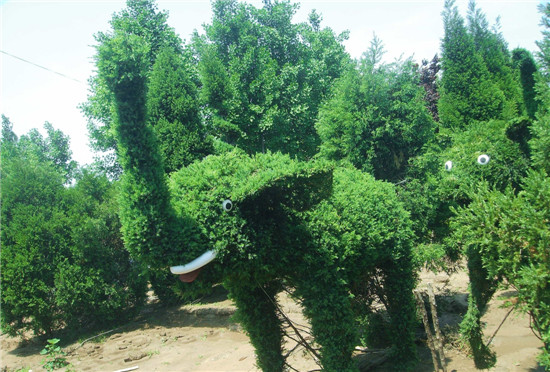
It has extremely strong tillering ability, tolerates pruning, and is easy to shape. It can be repotted or transplanted in all four seasons; when transplanting in summer or when new buds sprout, attention should be paid to shade and preventing the potting soil from becoming too wet, otherwise it easily causes the original leaves to drop. In autumn, after sufficient light and entering dormancy, the leaves can turn red.
Propagation Methods of Boxwood
Seed Propagation
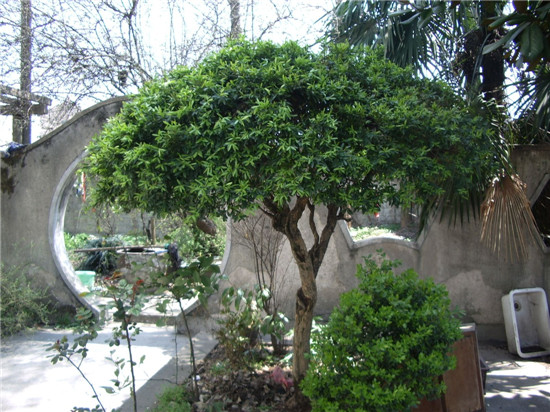
Boxwood seeds mature around September-October. After maturity, harvest and dry them in the sun, then sow them in deep, fertile open ground, allowing them to be exposed to frost, freezing and sunlight. In early spring of the next year, after applying a relatively concentrated liquid fertilizer, cover with a thin layer of soil and keep the soil moist. By the Spring Equinox, they begin to germinate and grow into seedlings. Boxwood seedlings grow slowly; generally, when they grow to 3-4 cm, they can be divided and transplanted. Seedlings must undergo 4-5 years of vegetative growth before they can bloom and bear fruit. Generally, in the years after flowering, flower growers always remove all the flower buds to reduce nutrient consumption, promote vegetative growth, take their natural growth habit, and with slight pruning, they quickly form a spherical umbrella-shaped crown and begin to have ornamental value.
Cutting Propagation
Cuttings are the main method of propagating boxwood. The time should be March in spring or August in autumn, using the stem of a seedling as the cutting, about 7 cm long with the terminal bud, with all lower branches and leaves cut off and upper leaves retained. To promote rooting of the cuttings, a 0.01010 naphthaleneacetic acid aqueous solution can be used; soak the base of the cutting about 2.5 cm long for 15-20 hours, then insert it into sandy soil to a depth of 3 cm. After insertion, spray once with a fine-holed watering can until thoroughly watered. At the same time, set up a shed to block sunlight, keep the soil moist, and frequently spray mist onto the leaves to increase air humidity and keep the leaf celery from wilting.
The above is the complete content of my summary on the planting of boxwood and the cultivation of boxwood. I hope this article can help everyone. Please also continue to follow us.