How to Care for and Manage Potted Pearl Boxwood
Pearl boxwood, also known as fish-scale boxwood, is an evergreen small shrub in the family Buxaceae. It prefers cool, humid climates and mostly grows on high mountain tops. Let's learn about the care and management of pearl boxwood below.
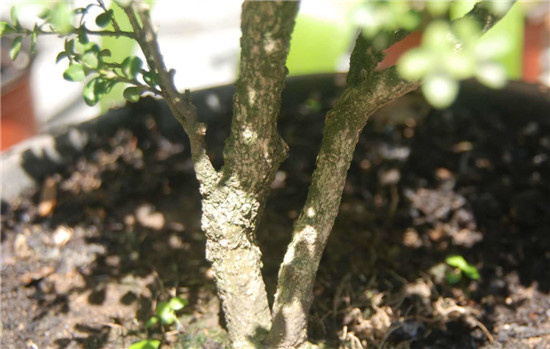
Pearl boxwood is a typical high-mountain evergreen tree species. Its wood is fine and solid, and its leaves are leathery and glossy. It grows rather slowly and consumes little water. Cold tolerance, drought tolerance, and shade preference are its most notable characteristics.
Years of research and practical experience have proven that the main reason wild pearl boxwood is difficult to keep alive after being collected from the mountains is the sudden change in its special living environment.
Like other living organisms, pearl boxwood has formed its own unique growth inertia over its long ecological history. That is, in a specific natural environment, it is accustomed to regulating the adaptive functions of its cells and tissues according to its own needs and ways, absorbing external nutrients to maintain its life and growth. Changing this inertia can easily lead to poor growth or even death. The principle is almost no different from what we humans commonly call "altitude sickness" or "not adapting to the climate and water."
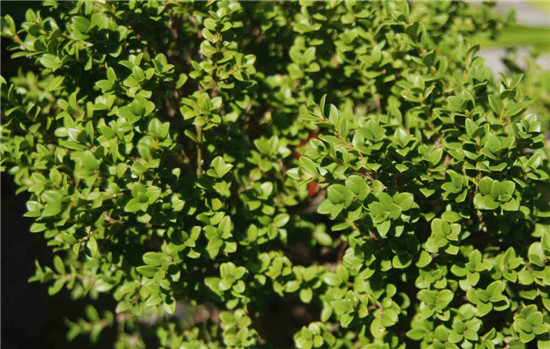
Generally speaking, depending on the age of the wild pearl boxwood and the degree of root damage, within several months or even two to three years after transplanting, as long as appropriate moisture is provided and careful care is given, the branches and leaves will not show much change on the surface. The younger the tree, the stronger the vitality of the root cells, and the slightly greater the chance of survival.
But even if it survives, it often shows slow greening in spring, a long dormant period, and sparse, weak branches and leaves, mostly remaining in a state of being stunted but not dead. The older the tree, the faster the root system shrinks. Although the nutrients in the trunk can still keep the leaves from withering immediately, it is ultimately difficult to change its fate of death. If new roots occasionally appear, attention should be paid to controlling moisture and providing appropriate light to help preserve and strengthen the roots. By no means should fertilizer be applied hastily.
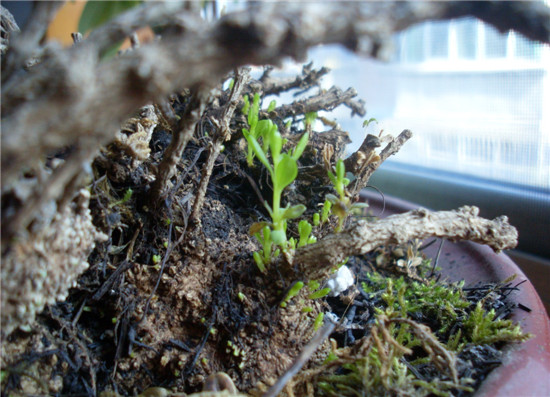
Is Pearl Boxwood Easy to Grow?
To grow it well, one must "understand its nature and follow its principles." That is to say, one must spray water on its leaves two or three times a day. If the weather is not dry, it may be sprayed less or not at all. Pearl boxwood does not tolerate pruning, so of course it cannot be treated the same as elm stumps or Japanese privet. It can only be allowed to grow naturally, and when necessary, a coir rope can be used to tie it lightly into shape.
Under normal circumstances, if a large pot is being switched to a small pot or a deep pot to a shallow pot, removing part of the roots will not affect survival, and the pot can be repotted in all four seasons. After National Day each year, the flower buds should be removed promptly, otherwise it will affect the sprouting of new buds the following year. This is also an important part of successfully acclimating pearl boxwood. Timely control of pests and diseases is also key to caring well for pearl boxwood, as pests and diseases have a great deal to do with branch dieback in pearl boxwood.
Pruning Pearl Boxwood
Pearl boxwood has extremely strong branching ability, and new buds may sprout almost anywhere. If it is allowed to grow naturally without suppression, it will inevitably affect the tree's shape and reduce its ornamental value. Therefore, it should be pruned in a timely manner to maintain a graceful tree shape and appropriate proportions. But remember: branch pruning should be done after the plant enters dormancy in autumn. Except for newly sprouted tender branches, pruning during the peak growing period in midsummer can easily cause branch tips to shrink.
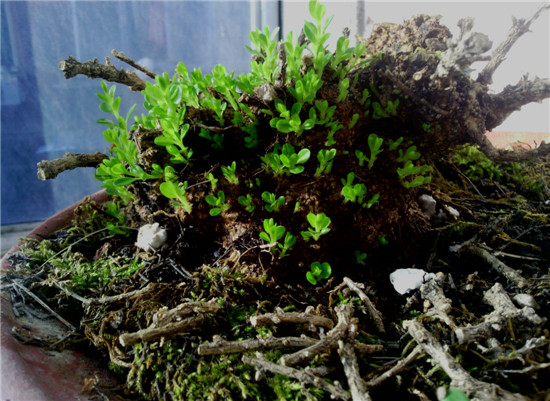
Pinching: For branches that grow too quickly, in order to suppress their height growth and encourage side branches to develop flat and spread out, the tender tips of the branch shoots can be pinched off.
Removing flower buds: For older plants, after August to September each year, some bead-shaped flower buds often appear on the branches or branch ends. If there are too many, the ones growing on the branches and stems should be removed at any time, while those at the branch ends can be kept for flower viewing. This can avoid consuming too many nutrients and ensure that the plant's branches and leaves are lush.
Branch pruning: Pearl boxwood often produces new branches at the base of the trunk. To maintain its attractive shape, attention must be paid to removing them appropriately. The pruning method should be decided according to the tree shape. For example, for a cloud-layer shape, the branches should be pruned into a flat form. Generally, dead branches, parallel branches, and crossing branches that detract from the appearance should be cut off.
The above is the full content of my summary for everyone on managing potted pearl boxwood and caring for potted pearl boxwood. I hope this article can help everyone. Please also continue to follow us.