Characteristics and Introduction of Littleleaf Boxwood: A Comprehensive Guide to Knowing It
Littleleaf boxwood (Buxus sinica var. parvifolia) is an evergreen shrub or small tree of the Buxaceae family. It can maintain good growth under ordinary indoor and outdoor conditions. Next, let us learn about littleleaf boxwood potted cultivation together.
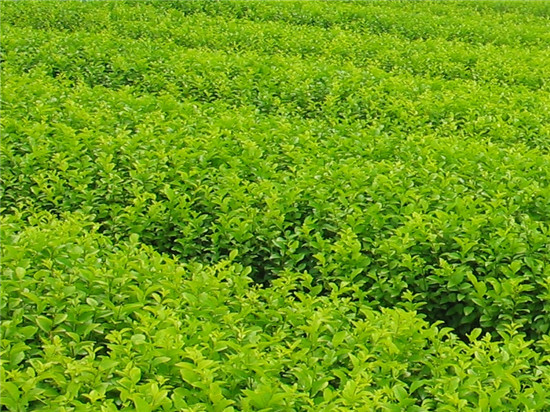
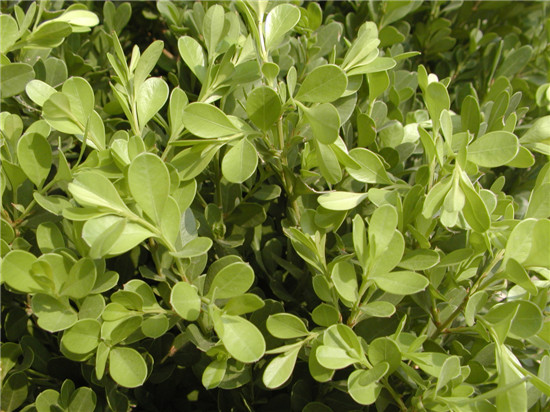
The trunk of littleleaf boxwood is grayish-white and smooth, with densely growing branches that are four-angled. The leaves are opposite, leathery, entire, elliptical or obovate, with a rounded or slightly notched tip, bright green on the surface and yellow-green on the underside. The flowers are clustered in the leaf axils or at the branch tips, opening from April to May, and are yellow-green in color.
This genus also includes the Chinese boxwood (Buxus sinica), with spoon-shaped or oblanceolate leaves that are dark green and glossy on the surface; and the pearl boxwood (Buxus sempervirens), an evergreen shrub with glossy leaves. Both of these two species have graceful tree forms and are precious species for making bonsai. They are shade-tolerant and light-loving, and can maintain good growth under ordinary indoor and outdoor conditions.
In long-term shaded environments, although the leaves can remain emerald green, the branches are prone to leggy growth or weakening. It grows in areas at altitudes of 1200 m to 2600 m, mostly in valleys, beside streams and under forests. At present, it is cultivated in all provinces for ornamental use. The nearly spherical capsule has short horn-like protrusions, and the fruit ripens in July, splitting into three valves when ripe.
Ecological Characteristics of Boxwood
1. Shade-tolerant and light-loving, it can maintain good growth under ordinary indoor and outdoor conditions. In long-term shaded environments, although the leaves can remain emerald green, the branches are prone to leggy growth or weakening.
2. It likes moisture and can withstand about one consecutive month of rainy weather, but dislikes long-term waterlogging.
3. It is drought-tolerant; as long as the surface soil or potting soil does not dry out completely, it shows no abnormal symptoms.
4. It is heat-tolerant and cold-tolerant, able to withstand summer sun exposure and severe cold of around minus 20°C, but in summer when it is hot and humid, it should be given more ventilation and light.
5. It is not demanding about soil, with loose and fertile sandy loam being best. For potted cultivation, vermiculite, peat or soil can also be used in combination. It is relatively strongly alkali-tolerant.
6. It has very strong tillering ability, is tolerant of pruning, and is easy to shape.
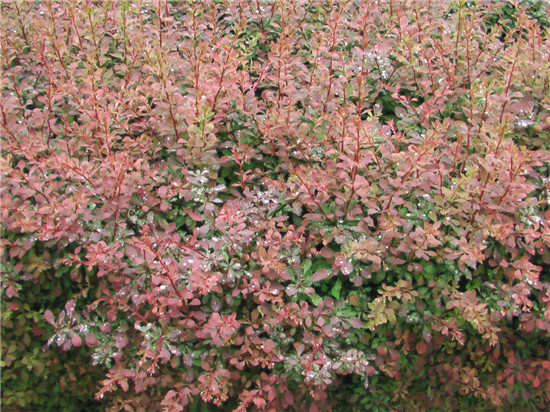
7. In autumn, after receiving sufficient light and entering dormancy, the leaves can turn red.
8. It can be repotted or transplanted in all four seasons. When transplanting in summer or when new buds are sprouting, attention should be paid to shading and preventing the potting soil from becoming too wet, otherwise the original leaves are prone to dropping.
How to Grow Littleleaf Boxwood Bonsai
Watering: Boxwood likes moisture, and bonsai need frequent watering to keep the potting soil moist, but waterlogging must be avoided. During high-temperature periods in summer, water in the morning and evening, and also spray water on the leaf surfaces.
Fertilizing: During the growing period from May to August, applying decomposed dilute cake fertilizer water 2-3 times is sufficient. In winter, apply base fertilizer once, using decomposed barnyard manure or dried cake fertilizer crumbs, either is fine.
Pruning: During the growing period, promptly cut off leggy branches, overlapping branches and excess branches that affect the tree shape. Boxwood sprouts relatively quickly. Generally, after new shoots appear, cut off the first 1-2 nodes at the tip to prevent leggy growth. After boxwood bears fruit, remove it promptly to avoid consuming nutrients and affecting the growth vigor of the tree.
Repotting: Generally carried out once every 2-3 years, with the time before spring sprouting being best. In conjunction with repotting, cut off some old roots and overly long or dense root systems, replace 1/2 of the old soil, and fill in fertile, loose culture soil to promote root development.
Pest and disease control: The main pests of boxwood are scale insects and boxwood loopers. Scale insects can be killed by manual brushing, or sprayed with 80% dichlorvos at 1500 times dilution; boxwood loopers can be sprayed with 80% trichlorfon wettable powder, or with 40% omethoate at 1000-2000 times dilution. The main disease is sooty mold, which can cause leaf drop. The key to prevention and control is to eliminate scale insects and frequently spray water on the leaf surfaces to wash off dust so that the plant grows well.
The above is the full content of the characteristics of littleleaf boxwood and the introduction to littleleaf boxwood that I have summarized for everyone. I hope this article can help you. Please also continue to follow us.