What are the soil culture techniques and methods for lucky bamboo?
Lucky bamboo is a familiar plant to everyone, right? You can often see a lucky bamboo placed beside the TV cabinet in every household. Next, let's take a look at the soil culture methods for lucky bamboo.
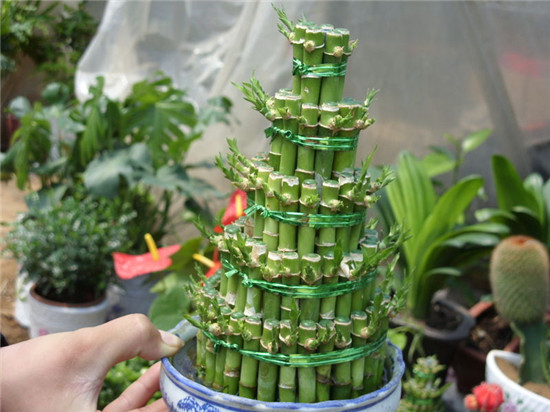
Lucky bamboo likes shady, humid and high-temperature conditions, is tolerant of shade, waterlogging, strong fertilizer and cold; it prefers a semi-shaded environment. It grows well in well-drained sandy soil or semi-muddy sand and alluvial clay soil. The suitable growing temperature is 20-28°C, and it can tolerate low temperatures of 2-3°C, but in winter it must be protected from frost.
In summer and autumn, the high-temperature and humid season is very favorable for the growth of lucky bamboo and is its best growing period. It is not strict about light and grows well in bright scattered light. Too strong light or exposure to the sun can cause leaves to turn yellow, lose green color and grow slowly. Therefore, when planting in the field, a shade net canopy 1.7-1.8 m high should be set up, with 75% shading rate as appropriate, to create a semi-shaded, scattered-light environment.
Especially from April to September, avoid direct strong light, sun exposure or excessive drought, otherwise the leaf surface is likely to become rough, scorched and weak in growth, and the leaves lack luster, reducing ornamental value. During the growing season, the soil should be kept moist frequently, and water should often be sprayed or sprinkled on the leaf surface to increase air humidity. In winter, pay attention to cold protection and frost protection. Below 10°C the leaves will turn yellow and wither. At this time, the soil should be alternately dry and moist, but it should not be droughty or too wet. Reduce watering and stop fertilizing.
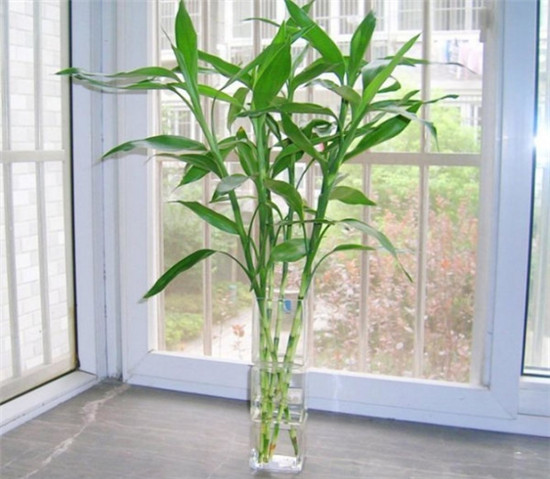
Soil culture methods:
1. It can be cultivated in loose, fertile rice fields or on slopes.
2. It grows well in sandy soil, but in winter it must be protected from frost.
3. The soil should be kept moist frequently; after heavy rain, accumulated water should be drained to prevent lodging.
4. Lucky bamboo has strong growth and strong root and bud sprouting ability, and can be inserted into a sand bed or semi-muddy sandy soil.
Yellowing leaves are caused by improper cultivation and management. There are the following situations and solutions:
1. Water yellowing: indicates excessive watering, so we should add some clay.
2. Drought yellowing: leaf tips wither and fall off, indicating insufficient water, so it needs sufficient watering.
3. Fertilizer deficiency yellowing: the leaf color becomes lighter, appearing yellow or pale green, indicating insufficient fertilizer, so fertilization is needed.
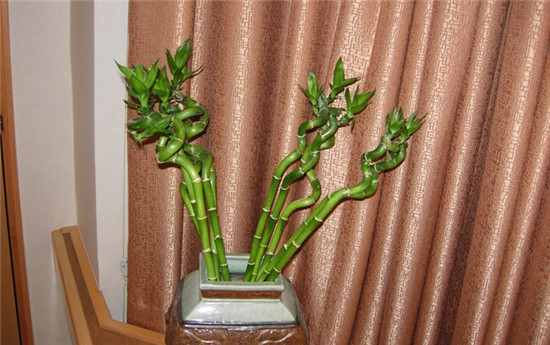
The role of lucky bamboo in home life
First, home beautification. Placing plants at home has become fashionable, but most people choose flowers or trees, and relatively few choose bamboo. However, it is undeniable that planting a bamboo can give people a sense of freshness.
Second, a beautiful symbolism. I believe many people grow lucky bamboo to seek a beautiful symbolism, hoping that their future life can be "flowers bloom in wealth, bamboo reports peace," and that life will become better and better.
Third, it can show a noble pursuit, giving oneself and others a special meaning. In particular, bamboo has represented integrity since ancient times and can show a kind of backbone.
Fourth, air purification. Compared with relative flowers and trees, bamboo's function of absorbing exhaust gas and releasing oxygen is no less, so it has a strong air-purifying effect.
The above is all the content I have summarized for you on the causes of yellowing leaf tips in spider plants and how to deal with yellowing leaf tips in spider plants. I hope this article can help everyone. Please also continue to follow us.