How to Grow a Jade Plant (Crassula arborescens): A Detailed Guide to Jade Plant Care
The jade plant has a tall, elegant crown, with stems and leaves that stay emerald green all year round, and white flowers that grow at the tips, making it very refined and distinctive. It is very suitable for decorating the home. Below, let's look at how to grow a jade plant:
Basic information about the jade plant:
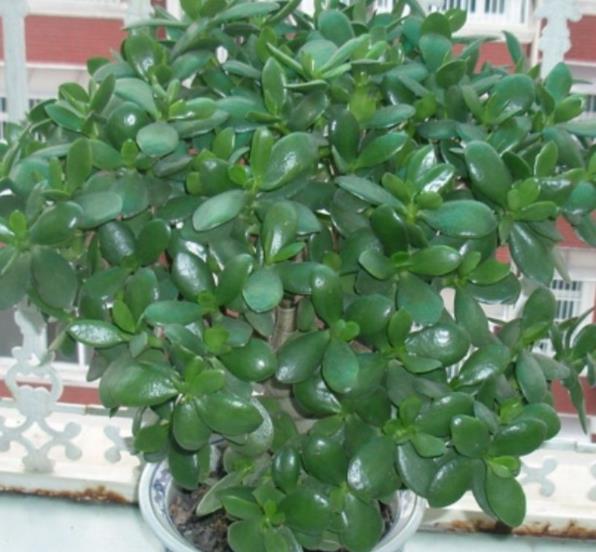
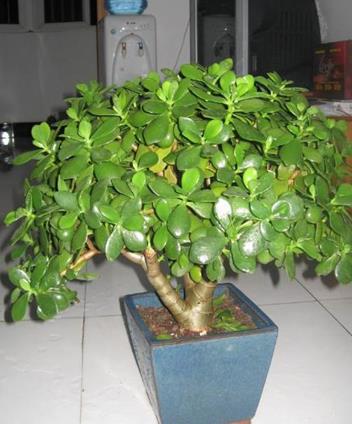
Jade plant (scientific name: Crassula arborescens Willd.), also called mu babao, babao, jade tree, etc. Its branches and leaves are thick and fleshy, green in all four seasons, with unusual leaf shapes and a dignified plant form. It is easy to cultivate and simple to manage. It is suitable for pot culture and can be placed on a balcony or as an accent on an indoor side table, appearing very delicate and elegant. Its crown is tall and elegant, its stems and leaves are emerald green, and it bears white flowers at the tips, making it very refined and distinctive. If matched with a pot stand and gravel and made into a small bonsai, it is suitable for pot culture, and can also be trained into the appearance of an old tree stump, making it even more attractive when decorating a tea table or desk.
How to grow a jade plant:
1. Soil: The jade plant has low soil requirements. It is best to use a growing mix of 2/3 leaf mold and 1/3 garden soil mixed with a small amount of river sand. A little hoof shavings or other slow-release fertilizer can be placed at the bottom of the pot as a base fertilizer. To help with drainage, some crushed stone or tiles should also be placed at the bottom of the pot.
2. Watering: The jade plant has a very strong drought tolerance and can grow even under arid environmental conditions. Its root system is afraid of waterlogging. If water accumulates in the flower pot, or if it is watered too frequently, root rot is easily caused. Therefore, mastering watering is the key to cultivation.
3. Sunlight: In summer, when the jade plant is kept in a semi-shaded place, or given 50% shade, the leaf color will be even more beautiful. In spring and autumn, because the temperature is not very high, it should be given direct sunlight to help it carry out photosynthesis and accumulate nutrients. In winter, keep it indoors in a place with bright light.
4. Temperature: The optimum growing temperature for the jade plant is 15°C-32°C. It is afraid of high temperatures and muggy heat, and enters dormancy when the summer heat exceeds 33°C. It dislikes cold and frost, and the overwintering temperature needs to be kept above 10°C. It also enters dormancy when the winter temperature drops below 7°C. If the ambient temperature approaches 4°C, it will die from cold injury.
5. Fertilizing: The jade plant grows relatively quickly, so it should not be fertilized too much; otherwise, the branches and leaves will grow excessively, which instead affects the plant shape and reduces its ornamental value. During the growing season, applying dilute fertilizer water only 2-3 times is enough, and no fertilizing should be done in winter.
6. Pests and diseases: The main diseases of the jade plant are anthracnose and leaf spot. It can be sprayed with a 1000-fold solution of 70% thiophanate-methyl wettable powder. When indoor ventilation is poor, the stems and leaves are susceptible to scale insects, which can be killed by spraying with a 1000-fold solution of 40% omethoate emulsifiable concentrate.
7. Pruning: The jade plant grows relatively quickly, so attention should be paid to shaping and pruning to make its plant form more simple and elegant.
The jade plant is one of the commonly used green plants for home decoration. It has a beautiful plant form and is simple to grow. That is all for the introduction to jade plant care methods, and we hope it is helpful to everyone.
Yanzi Zhang, also called jade tree, jade plant, douban zhang, and thick face, belongs to the Crassulaceae family, genus Crassula. Yanzi Zhang is native to southern South Africa and is an evergreen small shrub. It likes warmth, tolerates drought, is not cold-tolerant, likes sunlight, also tolerates semi-shade, and grows well under scattered light conditions. It likes fertile sandy loam. The winter temperature should not be lower than 7°C.
Every spring, Yanzi Zhang needs repotting and fresh fertile soil. Yanzi Zhang grows relatively quickly. To keep the plant form full, fertilizer and water should not be excessive. During the growing period, water 2-3 times a week. In the hot and humid July-August, be sure to water less, as Yanzi Zhang itself is relatively drought-tolerant. In midsummer, if ventilation is poor or there is excessive water shortage, leaves may also turn yellow and fall off, so it should be kept in a semi-shaded place. After autumn begins, gradually reduce watering. When cultivated outdoors, avoid being washed by heavy rain; otherwise, too much water accumulates at the roots and root rot is easily caused. Each year when repotting or moving it indoors in autumn, attention should be paid to shaping and pruning while maintaining its form.
Yanzi Zhang is generally propagated by cuttings. During the growing season, cut off a plump and solid terminal branch 8-10 cm long, let it dry slightly, then insert it into a sand bed. It roots about 3 weeks after insertion. Single-leaf cuttings can also be used; after cutting the leaf, wait for it to dry, then insert it into a sand bed. It roots about 4 weeks after insertion, and when the roots are 2-3 cm long, pot it up.
Yanzi Zhang is simple and rough to cultivate and manage, but to achieve a full and robust plant form and have flowers all over the tree as scheduled, there is indeed some work to do. First, Yanzi Zhang grows relatively quickly. Each year from August to October, as autumn begins and it turns cooler, Yanzi Zhang begins to resume growth, so sunlight should be strengthened again and shade equipment removed. At this time, the principles for fertilizing and watering are the same as in spring. Before Frost's Descent, move it into the greenhouse and place it in a sunny indoor spot, stop fertilizing, and control watering, basically watering once every half month, with the amount of water being one-half of that in summer.
The jade plant is an evergreen small shrub. It likes warmth, tolerates drought, is not cold-tolerant, likes sunlight, also tolerates semi-shade, and grows well under scattered light conditions. It likes fertile sandy loam. Below, the editor will take everyone into the world of the jade plant. There are also appreciation pictures of the jade plant.
How to grow a jade plant
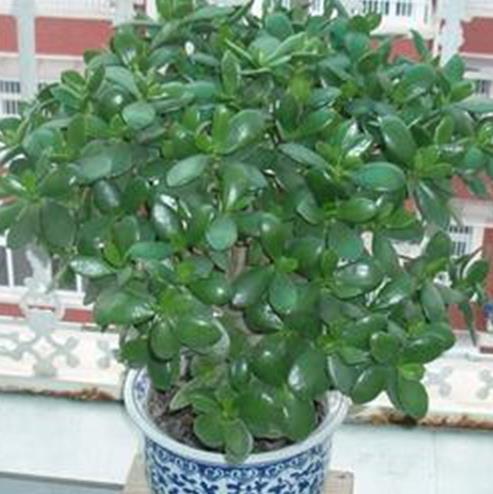
1. Humidity management for the jade plant: It likes a relatively dry air environment. If rainy days last too long, it is susceptible to infection by pathogens. It is afraid of rain, and the leaves should be kept dry at night. The optimum relative air humidity is 40-60%.
Jade plant temperature management
2. The optimum growing temperature for the jade plant is 15°C-32°C. It is afraid of high temperatures and muggy heat, and enters dormancy when the summer heat exceeds 33°C. It dislikes cold and frost, and the overwintering temperature needs to be kept above 10°C. It also enters dormancy when the winter temperature drops below 7°C. If the ambient temperature approaches 4°C, the jade plant will die from cold injury.
Jade plant temperature management - spacing
For the jade plant in summer: 1) Strengthen air convection so that the temperature inside the jade plant can be released; 2) Place it in a semi-shaded area, or give it 50% shade; 3) Mist the jade plant appropriately, 2-3 times a day. In winter: 1) Move it indoors to a place with bright light for care; 2) If the jade plant is outdoors, it can be wrapped with plastic film to overwinter, but every two days at noon when the temperature is relatively high, the film should be opened to let it breathe.
Jade plant light management
3. In summer, when the jade plant is kept in a semi-shaded place, or given 50% shade, the leaf color will be even more beautiful. In spring and autumn, because the temperature is not very high, it should be given direct sunlight to help it carry out photosynthesis and accumulate nutrients. In winter, keep it indoors in a place with bright light. If it is usually kept indoors, place it near southeast-facing doors and windows so it can receive light, and after every one month or one and a half months, move it outdoors for two months of care; otherwise, the leaves will grow thin and yellow, and new branches or leaf stalks will be slender with elongated internodes, in a leggy state.
Jade plant fertilizer and water management
4. The jade plant has a very strong drought tolerance and can grow even under arid environmental conditions, but this does not mean that it should not be given water or fertilizer. Its root system is afraid of waterlogging. If water accumulates in the flower pot, or if it is watered and fertilized too frequently, root rot is easily caused. The principle for fertilizing and watering the jade plant is "alternate dry and wet; when dry, dry it out thoroughly; do not water if it is not dry; when watering, water thoroughly." When fertilizing and watering, avoid getting the plant wet.
Shaping and pruning the jade plant
Some people believe that after the jade plant grows taller, it stops growing and shows leaf wilting, which is caused by insufficient nutrition and too small a pot. So they quickly change it to a larger pot and add more fertilizer such as meat soup, which instead causes the leaves to wilt and rot. The reason is not a nutrition problem, but is caused by too much watering, overly wet potting soil, poor drainage, or long-term drought followed by sudden excessive watering. At the same time, if the jade plant is kept indoors without sunlight for a long time and then suddenly moved outdoors and exposed to strong light, the same phenomenon can also occur.
1. Humidity management for the jade plant: It likes a relatively dry air environment. If rainy days last too long, it is susceptible to infection by pathogens. It is afraid of rain, and the leaves should be kept dry at night. The optimum relative air humidity is 40-60%.
Jade plant temperature management
2. The optimum growing temperature for the jade plant is 15°C-32°C. It is afraid of high temperatures and muggy heat, and enters dormancy when the summer heat exceeds 33°C. It dislikes cold and frost, and the overwintering temperature needs to be kept above 10°C. It also enters dormancy when the winter temperature drops below 7°C. If the ambient temperature approaches 4°C, the jade plant will die from cold injury.
Jade plant temperature management - spacing
For the jade plant in summer: 1) Strengthen air convection so that the temperature inside the jade plant can be released; 2) Place it in a semi-shaded area, or give it 50% shade; 3) Mist the jade plant appropriately, 2-3 times a day. In winter: 1) Move it indoors to a place with bright light for care; 2) If the jade plant is outdoors, it can be wrapped with plastic film to overwinter, but every two days at noon when the temperature is relatively high, the film should be opened to let it breathe.
Jade plant light management
3. In summer, when the jade plant is kept in a semi-shaded place, or given 50% shade, the leaf color will be even more beautiful. In spring and autumn, because the temperature is not very high, it should be given direct sunlight to help it carry out photosynthesis and accumulate nutrients. In winter, keep it indoors in a place with bright light. If it is usually kept indoors, place it near southeast-facing doors and windows so it can receive light, and after every one month or one and a half months, move it outdoors for two months of care; otherwise, the leaves will grow thin and yellow, and new branches or leaf stalks will be slender with elongated internodes, in a leggy state.
Jade plant fertilizer and water management
4. The jade plant has a very strong drought tolerance and can grow even under arid environmental conditions, but this does not mean that it should not be given water or fertilizer. Its root system is afraid of waterlogging. If water accumulates in the flower pot, or if it is watered and fertilized too frequently, root rot is easily caused. The principle for fertilizing and watering the jade plant is "alternate dry and wet; when dry, dry it out thoroughly; do not water if it is not dry; when watering, water thoroughly." When fertilizing and watering, avoid getting the plant wet.
Shaping and pruning the jade plant
Some people believe that after the jade plant grows taller, it stops growing and shows leaf wilting, which is caused by insufficient nutrition and too small a pot. So they quickly change it to a larger pot and add more fertilizer such as meat soup, which instead causes the leaves to wilt and rot. The reason is not a nutrition problem, but is caused by too much watering, overly wet potting soil, poor drainage, or long-term drought followed by sudden excessive watering. At the same time, if the jade plant is kept indoors without sunlight for a long time and then suddenly moved outdoors and exposed to strong light, the same phenomenon can also occur.