Key Points and Precautions for Peach Tree Pruning Techniques
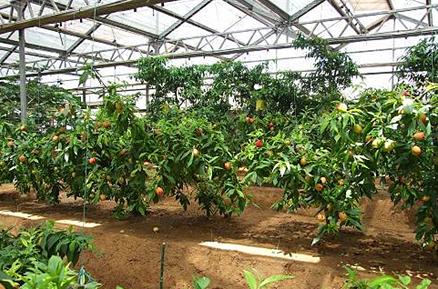
Peach trees have a strong demand for light, so timely pruning and cutting are needed to adjust the tree's vigor and its ventilation and light penetration. In spring, remove sprouts (buds and young shoots emerging on the back of the main trunk and branches). In summer, cut out upright, vigorously growing vegetative branches, as well as crowded branches and small branch groups inside the canopy. In autumn, continue thinning out water-sprout-type vegetative branches, and continue adjusting light and ventilation to promote the formation of plump flower buds. In winter, retain an appropriate number of fruiting branches according to tree vigor. Combine the pruning methods of thinning, leaving, heading back, and renewal cutting; young trees should maintain the leadership of the leading branch of each main branch (thin out competing branches); for mature trees entering full fruiting stage, it is necessary both to maintain the leadership of the leading branch of each main branch and to control the endless extension of the main branch extension shoots. Today, the editor will introduce peach tree pruning techniques to everyone.
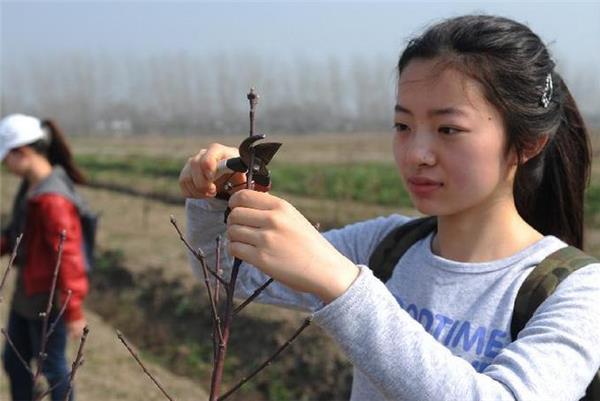
I. Key Points for Shaping and Pruning Young Trees
The commonly used tree form for peach trees is the three-main-branch open-center form. The trunk height for a grafted sapling is set at 60-70 cm, and there should be more than 5 plump buds 20-30 cm below the cut for the shaping zone. In the first year, select three well-spaced main branches, and none of the main branches should face due south. In the second year, select the first lateral branch on each main branch, and in the third year select the second lateral branch. Each year, cut the extension shoot of the main branch back to a length of 60-70 cm. To increase branching order, two pinching treatments can be carried out during the growing season. During the growing season, use methods such as branch bending to open the angle, control vigorous growth, and promote early fruiting. For four-year-old trees, some fruiting branch groups and fruiting branches should be developed on the main and lateral branches. In order to make the tree grow quickly and fruit early, winter pruning of young trees should mainly be light pruning.
II. Key Points for Pruning Trees in the Initial Fruiting Stage
The initial fruiting stage is generally from the third year to the sixth year after planting. The main task is to continue developing the scaffold branches, while also paying attention to developing fruiting branch groups.
1. Pruning of main branches: Select the extension shoot of the main branch, and head it back. At 50-60 cm along the extension shoot, if there is a good outer secondary shoot, the portion above the secondary shoot can be cut off, using the secondary shoot as the extension shoot, and then cut the secondary shoot back by 1/2. In positions lacking branches, cut them back to 20-30 cm to develop good fruiting branch groups, and the remaining vegetative branches can be thinned from the base.
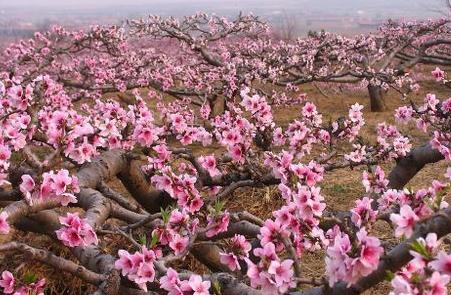
2. Pruning of lateral branches: For the lateral branches already selected, cut their extension shoots back by 1/2, thin out competing branches, and control their vigor. The tip of the extension shoot of the upper lateral branch must not be higher than or longer than the tip of the extension shoot of the main branch, always maintaining a subordinate relationship.
3. Development of fruiting branch groups: Large fruiting branch groups mostly use vigorously growing branches and can be formed in 3-4 years after heading back and thinning. Using generally vigorous branches, after heading back, 2-4 fruiting branches are produced to form a small fruiting branch group. Large, medium, and small fruiting branch groups should have branch group extension shoots, and their direction of extension should be constantly changed so that the branch groups grow upward in a curved manner, suppressing strong growth at the top and weak growth at the bottom, and preventing the branch axis from becoming too long and the lower part from becoming bare.
4. Pruning of fruiting branches: Generally, long fruiting branches retain 8-10 nodes of flower buds, medium fruiting branches retain 6-8 nodes of flower buds, short fruiting branches are headed back leaving 3-4 nodes, and bouquet fruiting branches are only thinned, not cut.
III. Key Points for Pruning Trees in the Full Fruiting Stage
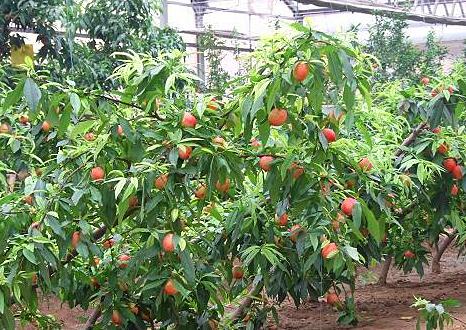
1. Pruning of main branches: In the early full fruiting stage, the extension shoot should be led by a strong branch, cut back to a length of about 30 cm. Also use secondary shoots to open the angle and slow the tree vigor. In the late full fruiting stage, select branches with a small angle and strong growth vigor to raise the angle, or cut back the branch tip.
2. Pruning of lateral branches: Lower weak ones are thinned out or cut back into large branch groups. For outer lateral branches with space to grow, use strong branches as leaders. At this stage, it is still necessary to regulate the principal-subordinate relationship between main and lateral branches. Summer pruning should focus on controlling vigorous branches, thinning dense branches, and improving ventilation and light conditions.
3. Pruning of fruiting branch groups: Adjust the density among branch groups by thinning branches and cutting back, so that they change from dense to sparse and from weak to strong, with renewal and rotation. Maintain good light. The general requirement is: "grow in staggered arrangement and separate to both sides, arrange evenly without shading, set angles and directions well, and distinguish subordinate relationships clearly."
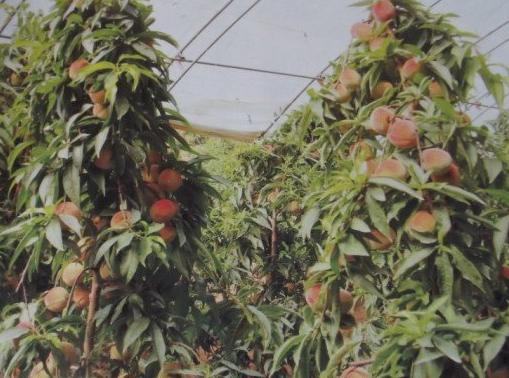
4. Pruning of fruiting branches: Pruning should be carried out according to the fruiting habits of the cultivar. For cultivars with large fruit but deep stem cavities and cultivars without pollen, such as Zaofengwang and other cultivars, fruiting on medium and short fruiting branches is preferable, so winter pruning should mainly be light pruning, first thinning upright branches on the back and overly dense branches, and after fruit set, prune again according to fruit set and branch density. For branches left long, some medium and short fruiting branches can also be stimulated, and these are precisely the main fruiting branches for the next year. In summer pruning, through repeated pinching, short branches are stimulated. When tree vigor begins to weaken, cut back promptly to stimulate strong branches and restore tree vigor. For cultivars with pollen and high fruit set rate on medium and long fruiting branches, heading back can be done according to the length and thickness of the fruiting branches. Generally, long fruiting branches are cut back to 20-30 cm, medium fruiting branches to 10-20 cm; those with a low starting node of flower buds are left shorter, and vice versa longer.
To properly adjust the relationship between growth and fruiting, sufficient reserve branches should be retained through single-branch renewal and two-branch renewal. Single-branch renewal and two-branch renewal should be applied simultaneously on the same tree. Generally speaking, single-branch renewal is preferable for young trees, and two-branch renewal is preferable for trees with weaker vigor.
Single-branch renewal: Long fruiting branches are appropriately lightly pruned and left long. After the tip fruits, the branch droops, the basal bud positions rise, and new shoots emerge. In the second year's pruning, cut back to the new shoot. This method is suitable when flower buds are borne at high nodes or when there are no reserve branches at the rear.
Two-branch renewal: On a two-year-old small branch group, select two branches, upper and lower. The upper long fruiting branch retains 7-8 flower buds for fruiting; the lower branch is headed back leaving only 3-4 buds at the base, so as to produce strong fruiting branches. In the second year's pruning, cut off the upper branch that has already fruited, leave two strong branches on the lower part, and then prune according to the above method.
In summer pruning, through repeated pinching, short branches are stimulated. When tree vigor begins to weaken, cut back promptly to stimulate strong branches and restore tree vigor. For cultivars with pollen and high fruit set rate on medium and long fruiting branches, heading back can be done according to the length and thickness of the fruiting branches. Generally, long fruiting branches are cut back to 20-30 cm, medium fruiting branches to 10-20 cm; those with a low starting node of flower buds are left shorter, and vice versa longer.To properly adjust the relationship between growth and fruiting, sufficient reserve branches should be retained through single-branch renewal and two-branch renewal. Single-branch renewal and two-branch renewal should be applied simultaneously on the same tree. Generally speaking, single-branch renewal is preferable for young trees, and two-branch renewal is preferable for trees with weaker vigor.
Single-branch renewal: Long fruiting branches are appropriately lightly pruned and left long. After the tip fruits, the branch droops, the basal bud positions rise, and new shoots emerge. In the second year's pruning, cut back to the new shoot. This method is suitable when flower buds are borne at high nodes or when there are no reserve branches at the rear.
Two-branch renewal: On a two-year-old small branch group, select two branches, upper and lower. The upper long fruiting branch retains 7-8 flower buds for fruiting; the lower branch is headed back leaving only 3-4 buds at the base, so as to produce strong fruiting branches. In the second year's pruning, cut off the upper branch that has already fruited, leave two strong branches on the lower part, and then prune according to the above method.