What are the effects and benefits of raw licorice root
[The effects and benefits of raw licorice root]
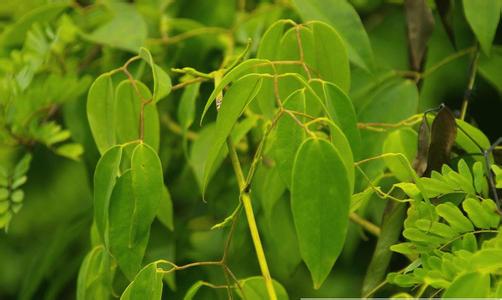
What is called raw licorice root is actually just licorice. Hospitals generally divide it into two types based on whether it has been processed - honey-fried licorice root and raw licorice root. For clearing heat and detoxifying, it is best used raw; for tonifying the middle and boosting qi, it is best honey-fried. When doctors write Chinese herbal prescriptions, they generally habitually write raw licorice as licorice, while honey-fried licorice is written as honey-fried licorice.
Licorice has a long history of use as medicine. As early as more than two thousand years ago, the Shennong Bencao Jing listed it as a superior-grade medicine. Tao Hongjing, a physician of the Southern Dynasties, honored licorice as the "National Elder" and said: "This herb is the king of all medicines; there are few classical formulas that do not use it." "National Elder" is a title for the emperor's teacher. The reason licorice was exalted as the "imperial teacher" of medicines is exactly as Li Shizhen explained in the Bencao Gangmu: "Among all medicines, licorice is the sovereign; it treats seventy-two kinds of mineral drug toxicity, neutralizes one thousand two hundred plant and wood toxins, and has merit in harmonizing all medicines, hence the title 'National Elder.'"
Licorice is neutral in nature and sweet in taste, entering all twelve meridians. It has pharmacological actions including detoxification, phlegm removal, pain relief, relief of spasms, and even anti-cancer effects. In traditional Chinese medicine, licorice tonifies the spleen and boosts qi, nourishes cough and moistens the lungs, relieves acute conditions and detoxifies, and harmonizes all medicines. Clinical application is divided into "raw use" and "honey-fried" use. Raw use mainly treats sore throat, painful boils and sores, gastrointestinal ulcers, as well as drug poisoning and food poisoning; honey-fried use mainly treats weakened spleen and stomach function, loose and thin stools, fatigue and fever, as well as cough and palpitations.
Western pharmacological research has found that licorice preparations have anti-inflammatory and anti-allergic functions, so in Western clinical practice they are mainly used as soothing agents. They relieve cough, remove phlegm, and treat sore throat and laryngitis; licorice or glycyrrhetinic acid has deoxycorticosterone-like effects and has good efficacy for chronic adrenocortical insufficiency; licorice preparations can promote the formation and secretion of gastric mucus, prolong the lifespan of epithelial cells, and have anti-inflammatory activity, and are often used in the treatment of chronic ulcers and duodenal ulcers; the flavonoids in licorice have anti-inflammatory, antispasmodic, and antacid effects; licorice is also one of the main ingredients of Ren Dan.
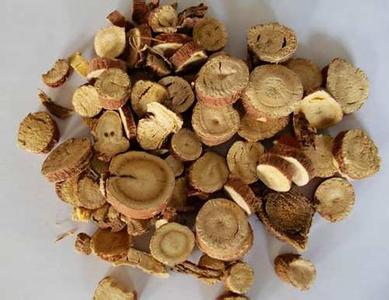
The effects of raw licorice root:
Tonifies the spleen and boosts qi, clears heat and detoxifies, removes phlegm and relieves cough, relieves acute pain, and harmonizes all medicines. Used for weakness of the spleen and stomach, fatigue and lack of strength, palpitations and shortness of breath, cough with copious phlegm, cramping pain in the abdomen and limbs, swollen boils and sores, and to mitigate the toxicity and harshness of drugs.
The actions of raw licorice root:
1. Used for heart qi deficiency, palpitations and severe palpitations, knotted or intermittent pulse, as well as spleen and stomach qi deficiency, fatigue and lack of strength, etc. For the former, it is often combined with cassia twig, such as in Guizhi Gancao Tang and Zhi Gancao Tang. For the latter, it is often used together with codonopsis and white atractylodes, such as in Sijunzi Tang and Lizhong Wan.
2. Used for painful boils and sores, sore throat, etc. It can be used alone, taken internally or applied externally, or used in combination. For painful boils and sores, it is often used together with honeysuckle and forsythia to jointly produce the effect of clearing heat and detoxifying, such as in Xianfang Huoming Yin. For sore throat, it is often used together with platycodon, such as in Jiegeng Tang. If there is pesticide or food poisoning, it is often decocted with mung bean or with saposhnikovia.
3. Used for asthma and cough. It can be used alone or in combination with other drugs. Examples include Erchen Tang for damp-phlegm cough; Linggan Wuwei Jiangxin Tang for cold-phlegm cough and wheezing; Sangxing Tang for dry-phlegm cough; Jiegeng Tang for lung abscess with cough and foul-smelling purulent phlegm caused by heat toxin; and Gancao Ganjiang Tang for cough with frothy saliva. In addition, it is also often used in combination for wind-heat cough, wind-cold cough, and heat-phlegm cough.
4. Used for stomach pain, abdominal pain, and calf muscle cramping pain, etc. It is often used together with peony, which can significantly enhance the therapeutic effect on cramping pain, such as in Shaoyao Gancao Tang.
5. Used to harmonize the harshness of certain drugs. For example, in Tiaowei Chengqi Tang, this product is used to moderate the purgative effect of rhubarb and mirabilite and their irritation to the gastrointestinal tract. In addition, in many prescriptions this product is commonly used to harmonize all medicines. Furthermore, in modern use for gastric and duodenal ulcers, it is often used together with cuttlefish bone and arcae concha.
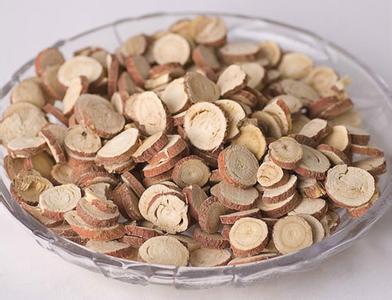
The benefits of drinking licorice soaked in water: beautifies the face and also tonifies the spleen
Licorice is good at tonifying the middle and boosting qi, mainly for internal damage from overwork, weak spleen qi, insufficient original yang, and lung qi deficiency and decline, etc. At such times it is often combined with codonopsis, astragalus, and other medicines, such as in Buzhong Yiqi Tang and Shengyang Yiwei Tang. Licorice is sweet in taste, and sweetness can relieve acute conditions, so it can treat internal urgency, acute pain, cramps, irritability, and all kinds of urgent conditions, such as the classical formulas Shaoyao Gancao Tang and Gancao Xiexin Tang. Licorice also has the effect of clearing heat and detoxifying, and has the effect of reducing boils and healing sores, and is often used clinically when there are heat-toxin sores and ulcers.
The functions and indications of licorice are to treat cold and heat pathogenic qi of the five zang and six fu organs, strengthen sinews and bones, promote muscle growth, double physical strength, and detoxify, and taken over a long time it lightens the body and prolongs life. Used raw, it drains fire and heat; used processed, it disperses exterior cold, removes sore throat, eliminates pathogenic heat, relaxes healthy qi, nourishes yin blood, tonifies the spleen and stomach, and moistens the lungs. Licorice is the most commonly used drug in clinical practice. Raw licorice can clear heat and detoxify, moisten the lungs and relieve cough, and harmonize the properties of all medicines; honey-fried licorice can tonify the spleen and boost qi, and its clinical dosage is especially large, with a large export volume. Besides medicinal use, licorice is also used in large amounts in food as an additive in pastries, and its sweetness is one hundred times that of sucrose. Western countries import large quantities of licorice and extract glycyrrhetinic acid from it to treat AIDS. Licorice for returning farmland to forest has an even stronger effect on soil and water conservation. Farmers in northern Shaanxi and people in the west report that scattering licorice seeds on the ground is enough for them to sprout, and its drought resistance is especially strong.
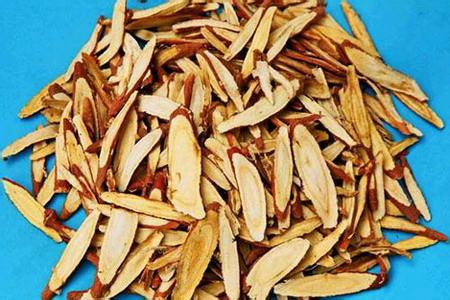
Contraindications of raw licorice root:
For clearing fire and detoxifying, it is best used raw; for tonifying the middle and relieving acute conditions, it is best used honey-fried. Licorice is sweet in taste and can promote dampness and congest qi, causing fullness in the middle, so those with exuberant dampness and chest and abdominal distension and vomiting should not take it. Long-term use of larger doses of licorice can also easily cause edema, so attention should be paid to this. "It is antagonistic to polygala and incompatible with the four substances euphorbia, genkwa, kansui, and sargassum." (Bencao Jing Jizhu). In addition, note that long-term administration has a tendency to cause water and sodium retention, slight shrinking of the adrenal glands, and a histologically hypoactive state; glycyrrhetinic acid can inhibit thyroid function in guinea pigs and has a tendency to lower basal metabolism.
What should be noted when taking raw licorice root?
The toxic and side effects of raw licorice root are relatively small, but if taken in large amounts over a long period, it can cause symptoms such as edema, elevated blood pressure, and reduced blood potassium, along with digestive disturbances such as abdominal distension and poor appetite. Therefore, occasionally steeping it in water to drink is fine, but it should not be used in large amounts over a long period.
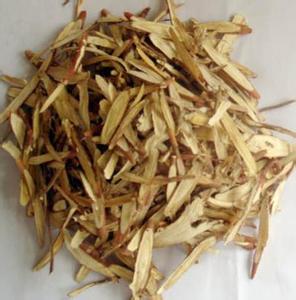
Suitable and unsuitable groups for raw licorice root
1. Suitable for people with gastric ulcers, duodenal ulcers, neurasthenia, bronchial asthma, and thrombotic phlebitis.
2. Those with dampness obstruction and middle fullness, nausea and vomiting, and edema and distension should not take it.
Its drought resistance is especially strong.
Contraindications of raw licorice root:
For clearing fire and detoxifying, it is best used raw; for tonifying the middle and relieving acute conditions, it is best used honey-fried. Licorice is sweet in taste and can promote dampness and congest qi, causing fullness in the middle, so those with exuberant dampness and chest and abdominal distension and vomiting should not take it. Long-term use of larger doses of licorice can also easily cause edema, so attention should be paid to this. "It is antagonistic to polygala and incompatible with the four substances euphorbia, genkwa, kansui, and sargassum." (Bencao Jing Jizhu). In addition, note that long-term administration has a tendency to cause water and sodium retention, slight shrinking of the adrenal glands, and a histologically hypoactive state; glycyrrhetinic acid can inhibit thyroid function in guinea pigs and has a tendency to lower basal metabolism.
What should be noted when taking raw licorice root?
The toxic and side effects of raw licorice root are relatively small, but if taken in large amounts over a long period, it can cause symptoms such as edema, elevated blood pressure, and reduced blood potassium, along with digestive disturbances such as abdominal distension and poor appetite. Therefore, occasionally steeping it in water to drink is fine, but it should not be used in large amounts over a long period.
Suitable and unsuitable groups for raw licorice root
1. Suitable for people with gastric ulcers, duodenal ulcers, neurasthenia, bronchial asthma, and thrombotic phlebitis.
2. Those with dampness obstruction and middle fullness, nausea and vomiting, and edema and distension should not take it.