How to Graft Jujube Trees? A Detailed Guide to Practical Grafting Techniques
Jujube grafting can still be carried out from July to September, and at this time, because the jujube branches grow vigorously and the graft buds develop fully, the grafting survival rate is relatively high.
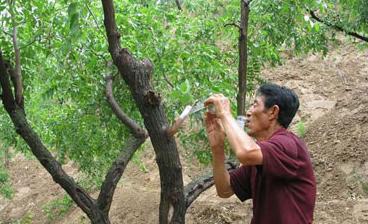
I. The Bark Grafting Method
Collecting Scions: Choose new jujube heads from 1- to 2-year-old superior varieties suitable for local cultivation, remove all bearing shoots and leaves, cut out the primary and secondary branches of the jujube head, and place them upright in a plastic bucket filled with clean water for later use.
Scion Preparation: Take 1 vigorous primary or secondary branch from the plastic bucket, cut it into segments 5-8 cm long, with the upper cut 0.5 cm from the bud eye and the lower cut no less than 5 cm from the bud eye. On the side facing away from the bud, cut away 1/2 of the thickness to a length of 2-3 cm; on the opposite side, use the same method to cut away 0.5 cm from the lower end of the scion, so that the scion forms a wedge shape with two sides of unequal length.
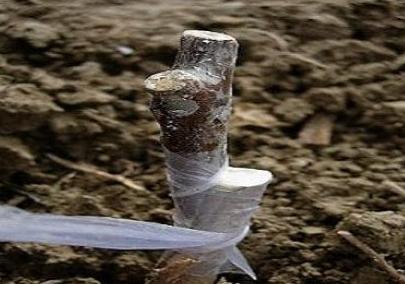
Grafting: Choose jujube seedlings more than one year old, or wild sour jujube seedlings, scattered seedlings, root-sucker seedlings, old nursery seedlings, etc. as rootstock. Cut the rootstock at the base 3-10 cm above the ground, insert the scion between the bark and cambium of the rootstock, leaving 0.1 cm of the top exposed, and apply a little soft mud to the joint between the scion and rootstock (be careful not to cover the bud eyes). Bind the rootstock and scion tightly with plastic tying strips, then use plastic film 8 cm long, 10 cm wide, and 0.006 mm thick to cover the rootstock and scion together, with a single layer at the top close against the bud eye and multiple layers at the bottom covering the part where the scion is inserted into the rootstock, and finally tie the scion-rootstock joint tightly with plastic tying strips.
Post-Grafting Management: 8-10 days after grafting, the scions sprout one after another, and most can break through the film. For particularly weak plants that have difficulty breaking through the film, use a sharp needle to slit the film at the sprouting point so that the scion sprouts can grow normally. After that, carry out normal sprout removal 2-3 times, and when the jujube seedlings reach 30 cm in height, set up straight stakes for support to prevent the wind from breaking the jujube seedlings.
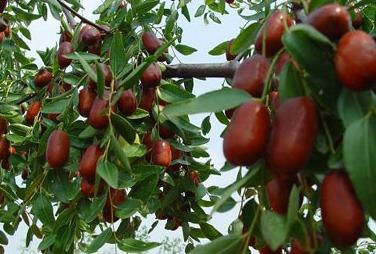
II. The Bud Grafting Method with Wood
Collecting Scions: Choose current-year branches of superior varieties that are robust, free of pests and diseases, with plump bud eyes, already lignified, and 0.4-0.8 cm in diameter. Cut them all into small sections 20-30 cm long, wrap them in wet sand or wet burlap, and sprinkle water promptly to keep them moist for later use.
Grafting: Choose sour jujube seedlings that are robust, free of pests and diseases, and with a base diameter of more than 0.5 cm as rootstock. First make a horizontal cut on the selected bud placement site on the rootstock, deep into the xylem, then cut a "T"-shaped interface 1.5-2 cm from top to bottom; or make a horizontal cut 0.5 cm above a plump bud on the scion, 1-1.5 cm deep into the xylem, then at 1-1.5 cm below the bud, use a knife to quickly cut downward from bottom to top to remove the graft bud, slightly shorter in length than the interface on the rootstock. Then place the graft bud into the "T"-shaped interface on the rootstock, align the cambium of the bud piece with the cambium of the rootstock (aligning at the top and one side), and bind tightly with plastic strips 0.5 cm wide.
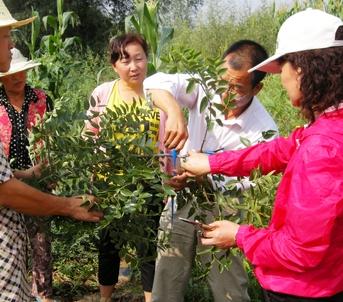
Post-Grafting Management: 15-20 days after grafting, check whether the grafted seedlings have survived (the method is: if the leaf stalk falls off at a touch when you feel the graft bud by hand, it has survived; if it does not fall off when touched by hand, it has not survived). For those that have not survived, replenish grafting can be done in time. In the spring of the following year, cut the rootstock 2-2.5 cm above the surviving scion and remove the plastic strips, so as to promote the survival and sprouting of the scion. During the growing season, spray pesticides regularly for management to prevent and control pests and diseases.
Now the editor will introduce the specific details.
The jujube tree is a tree species with a relatively low grafting survival rate. The author made slight improvements to the grafting measures, raising the survival rate of cleft grafting to more than 95%.
1. Selecting scions. Around early March, before the jujube trees sprout, choose one-year-old vigorous branches from the tree of the variety to be grafted, cut off the secondary branches, take the middle and upper parts, cut each two buds into one segment, and leave about 1 cm of branch above the upper bud of each segment, so that the lower end has sufficient internode length for cutting.
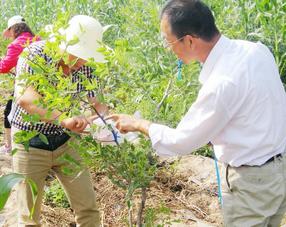
2. Scion treatment. Put the cut scions into a washed beverage bottle or other container, pour in 1%-2% sucrose water, place in a cool place and soak for 5-7 days, then rinse the scions repeatedly with clean water, wrap them tightly in plastic bags and store them in the refrigerator compartment, soak them again in sugar water for 1-2 days before grafting, rinse them clean, and keep them moist for later use.
3. Grafting. After mid-April, the tree body becomes active, and grafting can be carried out at this time. First wrap the scion with a 3 cm wide plastic film strip, leaving only the bud eye and the lower branch section of 2-3 cm exposed. If wrapping is done after inserting the scion, not only is the efficiency low, but it is also easy to displace the scion within the interface when wrapping the upper part of the scion, reducing the survival rate. Then cut the lower end of the scion into a wedge. The xylem of jujube branches is relatively hard, so the knife used must be very sharp to ensure a smooth cut surface. After cutting, wrap it in a washed wet towel to prevent air-drying. When grafting for seedling propagation, cut the rootstock at 5 cm above the ground. For top grafting to change varieties of jujube trees, choose branches with a branch age of 1-3 years, upward-growing branch vigor, and active growth, and graft at their lower part, leaving no other growing branches on the rootstock. Carry out the grafting operation conventionally, paying attention to aligning the cambium. After wrapping the interface tightly, twist the plastic film strip into a rope shape and tie it forcibly several times around the rootstock cut to minimize the gap between the cambium of the rootstock and the scion.
4. Post-Grafting Management. After grafting, the main thing to note is to promptly wipe off the sprouts on the rootstock. When the new shoots grow to about 20 cm, remove the wrapping material. If the interface has not yet healed completely, it can be wrapped again and removed after one month. After the scion survives, it grows vigorously, and the branches and leaves are heavy, so it is easy to break at the interface in windy and rainy weather. A sturdy small wooden stick should be tied at the interface in time for reinforcement, and removed after autumn. Other aspects can be managed conventionally.
The above is the introduction to jujube grafting given by the editor.
reduce the survival rate. Then cut the lower end of the scion into a wedge. The xylem of jujube branches is relatively hard, so the knife used must be very sharp to ensure a smooth cut surface. After cutting, wrap it in a washed wet towel to prevent air-drying. When grafting for seedling propagation, cut the rootstock at 5 cm above the ground. For top grafting to change varieties of jujube trees, choose branches with a branch age of 1-3 years, upward-growing branch vigor, and active growth, and graft at their lower part, leaving no other growing branches on the rootstock. Carry out the grafting operation conventionally, paying attention to aligning the cambium. After wrapping the interface tightly, twist the plastic film strip into a rope shape and tie it forcibly several times around the rootstock cut to minimize the gap between the cambium of the rootstock and the scion.
4. Post-Grafting Management. After grafting, the main thing to note is to promptly wipe off the sprouts on the rootstock. When the new shoots grow to about 20 cm, remove the wrapping material. If the interface has not yet healed completely, it can be wrapped again and removed after one month. After the scion survives, it grows vigorously, and the branches and leaves are heavy, so it is easy to break at the interface in windy and rainy weather. A sturdy small wooden stick should be tied at the interface in time for reinforcement, and removed after autumn. Other aspects can be managed conventionally.
The above is the introduction to jujube grafting given by the editor.