A Detailed Guide to the Planting Methods and Care Techniques of Orange Jessamine
Orange jessamine is a subtropical tree species and a small-leaved variety of the large-leaved orange jessamine. Next, let us take a look at how to plant orange jessamine.
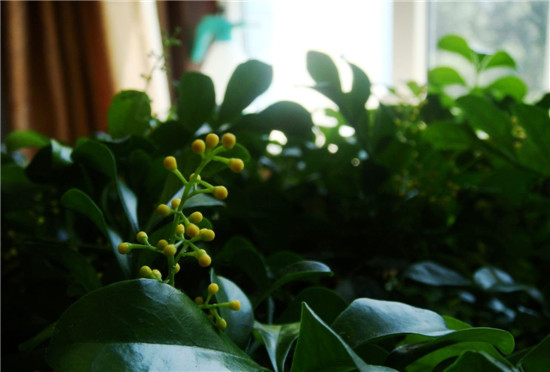
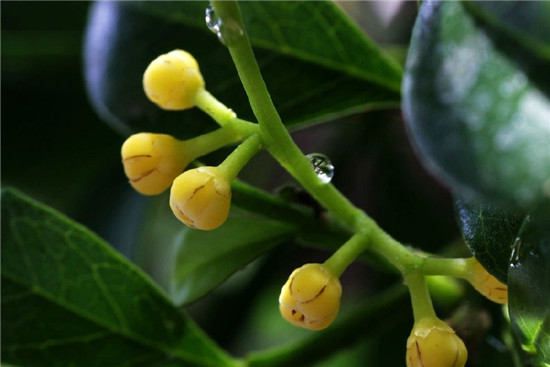
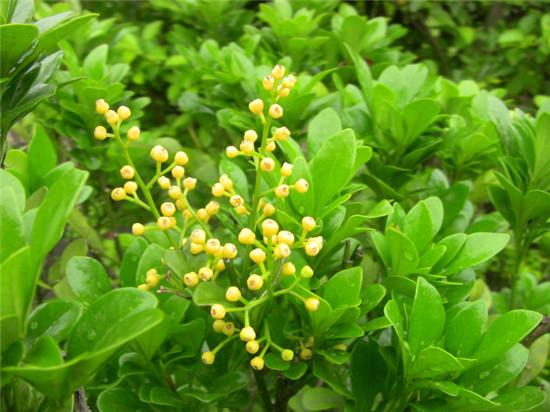
Orange jessamine, an evergreen shrub or small tree of the Meliaceae family, is a small-leaved variety of the large-leaved orange jessamine. It has many dense branches; its alternate pinnately compound leaves bear 3 to 5 glossy leaflets; its flowers are small like millet grains, golden yellow, polygamous and dioecious, borne in axillary panicles; it flowers on new shoots, with the peak blooming period in summer and autumn; when in bloom it gives off a delicate fragrance, with a scent like that of orchids.
How to grow orange jessamine:
1. Sunlight
Orange jessamine should be placed in a spot with ample sunlight in all four seasons. If you place orange jessamine in a courtyard or on a balcony with plenty of light and good ventilation, with more than 8 to 12 hours of sunlight per day, the plant will have deep green leaves, thick and sturdy branch growth, more rounds of flowering, bright yellow flowers, and a richer fragrance. If orange jessamine is kept in a shaded environment with insufficient sunlight, the plant's branches and leaves will grow leggy and weak, the number of flowerings will decrease, and the fragrance will be faint.
2. Watering
Orange jessamine likes moisture, and watering should be determined according to how dry or humid the climate is. You must both keep the potting soil moist and avoid excessive moisture over the long term. Being too dry is bad for the growth of orange jessamine and causes the leaves to wilt. Maintaining relatively high air humidity is what benefits the growth of orange jessamine. In dry weather and during the vigorous growth period, it is best to spray the leaves with water 1-2 times a day.
3. Temperature
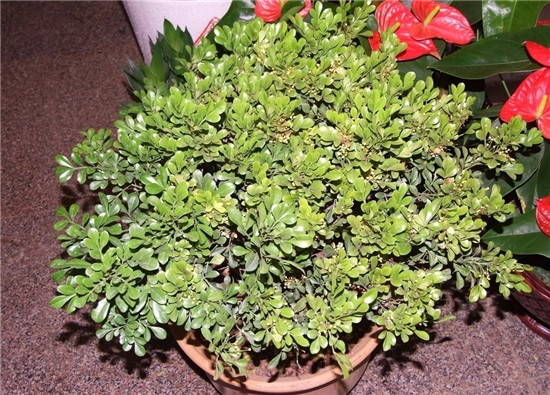
Orange jessamine likes warmth, and the higher the temperature, the more fragrant the flowers it produces. Generally speaking, at temperatures above 30°C and under ample sunlight, the flowers produced are strongly fragrant; conversely, in an environment below 30°C, if it is also in a shaded spot with insufficient light, the flowers produced are not as fragrant as when the temperature is high. To grow orange jessamine well, the suitable temperature range is between 20°C and 35°C, and during the period from June to October it can flower as many as 5 times.
4. Pruning
Orange jessamine should be pruned and shaped starting from the seedling stage, keeping a section of main trunk 15 cm to 20 cm tall. Do not let the main branches emerge in a cluster from the soil surface; instead, prune and branch above the 15 cm tall main trunk so that the plant's form becomes full. The lower branches of perennial old plants often age and die. Therefore, in the north it is advisable to shorten-prune once every other year during the hot season to prompt adventitious buds on the lower part of the main branches to sprout and grow new side branches, thereby keeping the tree form well proportioned, the tree vigorous, and the foliage lush and the flowers abundant.
When cultivating newly purchased orange jessamine, you should also pay attention to the following steps:
1. When orange jessamine has just been potted, after watering it thoroughly once, it is advisable to water sparingly within half a month to encourage new roots to grow.
2. For potted orange jessamine, generally the pot and soil need to be changed once every two years. Do not break up the old soil; remove part of the old soil where there are no roots, and cut off rotten roots. When adding new soil, appropriately add some phosphate fertilizer as a base fertilizer, but not too much. After potting, place it in a cool spot for care, and after about a week move it to a sunny spot. Repotting with soil replacement is generally best done around one week after it is moved outdoors in spring.
3. Orange jessamine fears cold, and overwintering is relatively difficult. When the temperature is below 12°C it enters dormancy, and fertilization should be stopped and watering reduced.
4. The following spring, wait until the temperature is stable before moving it outdoors, so as to avoid the spring cold freezing the plant to death.
5. Newly purchased orange jessamine may, because its growing environment differs from the indoor environment, such as in temperature and light, easily drop leaves and wither.
Many people like orange jessamine, especially its light, elegant fragrance, but they do not know whether orange jessamine is toxic, so they dare not move it indoors for viewing. In fact, orange jessamine is non-toxic. It likes warmth, sun, and fertilizer, and its growing temperature is 20°C-35°C. Usually, because of ample sunlight and higher temperatures, it gives off a strong fragrance; if placed in a shaded spot, it will either not bloom or bloom sparsely with a faint fragrance. Therefore, orange jessamine can be placed indoors for viewing, but it should not be kept indoors for a long time.
Care methods for orange jessamine
(1) Maintain good properties of the potting soil
The root system of orange jessamine is very well developed, with many fine fibrous roots. Therefore, nutrient-rich new soil must be replaced in a timely manner, and excess rotten fibrous roots must be removed. The pot should be changed at least once every two years, and once a year for those growing especially well. The new soil should be mixed with plant ash or fully burned coal cinders, and an appropriate amount of base fertilizer added, so that the potting soil both retains fertilizer and does not become waterlogged, that is, it is both breathable and sufficiently nutritious. Excess fibrous roots must be removed so that it grows more new roots and the root absorption function is enhanced.
(2) Withhold water and fertilize frequently
In spring, when orange jessamine begins to sprout, you should begin withholding water. This is the most critical part of "controlling branches to promote flowering." Since this is the peak period of sprouting for orange jessamine, if watering is not controlled, it will inevitably cause leggy growth of branches and leaves. Water again only when its tender tips slightly shrivel and droop.
Keeping the potting soil always in a slightly dry state can control vegetative growth and force it to shift to reproductive growth. In this way, the growth of branches and leaves can gradually slow down, and the leaves produced are thick, green and glossy, with short leaf spacing, and flower bud differentiation continues, forming flowers and branch buds advancing together, so that when the flowers bloom the flower clusters may even be taller than the branch buds.
Apply organic fertilizer 1-2 times a week. When the flower buds appear spread open, water once with a quick-acting phosphate fertilizer (potassium dihydrogen phosphate). After flowering, depending on the size of the plant, water once with a slightly stronger organic fertilizer to replenish the nutrients consumed and lay a good foundation for the next batch of flowers. You should also continue to withhold water in an appropriate amount, limited to the tender tips not shriveling.
(3) Sunlight must be sufficient
Orange jessamine likes light. Too much shade will cause leggy branches, fewer flowers or even no flowers, or flowers with no fragrance, so orange jessamine must be given sufficient light. This not only enhances the photosynthesis of its leaves to produce more nutrients, but also makes the branches it grows short and sturdy, with short leaf spacing, and the leaves small, thick, green and bright; it also promotes continuous flower bud differentiation, improves the quality and quantity of flowers produced, and the flowers produced are richly fragrant, even in summer.
(4) Pinch back and thin out branches in a timely manner
Orange jessamine has a strong sprouting rate, with many tiller buds and adventitious buds, so promptly cut off the branches and leaves growing on the inner branches and the overly dense, weaker-growing, overly long branches that affect the plant's shape, in order to reduce unnecessary consumption of nutrients. When the tender leaves grow to the 5th layer, pinch them back to force it to produce more side branches. Controlling the length of each branch can not only keep the plant's shape perfect, but also make it bloom neatly each time and increase the number of flowers in each batch.
The above is all the content I have summarized for you on the planting and care of orange jessamine. I hope this article can help everyone. Please also continue to follow us.
After flowering, depending on the size of the plant, water once with a slightly stronger organic fertilizer to replenish the nutrients consumed and lay a good foundation for the next batch of flowers. You should also continue to withhold water in an appropriate amount, limited to the tender tips not shriveling.
(3) Sunlight must be sufficient
Orange jessamine likes light. Too much shade will cause leggy branches, fewer flowers or even no flowers, or flowers with no fragrance, so orange jessamine must be given sufficient light. This not only enhances the photosynthesis of its leaves to produce more nutrients, but also makes the branches it grows short and sturdy, with short leaf spacing, and the leaves small, thick, green and bright; it also promotes continuous flower bud differentiation, improves the quality and quantity of flowers produced, and the flowers produced are richly fragrant, even in summer.
(4) Pinch back and thin out branches in a timely manner
Orange jessamine has a strong sprouting rate, with many tiller buds and adventitious buds, so promptly cut off the branches and leaves growing on the inner branches and the overly dense, weaker-growing, overly long branches that affect the plant's shape, in order to reduce unnecessary consumption of nutrients. When the tender leaves grow to the 5th layer, pinch them back to force it to produce more side branches. Controlling the length of each branch can not only keep the plant's shape perfect, but also make it bloom neatly each time and increase the number of flowers in each batch.
The above is all the content I have summarized for you on the planting and care of orange jessamine. I hope this article can help everyone. Please also continue to follow us.