What are the ways to grow aloe? A full breakdown of care essentials
Aloe, also known by the names Luhui, Xiangdan and Nuhui, belongs to the genus Aloe in the family Liliaceae. It is a common plant in our daily life, serving both as an ornamental and as an edible plant. Next, let us take a look at how to grow it.
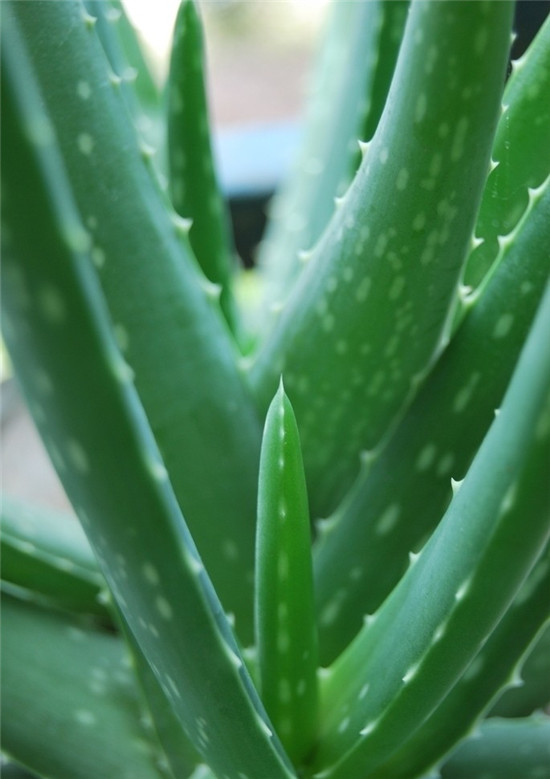
Growing aloe in a pot at home differs from growing it outdoors, because its growing environment is limited to a small pot. In order to meet as much as possible the aloe root system's requirements for water, nutrients, air, heat and other environmental conditions during its growth and development, choosing suitable growing media and scientifically mixing potting soil is very important for promoting the normal development and growth of aloe.
The main ways to grow aloe are as follows:
1. Potting soil mixing: a commonly used potting soil formula is humus, garden loam and river sand (or sawdust or thoroughly burned coal ash) in a ratio of 2:2:1. The most suitable growing medium requires a pH of 6.8-7.0. At ordinary times, also pay attention to keeping the potting soil clean and hygienic, and disinfect and sterilize it frequently.
2. Choosing a pot: by the material of the flower pot, there are clay pots, purple clay pots, porcelain pots, plastic pots and so on. Choose a suitable pot for planting according to personal preference and aesthetic taste. A clay pot with good air permeability is most suitable for growing aloe.
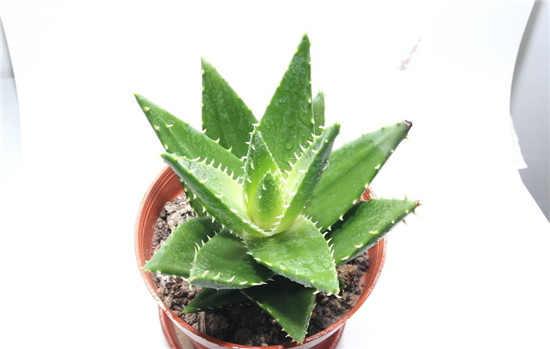
3. Potting up and repotting: before potting up, selecting seedlings is key. Potting up is best done in spring and summer, with a suitable indoor temperature of 15°C-18°C. Potted aloe generally needs repotting once every 1-2 years, and the repotting time is April-May in spring and September-October in autumn each year.
4. Fertilizing: try not to use chemical fertilizers. Organic fertilizers and inorganic fertilizers can be applied, and combining the two gives better results. There are two methods: applying base fertilizer and applying top dressing.
5. Watering: aloe has an especially strong tolerance for drought. Water it reasonably according to the conditions required for the plant's growth and development, following the principle of watering when dry and letting it dry out between waterings, and watering thoroughly once the soil is completely dry.
6. Overwintering management: in winter, the temperature must be kept above 5°C, and it should be moved indoors or into a greenhouse to overwinter, with watering controlled and light increased.
Aloe was recorded as the "immortal plant" in ancient Egyptian herbal books. From this we can see that, on the one hand, aloe has very high medicinal value, and on the other hand, it is easy to grow. So how can we grow aloe better?
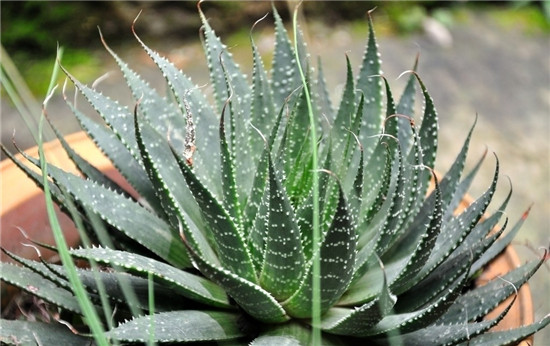
Water: we often say that "water is the source of life." Although aloe is a plant that grows in deserts, it likewise cannot do without the moisture of water. When watering aloe, pay attention to seasonal changes. For example, in summer we must prevent the aloe from drying out, so watering about once every 5 days is best, while in autumn we should also water appropriately, generally once about every 10 days.
Temperature: aloe is a tropical plant, so it likes to grow in warm places, and therefore we should often give the aloe some sun. If there is rainy weather or the climate temperature is relatively low, it is best to put it indoors. Only then will the aloe not "catch a chill" and freeze.
Soil: fertilizer can be applied appropriately to ensure the aloe's nutrients. At the same time, we should also pay attention to loosening the soil around the aloe appropriately, so as to avoid waterlogging or soil compaction causing the aloe's roots to rot.
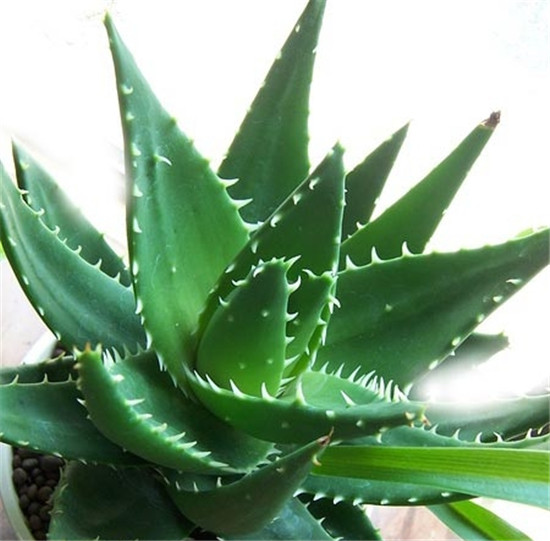
Aloe management and care
The management of potted aloe at home mainly includes three aspects: fertilizing, watering and keeping warm in winter.
Fertilizing: during its growth, aloe needs large amounts of the elements carbon, hydrogen, oxygen, nitrogen, phosphorus, potassium, sulfur, calcium, magnesium and iron, among which carbon, hydrogen and oxygen come from the air, while the other elements are absorbed from the potting medium. In addition, it needs elements such as boron, manganese, molybdenum, zinc, copper and chlorine. Although the amounts needed are not large, they cannot be replaced by other elements. Scientific fertilizing can supplement nutrients.
Watering: in winter, generally water once every 15-20 days, and if needed, spray water on the leaves. Water as little as possible and keep the potting soil dry, which helps the plant overwinter safely; in spring, generally water once every 5-7 days. Do not water if not dry, and water thoroughly when watering, so that the potting soil is neither completely dry nor constantly wet; in summer, the temperature is relatively high and evaporation is great, so water once every 2-3 days, and in addition spray water on the aloe leaves every morning and evening. Also pay attention to reducing exposure to the scorching sun to reduce water loss; in autumn, the watering method for aloe is basically similar to that in spring, and the potting soil should alternate between dry and wet. Watering is generally best done in the early morning and at dusk, when the water temperature is relatively close to the potting soil temperature, which can avoid the potting soil temperature changing drastically due to watering and affecting root growth. Remember: "For potted aloe, better dry than wet."
The above is all the content I have summarized for you on what the ways to grow aloe are. I hope this article can help everyone. Please also continue to follow us.
Please also continue to follow us.