How to grow lucky bamboo? Recommended practical cultivation methods
Lucky bamboo, also known as Wanshou bamboo, likes a warm environment, can also tolerate shade, and fears direct strong sunlight. Next, let us take a look at lucky bamboo cultivation.
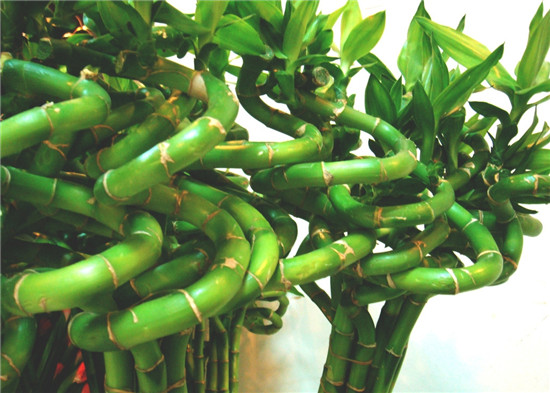
Usually, when growing lucky bamboo, it should be placed in a bright spot, but in summer, care should be taken to avoid sunlight exposure. In winter and spring, it is advisable to let it receive more sunlight, which helps the leaf color develop fully. During planting, garden soil plus a small amount of river sand can be used as the growing medium, with a small amount of roasted, dried, and crushed eggshells added as base fertilizer to promote the growth of lucky bamboo.
If the water culture method is used to grow lucky bamboo, before placing it in a vase, the leaves at the base of the cutting should be cut off, and the base should be cut into a slanted opening with a sharp knife to facilitate the absorption of nutrients and water. Before rooting, change the clean water once every 3-4 days. Do not move the position or change the direction within 10 days. After about 15 days, white fibrous roots can grow. After water-cultured lucky bamboo has rooted, it should not be frequently changed with water. When the water decreases, it should be added promptly.
During the water culture process, a small amount of compound flower fertilizer or nutrient solution should also be supplied promptly. However, fertilization must not be excessive, so as to avoid "burning the seedlings" or causing leggy growth. If no fertilizer is applied for a long time, the plant will grow weakly and the leaves will turn yellow, which will also affect the ornamental effect.
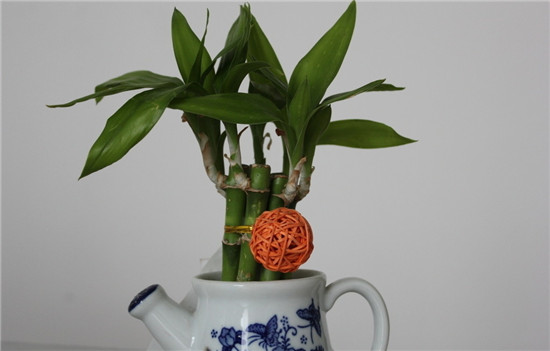
Netizens often report that due to poor management of lucky bamboo, physiological diseases such as leaf fading, loss of luster, and root rot occur. Now everyone can refer to the above information and make corresponding adjustments to the lucky bamboo they are growing, gradually restoring the lucky bamboo to a healthy state.
Precautions for water-cultured lucky bamboo
First: When we buy back the bamboo stems, we should remove the leaves at the base, and then cut the base into a slanted opening. This can increase the absorption of nutrients. Before rooting, change the water once every 3 to 4 days, and two small pieces of charcoal can be placed in it to prevent rot. Do not casually move the position of the lucky bamboo within half a month. Moving it around like this is not good for bamboo that has not rooted. After half a month, white fibrous roots can basically be seen.
Second: After roots have grown, if we choose water culture, then at this time we should not change the water frequently. Well water is best for the water. If it is tap water, then it must be left to settle for a day. The water must be clean and must not contain oil. Dirty water and hard water can both lead to root rot.
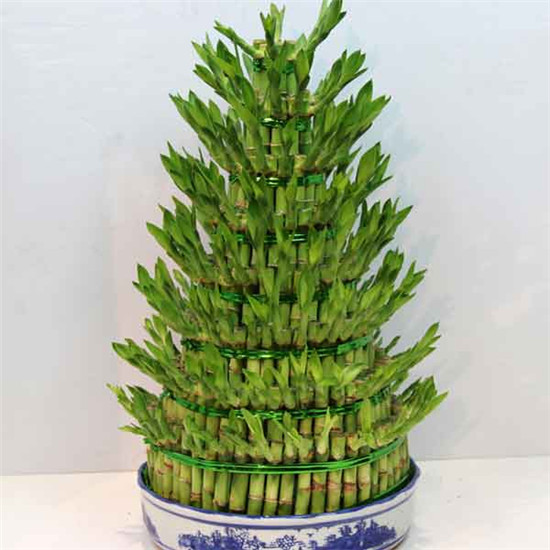
Third: If soil culture is desired, then wait until the roots have grown relatively abundantly before transplanting into soil. Use sandy loam for the potting soil, with 3-4 plants per pot. After that, water a little every day and keep the soil moist.
Fourth: Although lucky bamboo likes shady and humid environments, lighting also has its requirements. The place where it is placed should preferably receive scattered sunlight. Do not place it next to a TV, or in places where fans and air conditioners can blow on it, so as to avoid causing the leaves to wither.
Introduction to precautions for lucky bamboo cultivation:
1. Lucky bamboo likes a humid environment. When the air is too dry, it will cause the leaf tips to scorch. At this time, water should often be sprayed on the branches and leaves. If conditions permit, it is best to spray a small amount of flower fertilizer solution on the leaf surface every month.
2. Place lucky bamboo in an indoor place with ventilation and light transmission, to facilitate photosynthesis and promote the formation and accumulation of organic matter.
3. It may be that during the collection and processing of the bamboo stems, some procedures were neglected. Strict sterilization, disinfection, and mold removal were not carried out, resulting in inherent deficiencies. Or due to improper care, the branches carry bacteria.
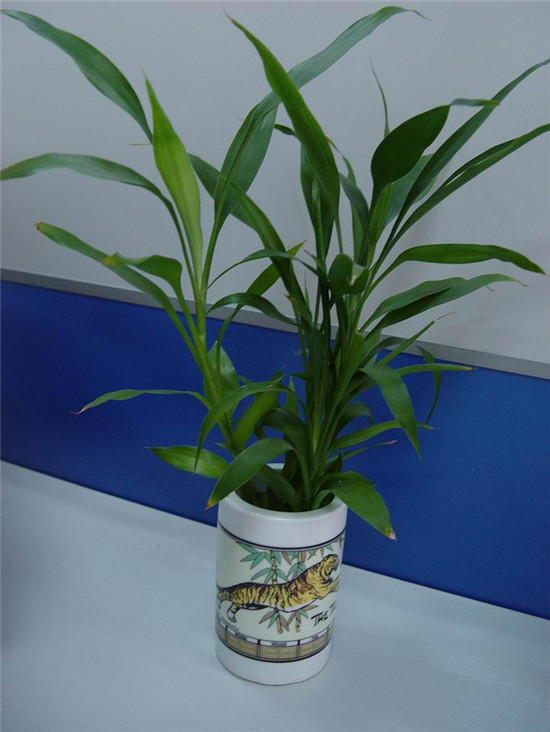
4. Maintenance agents can be used appropriately.
5. In the early stage, change the water once every 10 days, and rinse off the dirt on the bamboo head. After growth stabilizes, because water evaporation causes the water volume to decrease, as long as the water quality does not change, do not change the water. Frequent water changes can also cause leaf withering. Some water can be added on top of the original amount.
6. Remove dead branches promptly when found, and change the water promptly, to avoid other bamboo branches becoming infected.
7. During the maintenance process, the amount of light is too little, and the bamboo branches show symptoms of light deficiency.
8. After being grown for a period of time, roots will grow at the bottom end of the bamboo. When there are too many roots, they should be pruned. In fact, these roots have little effect on the growth of lucky bamboo. Cutting off old roots is more beneficial to growth.
9. It is the water quality issue in growing lucky bamboo. Usually, urban tap water should be left out for two days, so that impurities settle and toxic gases are released before it can be used for cultivation.
10. If the weather is cold, pay attention to cold protection, and do not let cold wind blow directly on it.
The above is all the content of the lucky bamboo cultivation methods recommendations I have summarized for everyone. I hope this article can help everyone. Also, please continue to follow us.
Also, please continue to follow us.