What are the benefits and effects of pothos? Read this article to understand
Pothos is a large evergreen climbing plant that grows in tropical regions, often climbing on rocks and tree trunks. Next, let us take a look at the benefits and effects of pothos.
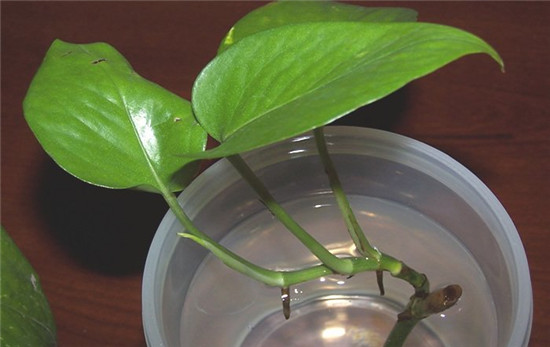
It has a lovely appearance. Pothos, also known as golden pothos, devil's ivy, and golden vine, is an evergreen perennial herbaceous plant in the Araceae family, genus Epipremnum. The stems and vines of pothos are thick and strong, capable of reaching several meters in length, with aerial roots at the stem nodes. The young leaves are ovate-heart-shaped. Newly propagated seedlings have smaller and lighter-colored leaves. As the plant ages, the mature leaves become long ovate, about 15 cm long and about 10 cm wide. The deep green leaf surface is interspersed with irregular yellow-white spots or stripes.
Its life needs differ from other plants. Pothos is generally propagated by cuttings. Because it has aerial roots at the stem nodes, cuttings root very easily.
It is a child with character. It likes warm, humid environments and requires loose, fertile, well-draining soil. Potted pothos should use fertile, loose, well-draining leaf mold soil, preferably slightly acidic.
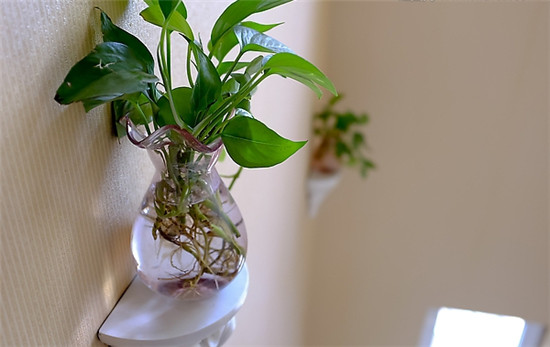
Its hometown determines its character. Pothos is native to the Indonesian archipelago, and in tropical regions it often climbs on rocks and tree trunks. It likes high temperatures, high humidity, and semi-shaded environments, and is not cold-tolerant. Its suitable growing temperature is 15°C to 25°C. Below 15°C, growth slows down, and the overwintering temperature should not be lower than 10°C.
So what specific benefits does pothos have for us? Let us understand them one by one below!
First is its decorative effect. Keeping such a pot of pothos indoors or outdoors, seeing its vivid, dripping green, can give people an aesthetic sense of pleasure and make people feel relaxed and comfortable. Therefore, its decorative effect is very prominent.
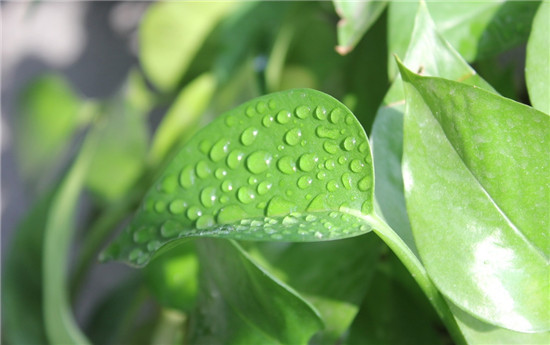
The effect of purifying air. Pothos is a large evergreen climbing plant. Like spider plants and ivy, it has a very strong ability to purify air. Pothos can absorb benzene, trichloroethylene, formaldehyde, and other substances from the air. Placing pothos in a newly renovated home is simply the most suitable choice. According to environmental scientists, one pot of pothos in a room of 8-10 sq m is equivalent to an air purifier. It can be seen that the air-purifying ability of pothos is quite strong.
The effect of attracting airflow. Pothos can attract airflow and allow indoor ventilation and breathability. Why say this? Plants themselves also breathe, absorbing carbon dioxide and exhaling oxygen. Pothos is generally placed by the window. When it is too windy outside, it blocks some of the wind. If there is no wind, it itself will release new oxygen. The oxygen enters the space where we live, making us more energetic and making the indoor air fresher.
The effect of absorbing kitchen odors. This is actually also one aspect of purifying air. Placing pothos in the kitchen can effectively absorb some cooking oil fumes caused by stir-frying and cooking, and remove some other kitchen odors. Let our kitchen maintain fresh air.
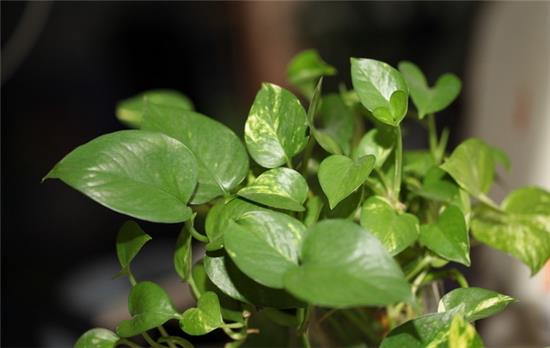
Pothos is suitable for being placed in the kitchen with the most oil fumes. Placing it in the kitchen both achieves the purpose of environmental protection and adds a bit of green to the kitchen, achieving two goals at once. Environmental scientists have found that one pot of pothos in a room of 8-10 sq m is equivalent to an air purifier, and can effectively absorb harmful gases in the air such as formaldehyde, benzene, and trichloroethylene. Pothos not only has strong vitality, but when placed indoors, its air-purifying ability is no less than that of ivy and spider plants. Newly laid flooring very easily produces harmful substances. Because pothos can simultaneously purify benzene, trichloroethylene, and formaldehyde in the air, it is very suitable for placement in newly renovated rooms.
Pothos is also suitable for being placed on windowsills. If we pay careful attention, we can find that the plants generally placed on windowsills in ordinary homes are pothos, because its size is particularly small and it fits just right on the windowsill. It will not crush the windowsill, nor will it block the beautiful scenery the owner sees beyond the windowsill.