Detailed Guide to the Cultivation Methods and Techniques of Asparagus Fern
Asparagus fern, also known as cloud bamboo, is a perennial evergreen climbing plant of the genus Asparagus in the family Liliaceae. Let us now take a look at the cultivation techniques of asparagus fern.
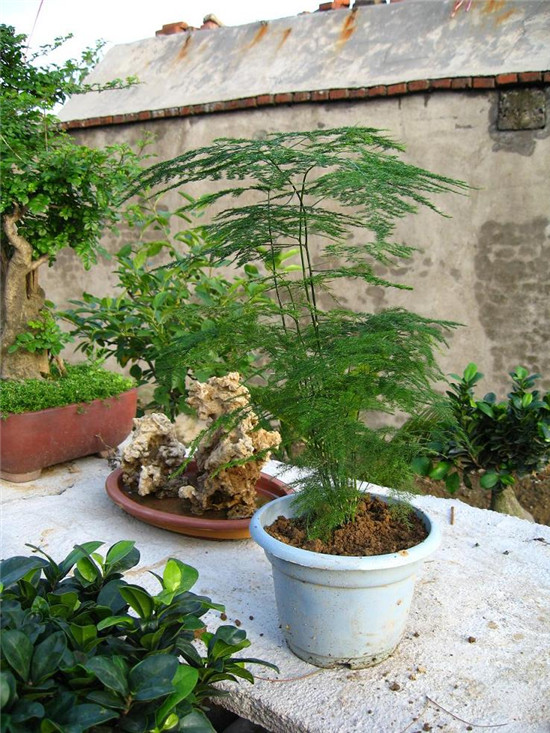
Asparagus fern is a shade-loving plant and should not be placed in a spot with too strong light, otherwise the branches and leaves easily turn yellow and wither. Watering should be appropriate, keeping the potting soil alternately moist and dry; generally, watering just enough to moisten the surface soil is sufficient, and in dry seasons, clean water should be sprayed on the leaves more often. Asparagus fern likes fertilizer; every 10-15 days, apply 1 dose of fully decomposed dilute liquid fertilizer based mainly on nitrogen and potassium, or water in diluted leftover milk. Asparagus fern grows quickly, so weak, overly dense, old branches and dead stems should be thinned and pruned at any time, which helps with ventilation and maintaining a low, compact form. Asparagus fern can also be planted in bamboo tubes, which have good drainage and water retention, so there is no need to drill holes in the bottom of the pot.
Growth habits: Asparagus fern is not cold-tolerant and not drought-tolerant; it likes warmth and a semi-shaded environment, and fears frost. Asparagus fern has strict requirements for potting soil, requiring it to be loose, fertile, well-drained and well-aerated, and the potting soil is best neutral. It can be prepared with leaf mold, sand and decomposed fertilizer. Asparagus fern is not cold-tolerant and also fears heat; the suitable growth temperature is between 15-25°C. It can neither withstand direct light exposure nor stay in a shaded place for too long. It should not be watered too much; master the watering principle of watering when dry and stopping when wet. Applying fertilizer once a month can meet its growth needs. One- to two-year-old asparagus fern has the greatest ornamental value. Three-year-old asparagus fern begins to send out tendrils, so a support should be set up for it to climb. If you do not want to set up a support, you can also cut off the climbing branches at the root. Asparagus fern is not cold-tolerant; the overwintering temperature is 10°C.
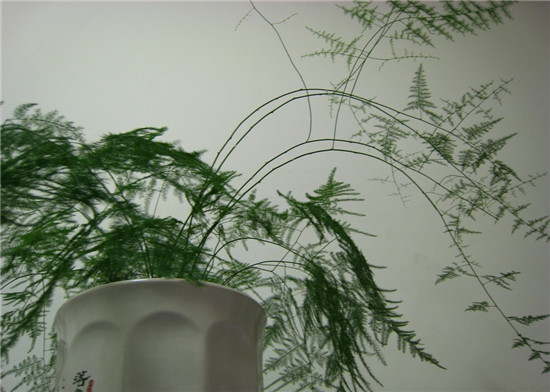
Cultivation points: Seedling raising is generally carried out from May to October. Before sowing, soak the seeds in warm water for 10-20 hours; after soaking, mix the seeds with plant ash. Cover with soil of about 1 cm when sowing. Seeds dislike light for germination, and under shaded conditions they emerge in about 15-25 days; after two rounds of seedling separation, plant them into small pots. It is semi-shade tolerant and likes a well-ventilated environment. It has low requirements for soil; apply less fertilizer and water less, so as to keep it as upright and short as possible.
Cultivation Methods of Asparagus Fern
1. Potting soil: For the potting soil used to cultivate asparagus fern, fertile sandy loam is suitable; it requires warmth and moisture, rich leaf mold and good drainage. Generally, it can be prepared in a ratio of 4 parts garden soil, 2 parts leaf mold, 2 parts compost soil and 1 part sand, and the soil should be changed and fertilized regularly. If excessive fertilizer causes "root burn", the pot needs to be turned out to remove the fertilizer, and the soil ball should be rinsed with clean water, then replaced with new soil for cultivation.
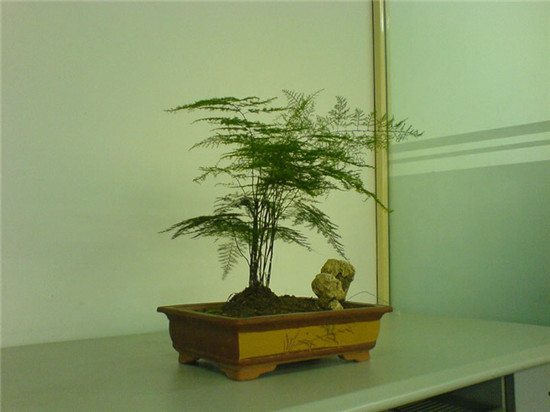
2. Watering: Watering is the key point in the cultivation of asparagus fern. Too much watering and overly wet potting soil easily cause root rot, while too little watering causes the leaf tips to scorch and turn yellow. Therefore, during watering, it should be determined according to the weather, growth condition and the dryness or moisture of the potting soil, following the principle of not watering when dry and watering thoroughly when watering. In hot and dry weather, the leaves can be sprayed with water to increase humidity and lower temperature; in winter, water less.
3. Fertilizing: Asparagus fern does not like heavy fertilizer, but it cannot lack fertilizer either. Limited by the potting soil in containers, asparagus fern cultivation must replenish nutrients in time to meet growth requirements. When fertilizing asparagus fern, apply small amounts frequently, and do not apply concentrated fertilizer, otherwise it will cause yellow leaves. Generally, applying a thin decomposed liquid fertilizer once a month is sufficient; after the plant grows larger and its form is set, fertilization can be appropriately controlled and reduced.
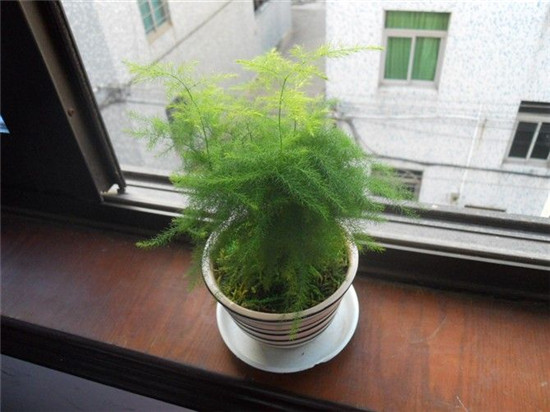
4. Light: Asparagus fern should not be exposed to the scorching sun when cultivated. In hot seasons, it should be placed in a cool, ventilated place. At the same time, during the flowering period, asparagus fern fears both wind and rain, so attention should be paid to good ventilation; in good weather, it can be appropriately placed outdoors to receive sunlight. In winter, the temperature for potted asparagus fern should be kept above 5°C to avoid freezing.
5. Placement: Asparagus fern is mostly used for indoor desk decoration. Because asparagus fern is very afraid of smoke and dust, and if it encounters toxic gases, the branches and leaves easily turn yellow, it should be placed in a clean and well-ventilated environment.
The above is the entire content of the cultivation methods and techniques of asparagus fern that I have summarized for everyone. I hope this article can help you. Please also continue to follow us.