What are the cultivation methods for string of pearls?
String of pearls, also known as jade beads, originated in southern Africa. Because it is a trailing plant, it is widely cultivated around the world. Next, let us take a look at how to grow string of pearls at home.
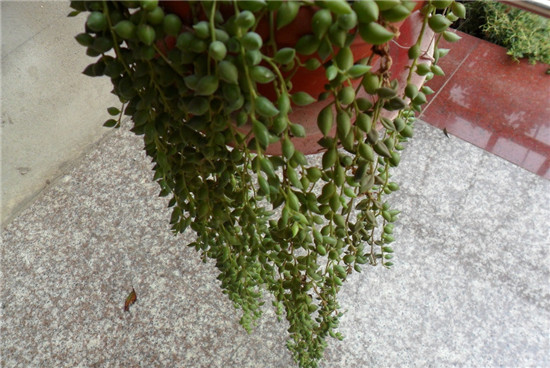
String of pearls gets its name because its plump, full, emerald-green oval leaves resemble pearls. It is also known as jade beads, lover's tears, Buddhist beads string of pearls, jade beads, green bells, and green bell. The flowering period is generally from December of that year to January of the following year.
String of pearls likes soil rich in organic matter that is loose and fertile. It grows best in a warm environment with relatively high air humidity and strong indirect light. In summer, avoid high temperatures and high humidity, otherwise the stems easily rot and the plant dies. Potted plants can be placed in a rain-proof, shaded area for cultivation. After autumn begins, the plant resumes growth, so light should be increased and liquid fertilizer applied. There are also blue string of pearls and brown string of pearls.
Different flowers have different requirements for temperature and environment. String of pearls has certain requirements for its environment. String of pearls relatively likes a warm, humid, and semi-shaded environment. It likes soil rich in organic matter that is loose and fertile. It generally grows best in medium light. However, string of pearls has relatively strong adaptability and is fairly drought-tolerant and cold-tolerant.
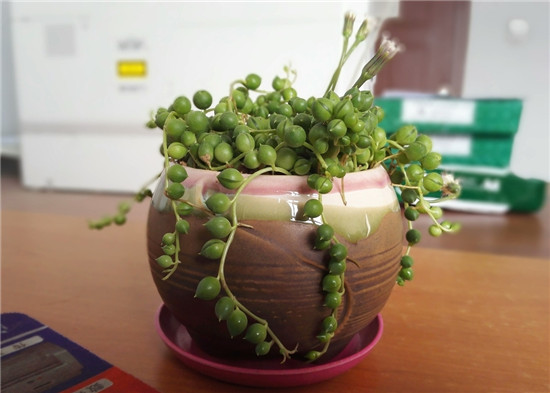
String of pearls is a relatively delicate plant. In summer, avoid high temperatures and high humidity, as high temperatures and high humidity can easily cause string of pearls stems to rot and the plant to die. After autumn begins, the string of pearls plant will resume growth, and light and fertilizer should be increased. During cultivation, when watering string of pearls, be sure to remember the principle of preferring dry over wet. When the weather is dry, spray water on the leaves and vines more often to make up for the lack of moisture and keep the beads green and plump. String of pearls avoids shade, high temperatures, and high humidity; direct sun exposure can scorch the beads.
String of pearls can be propagated by cuttings. Its vines root very easily. In spring and autumn, cut off several sections of vine and bury half in loose sandy soil, keeping it moist but not waterlogged. In about half a month, roots can grow. String of pearls can also be propagated using the small plantlets on the runners. During the growing season, cut off the small plantlets on the runners and plant them in potting soil or water. After the small plantlets grow roots, they can be transplanted into hanging pots.
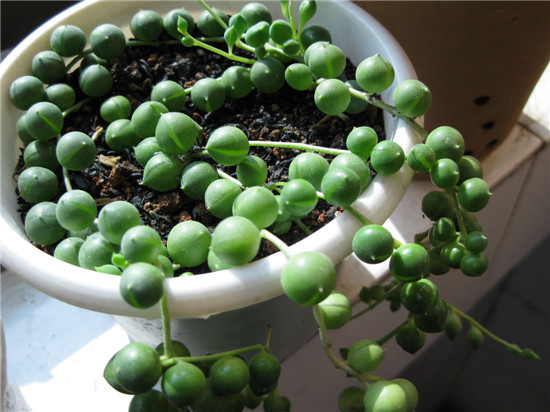
Cultivation of string of pearls
1. Because the leaves are fleshy and juicy, it is drought-tolerant. During cultivation, watering should prefer dry over wet; this is one of the keys to success. When the weather is dry, spray water on the leaves and vines more often to make up for the lack of moisture and keep the beads green and plump. It relatively likes semi-shade; direct sun exposure may scorch the beads, while too weak light causes poor growth.
2. The plant's root system is very shallow, so it can be planted in a shallow pot. Generally, use a tile to cover the bottom hole and spread a layer of coal cinders or coarse sand to increase aeration and drainage (especially when using the plastic pots commonly used now). For the soil, it is best to use leaf mold (fallen leaves from trees in autumn and winter mixed with a certain amount of crushed soil and exposed to rain and dew for a year, then mixed with a certain amount of sand; the soil-to-sand ratio is about 1:3).
3. It likes warmth and humidity, is relatively cold-tolerant (when cultivated in the Jianghuai region, it can tolerate a low temperature of 0°C), and is heat-tolerant. The optimum temperature is about 20°C-28°C. Growth is slow at both high and low temperatures. In particular, in a high-temperature environment above 30°C, it almost goes dormant, so watering and fertilizing should be reduced, otherwise the roots easily rot. This is also one of the keys to successful cultivation.
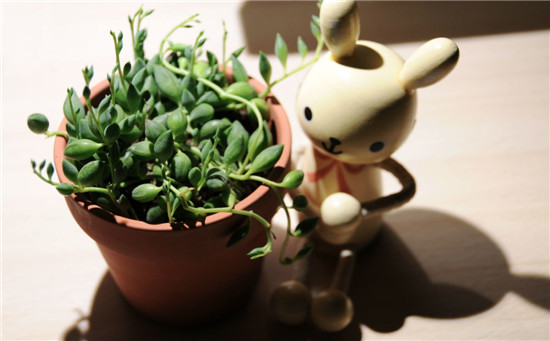
4. In spring and autumn, when growth is vigorous, fertilizer should be applied "thinly and frequently." Spraying 1-3‰ nitrogen fertilizer and potassium dihydrogen phosphate on the leaf surface often helps make the beads greener and plumper and improves ornamental value.
5. There are few pests and diseases. Aphids in spring are one of them; remove them promptly or spray 1500 times omethoate to kill them. Mites in summer and autumn are secondary; use 1000 times dicofol to kill them. Pay attention to ventilation and increasing leaf surface humidity, which can reduce mite infection.
The above is all the content of the string of pearls cultivation methods I have summarized for everyone. I hope this article can help everyone. Please also continue to follow us.