What types of spider plants are there? Introducing common spider plant varieties
Spider plants grow with creeping stems, and as potted flowers they have great ornamental value, dancing like green butterflies. Next, let us take a look at the varieties of spider plants.
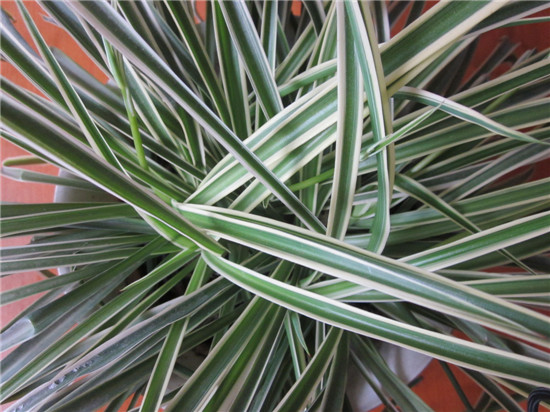
Spider plant, also known as: creeping stem grass, hanging orchid, fishing orchid, orchid grass, folding crane orchid; in Western Europe it is also called spider grass or airplane grass. It is a plant of the Liliaceae family and the genus Chlorophytum, native to South Africa. It is a perennial evergreen herbaceous plant of the Liliaceae family. The roots are fleshy, and the leaves are slender, resembling orchid leaves. The creeping stems produced from the leaf axils of the spider plant can grow about a chi long, both firm and soft; the leaves clustered at the top of the stems droop outward from the edge of the pot and sway with the wind, resembling a crane spreading its wings and leaping. Therefore, the spider plant was called folding crane orchid in ancient times. The plant has the effect of purifying the air, and the whole plant can be used as medicine.
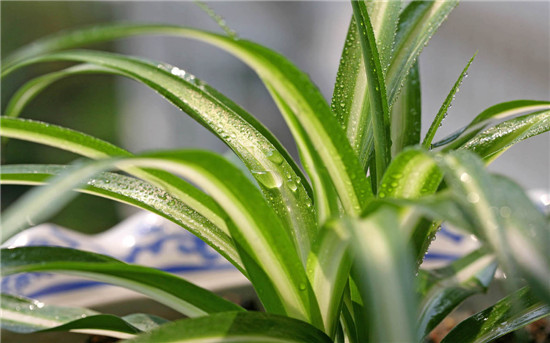
Spider plant is a perennial green herbaceous plant, with a very short rhizome, thick and short root tips, flowers mainly white, sometimes blue-green flowers, and linear leaves with green and yellow stripes in the middle. The leaves clustered at the top of the spider plant's stems droop outward from the edge of the pot and sway with the wind, like a crane spreading its wings and leaping. Therefore, the spider plant also has a nice name called folding crane.
Friends who like plants must know the spider plant. There are many varieties of spider plants. Spider plant is a very easy indoor plant to grow. It likes shade all year round and can be grown year-round in a bright indoor environment. It generally grows in places with good drainage and fertile soil. It is relatively drought-tolerant but not cold-tolerant. Its growth temperature is generally between 15°C and 35°C. Because the roots of the spider plant are well developed and grow relatively fast, if the flower pot is not changed in time, the roots will accumulate, causing the leaves to turn yellow and withered.
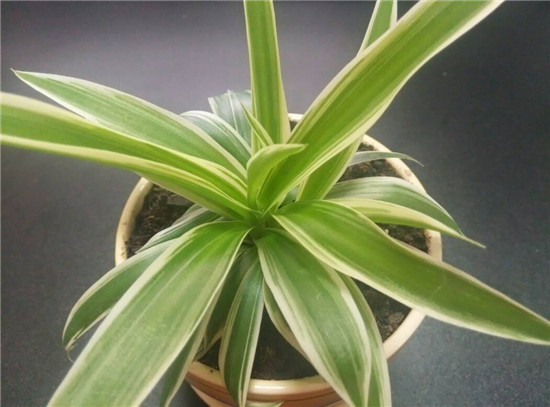
Types of spider plants
Spider plants mainly include the following 8 major varieties:
1. Broad-leaf spider plant: the leaves are broadly linear and entire, or slightly wavy and wrinkled. The scape is drawn out from the leaf cluster, and after flowering it forms creeping runners that can take root and sprout to grow into new silver-heart spider plant plants. Racemose inflorescence, white flowers, 2 flowers per bract axil, perianth in two whorls, 6 segments. The flowering period is in spring and summer, and the capsule is three-angled spherical.
2. Silver-heart spider plant, also called middle-striped spider plant: the leaves are narrow and long, lanceolate, milky white with green stripes and edges.
3. Milky-white spider plant: the main vein of the leaf has white longitudinal stripes.
4. Purple spider plant, also called colorful-leaf spider plant: the main vein of the leaf is purple.
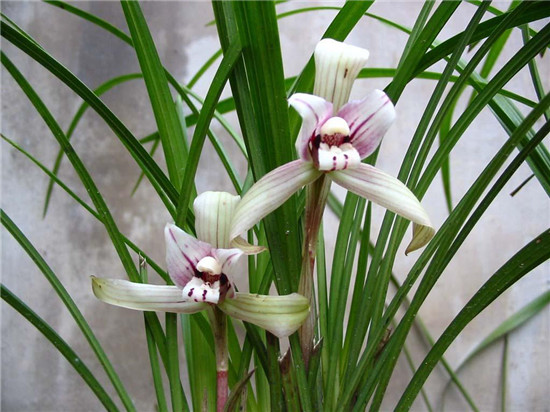
5. Golden-edge spider plant: the leaf edges are golden yellow, the leaves are slender and soft, the leaves hang down like flowers, evergreen all year round, known in ancient times as "folding crane orchid." Its special appearance forms a unique hanging landscape and three-dimensional beauty, and can create a distinctive decorative effect.
6. Golden-heart spider plant: an evergreen perennial herbaceous plant, with slender leaves, linear-lanceolate, with yellow-white longitudinal stripes in the center, bright green. It is a common office and home potted plant.
7. Silver-edge spider plant: the leaf edges of the silver-edge spider plant are white.
8. Silver-heart spider plant: there are silvery-white longitudinal stripes around the main vein of the leaf.
The above is all the content of what types of spider plants there are that I have summarized for everyone. I hope this article can help everyone. Please also continue to follow us.