Detailed Explanation and Symbolism of the Yellow Hyacinth Flower Language
Detailed Introduction to the Flower Language of the Yellow Hyacinth
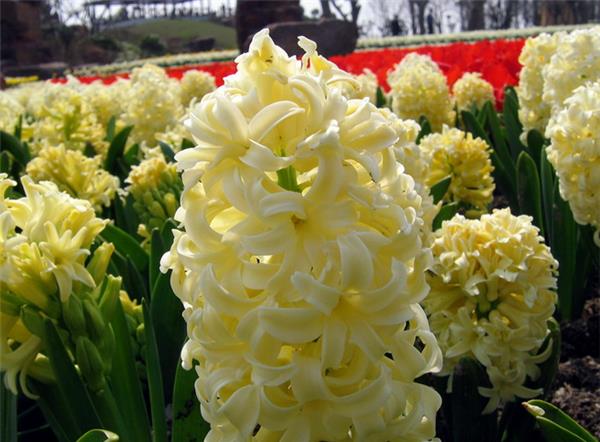
Detailed Introduction to the Yellow Hyacinth
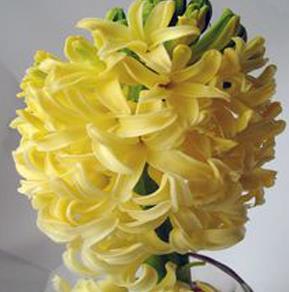
The hyacinth's English name is Hyacinth. When speaking of the flower language of the yellow hyacinth, let us first understand the origin of the hyacinth's scientific name: it is said that the scientific name of the hyacinth flower comes from the name of Hyacinthus in Greek mythology, because his name was Hyacinthus, and to commemorate Hyacinthus, who was favored by the sun god Apollo, people used the hyacinth to name this very popular flower of that time.
Different colors of hyacinths have different flower languages:
Hyacinth: Eternal remembrance. As long as the fire of life is lit, one can share a rich life; Purple hyacinth: Sad, melancholy love. Apology, regret. (Having my love, you will surely be happy and joyful); Light purple hyacinth: Gentle temperament, romantic feelings. Sadness.
White hyacinth: Secret love. Pure and light, or love that one dares not reveal
Red hyacinth: Thank you, touching love (your love fills my heart); Peach red hyacinth: Represents passion; Pink hyacinth: Admiration, romance.
Blue hyacinth: Noble and rich, constancy, chastity, as happy as seeing you.
Dark blue hyacinth: Somewhat melancholic because of love
Light green hyacinth: If you want to have no secrets, you must first have a kind heart.
The cultivation methods for yellow hyacinth should pay attention to the following aspects:
Bulb selection: The nutrients needed for hyacinth blooming are primarily supplied by nutrients stored in the scale leaves of the bulb. Only by selecting bulbs with undamaged outer skins, fleshy scales that are not excessively shriveled, relatively firm and very heavy, and plump, can full and beautiful flowers bloom.
Open-field cultivation: Best carried out from October to November, choose well-drained soil, apply sufficient base fertilizer before planting, for field cultivation, avoid continuous cropping. Generally no other management is needed before flowering. After flowering, if seeds are not to be collected, the flower stem should be cut off to promote bulb development; the cutting position should be as high up on the flower stem as possible. In early June, the bulbs can be dug out, spread out, graded and stored in cold storage; the summer temperature should not exceed 28°C.
Pot cultivation: In late autumn, select well-grown hyacinth bulbs from the market and plant them in loose culture soil. Use loam, leaf mold, fine sand, etc. mixed together as nutrients. When planting, note: the upper end of the bulb should be exposed above the pot soil; after planting, place in sunlight and keep the pot soil moist. The temperature required for forcing is 5-10°C.
Water cultivation: Choose a glass container with a mouth slightly smaller than the bulb, place the bulb on the bottle mouth, add water to about 1 cm from the bulb base. You can also, like with narcissus, plant several bulbs together in a shallow basin for hydroponic cultivation. Forcing cultivation: After the last third of the month, treat the bulbs at a low temperature of 8C for 70-75 days, then pot them in early October and cultivate in a greenhouse, so they can be made to bloom at the end of the year. Because the forcing sensitivity of cultivated varieties varies greatly, varieties suitable for forcing should be selected when forcing cultivation is carried out.
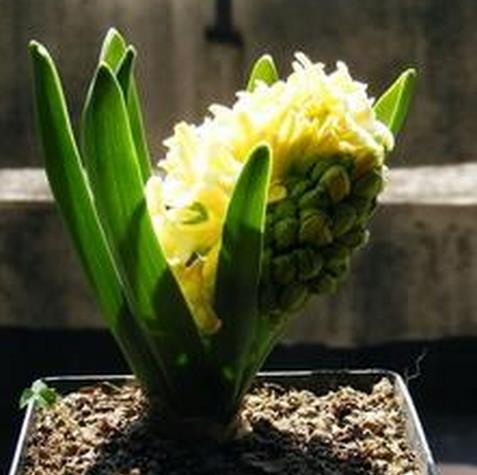
Hyacinth is native to southern Europe, the eastern Mediterranean coast, and the Asia Minor region. It prefers cool, humid air and sunny environments, is cold-tolerant, and requires well-drained sandy soil; it grows very poorly in low-lying, wet, heavy soil. Hyacinth likes fertilizer. Whether potted or ground-planted, it is best to apply sufficient base fertilizer, the soil should be loose, and fertilizer should be applied frequently during the growth period. For ground planting, loosen the soil promptly after seedlings emerge, apply a topdressing once in winter, and apply topdressing once each before and after flowering in spring. For potted forcing cultivation, plant bulbs in September, 3-4 per pot. Place in sunlight, move into a greenhouse in November, and it can bloom at Spring Festival. When forcing hyacinth cultivation, make sure it is first kept at a relatively low temperature so that it grows roots but does not sprout leaves, then place it in semi-shade at a slightly higher temperature so that the leaves grow to a certain height, and finally give it a higher temperature and sufficient sunlight; only in this way can the stems and leaves be full and the flowers lush. Hyacinth is mainly propagated by dividing bulbs. After the aboveground parts die in summer, dig out the bulbs, separate the large bulbs from the small bulbs; the small bulbs need to be cultivated for three years before they can bloom. To breed new varieties, sowing propagation is also possible; seedlings need 4-5 years to bloom. The hyacinth has a short plant shape, and its inflorescence is neat and unusual, with cool and elegant flower colors and a distinctive mood. For pot cultivation, place indoors for appreciation. Hyacinth can also be cultivated by hydroponics; move the flowering plant into a uniquely shaped glass container, add water, and its flowers, leaves, and roots can all be appreciated. It is elegant and clean, and can be placed anywhere indoors.
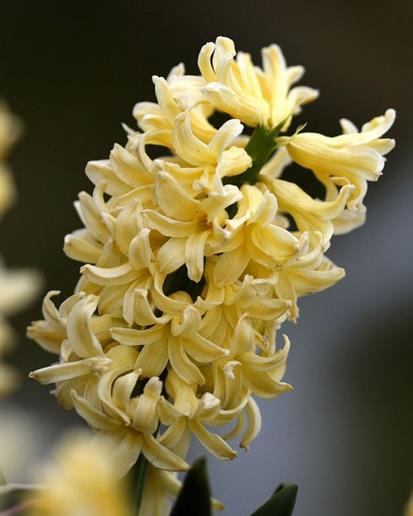
Fertilizer: No fertilization is needed during the flowering period. Apply topdressing once each before and after flowering, and apply sufficient base fertilizer when planting.
Soil: Well-drained, fertile sandy loam is suitable. Avoid heavy soil, or cultivate by hydroponics.
Temperature: Cold-tolerant.
Light: Placing it indoors during the flowering period makes it last longer. If conditions permit, it is best to place it for 4 hours daily in front of bright south, east, and west windows.
Hyacinth habits are sun-loving and cold-tolerant, suitable for growing in cool, humid environments and loose, fertile sandy soil, and avoiding waterlogging.
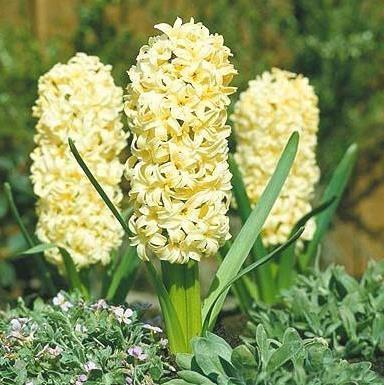
Although hyacinth is beautiful, it is indeed toxic, so it should not be placed in the bedroom; it should be placed in a well-ventilated place. Also, hyacinth pollen can easily cause skin allergies, so avoid putting your nose close to the flower to smell it. Placing it on the living room table is not something to worry too much about. In addition, the hyacinth bulb is also toxic. If swallowed by mistake, it can cause symptoms such as dizziness, stomach cramps, and diarrhea, and in severe cases can lead to paralysis and may be fatal.
Water: Keep the plant moist during the growth period and flowering period. The general indoor air humidity is sufficient.
Fertilizer: No fertilization is needed during the flowering period. Apply topdressing once each before and after flowering, and apply sufficient base fertilizer when planting.
Soil: Well-drained, fertile sandy loam is suitable. Avoid heavy soil, or cultivate by hydroponics.
Temperature: Cold-tolerant.
Light: Placing it indoors during the flowering period makes it last longer. If conditions permit, it is best to place it for 4 hours daily in front of bright south, east, and west windows.
Hyacinth habits are sun-loving and cold-tolerant, suitable for growing in cool, humid environments and loose, fertile sandy soil, and avoiding waterlogging.
Although hyacinth is beautiful, it is indeed toxic, so it should not be placed in the bedroom; it should be placed in a well-ventilated place. Also, hyacinth pollen can easily cause skin allergies, so avoid putting your nose close to the flower to smell it. Placing it on the living room table is not something to worry too much about. In addition, the hyacinth bulb is also toxic. If swallowed by mistake, it can cause symptoms such as dizziness, stomach cramps, and diarrhea, and in severe cases can lead to paralysis and may be fatal.