How to Plant Hyacinth Bulbs: A Guide to Planting Methods
How to Plant Hyacinth Bulbs: A Guide to Planting Methods
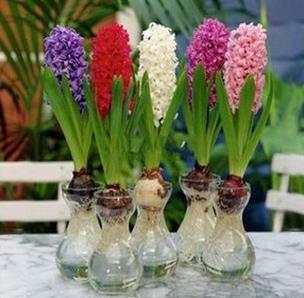
First
The soil and bulbs need to be disinfected. Use carbendazim or similar dissolved in water to wash the bulbs and soak the soil. After soaking the soil, it needs to dry, then add a rooting-promoting nutrient solution such as Cuiyun B1. If you have a microwave at home, you can put the soil in the microwave on high for one minute, then take it out and let it cool before use.
Second
The soil needs good aeration; ordinary potting soil will also do. Remember, this soil must be disinfected and already thoroughly soaked with a rooting solution, B1, or similar nutrient solution. Then place the bulb on top of the soil without covering it. Next, spread decorative stones or small pebbles to hold the bulb at about one quarter of its height, that is, about 1 cm to 2 cm above the base of the bulb.
Third
Newly planted bulbs do not need to be watered by the soaking method; wait until the soil has lost 50-80% of its moisture after planting, then use the soaking method to water. The water for the soaking method needs B1 or a similar rooting nutrient solution. (Soaking method: place a small bowl or saucer under the flower pot, put water in the bowl or saucer, and water in this way rather than pouring water directly into the pot.) Key points for soil culture: do not water too much, but you can spray water into the surrounding air to increase humidity. During the soaking method, there is no need to spray water into the air.
First
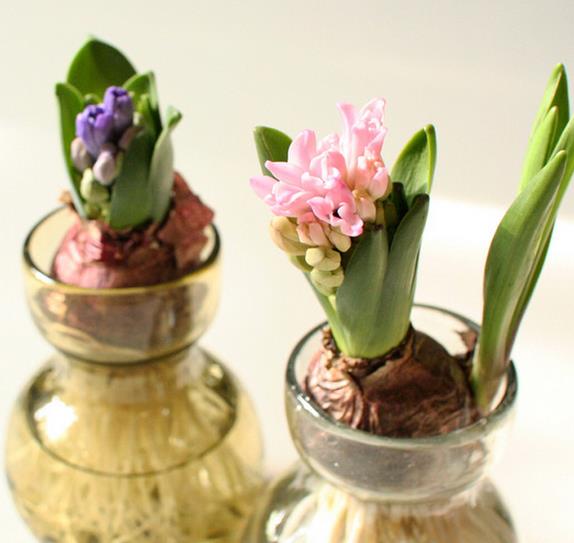
The bulbs still need to be disinfected; a V-shaped container or the shallow dish type used for forcing narcissus will do. Other containers can also be chosen; I will explain the method at the end.
Second
After mixing a rooting nutrient solution, such as a rooting agent or Cuiyun B1 solution, with water, for a V-shaped container you only need to place the bulb in it. (The nutrient solution only needs to reach the base of the bulb.) If the container is transparent, please cover it with black cloth or dark cloth. After shading, place it in a room with light; do not put it in a place with overly strong sunlight, or that is too cold or too dark, otherwise sprouting will be very weak.
For the shallow dish, use decorative stones to hold the bulb in place, and the water should likewise only reach the base of the bulb.
For other containers, such as a bowl, or a non-draining flower pot without a drainage hole, fill it completely with decorative stones, place the bulb on top, and the water should still only reach the base, not higher. Otherwise it easily causes rot.
Key to water culture: transparent containers must be shaded. First place in a spot with moderate light, then after sprouting, move to a spot with more light. Do not suddenly move it from a moderate-light spot to a spot with very bright light. Only increase light gradually, with an interval of 3 days to 1 week before moving to the next brighter spot.
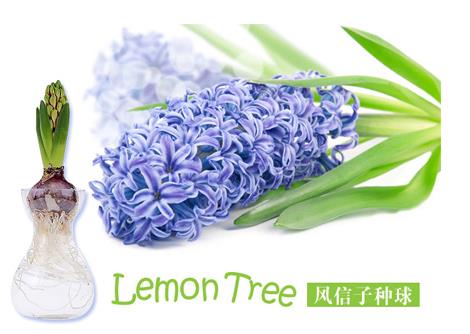
1. Bulb treatment. Bulbs must be disinfected before planting, otherwise they will rot, especially when planted in soil. Flower medicine: carbendazim is an essential fungicide for tulip, hyacinth, and similar bulbs; flower medicine: Peilei thiophanate-methyl (commonly known as Topsin-M) 5 g for bulb disinfection, killing fungi; carbendazim and other drugs that kill fungi and bacteria will do. After buying the fungicide, mix it into a 1:1000 solution (it does not have to be this precise; approximately is fine). When disinfecting, first peel off the brown outer skin of the bulb and wash off the mold spots and mold patches on the surface. If there is a larger area, peel off another layer. Remove the small side bulbs growing beside the bulb, as leaving them will consume the nutrients of the flowering bulb. After washing, soak the bulb in the disinfectant solution for about half an hour. Then take it out and let it dry. After disinfection, it is time to prepare for planting; after soaking in water, it will grow roots.
2. Pot selection. For soil-cultured pot planting, what size pot is suitable? Generally, for hyacinths, use a pot with a diameter of 8-10 cm for one bulb, and a pot with a diameter of 20 cm for 3-4 bulbs.
3. Planting depth. For soil culture, after burying the bulb, just leave a little tip showing above the soil surface, 1-2 mm.
4. Fertilizer. Hyacinth bulb plants like soil rich in phosphorus and potassium fertilizer, so before planting, if you have Peilei refined bone meal (200 g pack), Cuilei, flower-and-fruit promoters, or similar, put some at the bottom of the pot; this will make them grow very well.
5. Rooting and sprouting. Bulb plants such as hyacinths need a relatively low temperature to root, generally around 10 degrees. Rooting takes about 14 days. After planting, just place them directly on an open balcony. So if after planting you find there is no movement at all, do not worry; by then the roots have already grown quite long. During rooting, it is best to cover with cardboard or a paper tube so that the newly emerging sprouts are not exposed to light; this can prevent "short neck" disease. Short neck disease means the hyacinth flower stem cannot emerge and cannot grow tall, with the flower stuck in the middle when blooming. After two weeks, it can be removed. [Bulb circumference (cm)] 17/18 [Planting depth (cm)] 0-10 [Fragrance (rating)] 1 [Flowering period] Under natural conditions, it blooms from March to April.
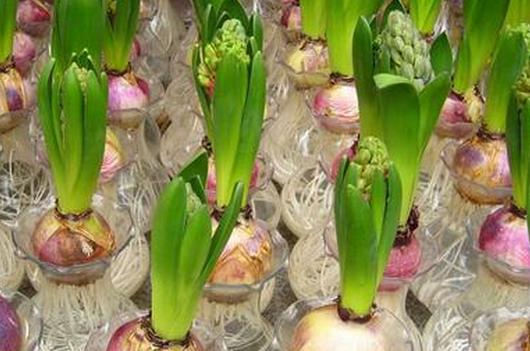
6. Watering. Before sprouting, do not water unless dry. There are no fixed rules for watering plants; hyacinths relatively need more water, especially during vegetative growth and flowering. During this period, provided there is sufficient direct light and the soil does not hold water poorly, you can keep the soil moist, that is, water thoroughly after the soil surface dries. If direct light is poor, you can appropriately extend the watering interval. When watering, be careful not to pour water into the leaf center.
7. Care until flowering. After low temperature promotes root growth, then a slightly higher temperature promotes leaf growth, and finally higher temperature and sufficient sunlight allow full stems and leaves and abundant flowers. Hyacinths are relatively cold-tolerant, and there must be sufficient direct light during the day, otherwise the plants will become leggy, and in severe cases will not bloom. During the flowering period, place in a bright spot for 4 hours a day. At other times, it can be placed indoors for enjoyment. Generally, from planting to flowering takes about 50-60 days.
8. Post-flowering treatment. For soil-cultured hyacinths, if nutrition keeps up, they can continue to bloom the next year. When the flowers are about to fade, cut off from half of the flower stem to prevent cutting too low and causing rot downward. Continue fertilizing and keep the green leaves growing to accumulate nutrients. When watering, be sure not to water the bulb. As June approaches, gradually reduce watering; after the leaves turn yellow, dig them out.
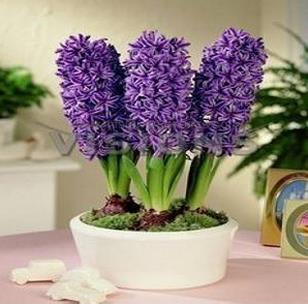
1. Disinfect the bulbs, soak them in 1000 times diluted Topsin-M for 20 minutes, then plant them in a prepared container, covering with 4 cm to 5 cm of soil above, and after planting place them in an environment of about 9°C; rooting begins in about 15 days.
2. Place the rooted bulbs under conditions of 15°C to 18°C to promote flowering; they can bloom after 50 to 60 days.
3. Regulate the flowering period by understanding the characteristics of the variety, that is, the growth periods of early, mid, and late varieties, and count backward from the flowering date, which is the starting date of the flowering promotion period.
4. Keep the bulbs that have already bloomed well, place them in a cooler environment to maintain a good growth state, and cut off the flower stems. Be careful to apply decomposed fertilizer in time to make the bulbs plump. Pay attention to pest and disease control throughout the growing season.
5. In late autumn, as the weather gradually turns cold, place the pot outside to let it sprout again; for bulbs that have already sprouted, simply repeat step 2, and they will bloom again when needed.
6. For bulbs that have not undergone low-temperature treatment, after potting, place them in a naturally cool environment for low-temperature treatment; after the bulbs sprout, promote flowering.
6. Watering. Before sprouting, do not water unless dry. There are no fixed rules for watering plants; hyacinths relatively need more water, especially during vegetative growth and flowering. During this period, provided there is sufficient direct light and the soil does not hold water poorly, you can keep the soil moist, that is, water thoroughly after the soil surface dries. If direct light is poor, you can appropriately extend the watering interval. When watering, be careful not to pour water into the leaf center.
7. Care until flowering. After low temperature promotes root growth, then a slightly higher temperature promotes leaf growth, and finally higher temperature and sufficient sunlight allow full stems and leaves and abundant flowers. Hyacinths are relatively cold-tolerant, and there must be sufficient direct light during the day, otherwise the plants will become leggy, and in severe cases will not bloom. During the flowering period, place in a bright spot for 4 hours a day. At other times, it can be placed indoors for enjoyment. Generally, from planting to flowering takes about 50-60 days.
8. Post-flowering treatment. For soil-cultured hyacinths, if nutrition keeps up, they can continue to bloom the next year. When the flowers are about to fade, cut off from half of the flower stem to prevent cutting too low and causing rot downward. Continue fertilizing and keep the green leaves growing to accumulate nutrients. When watering, be sure not to water the bulb. As June approaches, gradually reduce watering; after the leaves turn yellow, dig them out.
1. Disinfect the bulbs, soak them in 1000 times diluted Topsin-M for 20 minutes, then plant them in a prepared container, covering with 4 cm to 5 cm of soil above, and after planting place them in an environment of about 9°C; rooting begins in about 15 days.
2. Place the rooted bulbs under conditions of 15°C to 18°C to promote flowering; they can bloom after 50 to 60 days.
3. Regulate the flowering period by understanding the characteristics of the variety, that is, the growth periods of early, mid, and late varieties, and count backward from the flowering date, which is the starting date of the flowering promotion period.
4. Keep the bulbs that have already bloomed well, place them in a cooler environment to maintain a good growth state, and cut off the flower stems. Be careful to apply decomposed fertilizer in time to make the bulbs plump. Pay attention to pest and disease control throughout the growing season.
5. In late autumn, as the weather gradually turns cold, place the pot outside to let it sprout again; for bulbs that have already sprouted, simply repeat step 2, and they will bloom again when needed.
6. For bulbs that have not undergone low-temperature treatment, after potting, place them in a naturally cool environment for low-temperature treatment; after the bulbs sprout, promote flowering.