How to Grow Gardenia in Water? A Detailed Guide to Care Methods
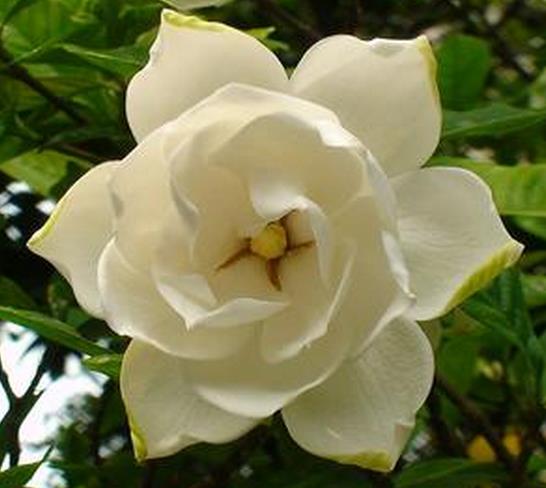
With its pure white flowers, jade-green leaves and rich fragrance, the gardenia is one of the most captivating flowering plants of early summer. Let's learn about how to grow gardenia in water.
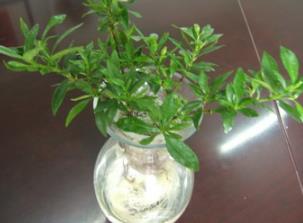
To grow gardenia in water, take a 10-12cm one-year-old branch and keep 2-4 leaves. Cut the tip of the gardenia branch into a horse-ear shape, soak it in a 0.1% potassium permanganate solution for 4-6 hours, then take it out and insert it into clean water, with the submerged length being 1/3 of the total cutting length.
Growing gardenia in water requires a brown bottle as the container, with the water changed once every 1-2 days. Alternatively, drill small holes in a wooden board or foam board, insert the cuttings into the holes, and let them float on the water surface, with 2/3 of the cutting length remaining above the floating body and 1/3 inserted into the water. After the water-grown gardenia develops new roots, move it from a dark place to a bright place. When the roots reach 1.5-2 cm and a single plant has 6-7 roots, it can be transplanted into a pot or planted in the ground.
Is Growing Gardenia in Water Feasible?
Gardenia likes a warm, humid environment with plenty of light and good ventilation, and it dislikes intense direct sunlight. Gardenia is suited to living in slightly shaded spots, tolerates partial shade, and fears waterlogging. Gardenia is very well suited to water culture; water-grown gardenia roots very quickly and has strong adaptability.
To grow gardenia in water, first select robust branches, because the quality of the branch directly determines how well the plant grows. For water-grown gardenia, choose a branch with a thick main stem and more than three small branches growing from that one main stem; such a gardenia is easy to keep alive in water and has a beautiful shape.
Because gardenia branches may carry insect eggs, to avoid insects during water culture, first wash the gardenia branch clean, taking care not to damage the bark. For water-grown branches, prune off the overgrown twigs and leaves and any leaves that have been bitten by insects; for larger leaves, cut off more than half horizontally to prevent too-rapid evaporation, which would make the gardenia leaves wilt and dry up.
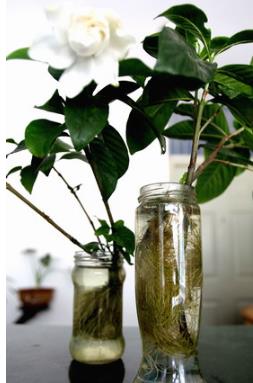
Among all cuttings, I have never seen anything easier than rooting gardenia cuttings, using the water culture method directly, and then transplanting after the gardenia has rooted, which is really very convenient.
Time for cuttings:
If using water culture, you can actually do it all year round, because indoors you can create the environment and temperature. The best periods are early June to early August, and early October to mid-November. During these periods you can use either soil cuttings or water culture; these two periods are called summer cuttings and autumn cuttings respectively. Summer and autumn cuttings have relatively high temperatures, so rooting is very easy, while winter is a bit worse.
Tools needed:
A container for holding water (a cup, any bottle or jar, well, a mineral water bottle will do), preferably a transparent glass one, so you can see how clear the water is and change it at any time. You can also observe the growth state of the roots.
If the container is large, you can insert several branches together in the bottle like flower arranging; if there are too few, they need to be fixed in place.
Selecting branches:
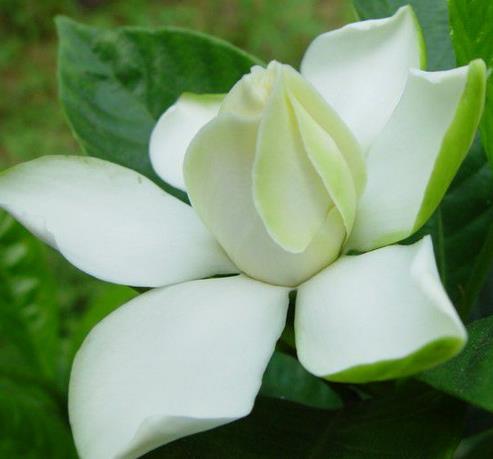
This step is actually the most important; do it well and you are halfway to success. For gardenia branches, choose 1-2 year old branches; too young and they rot easily, too old and they do not root easily. Bright green bark, no pests, and robust growth are the most basic conditions: there are many gardenia varieties, and common ones include "Large-flowered Gardenia", "Oval-leaf Gardenia", "Small-leaf Gardenia", "Narrow-leaf Gardenia", "Variegated-leaf Gardenia" and so on. I personally prefer "Large-flowered Gardenia", whose flowers are large and pure white with a rich fragrance, so from a group of fragrant, large-flowered young and middle-aged gardenia trees I chose new two-year-old Large-flowered Gardenia branches for cuttings. It is recommended to choose several branches and grow them in water together.
The selected branch generally should keep three nodes; remove the leaves on the lowest node, and keep only 1-2 leaves on the upper two nodes to reduce transpiration and aid photosynthesis. Cut 1-2 cm below the bottom node into a horse-hoof shape; if the branch is taken from the middle section, cut the upper node flat 1-2 cm above it. The roots grow from the slanted cut.
Insert the trimmed branch into the prepared bottle. Since this is water culture, there is no need to consider a growing medium; simply put clean water in the container and change it at any time to prevent the cut from rotting.
Pruning Time and Methods for Water-Grown Gardenia
Gardenia should be pruned in April before buds form. When the gardenia is about to bloom, the plant has already shifted from vegetative growth to reproductive growth, and the temperature is relatively high, so it is not suitable for pruning, and certainly not for comprehensive heavy pruning.
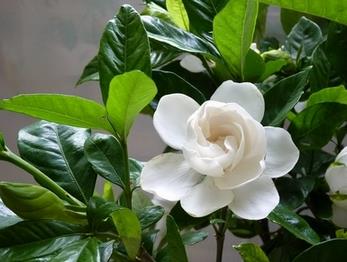
Gardenia forms flower buds in April, so between April and May, apart from cutting off individual messy branches and leaves, the focus should generally be on protecting the buds; it blooms in June, and spent flowers should be cut off promptly to encourage new shoots to sprout. When the new shoots grow to 2 or 3 nodes, carry out the first pinching, and appropriately remove some axillary buds; in August, pinch the secondary branches to build the crown, and you will get a plant with a beautiful tree shape.
Gardenia forms flower buds in April, so between April and May, apart from cutting off individual messy branches and leaves, the focus should generally be on protecting the buds; it blooms in June, and spent flowers should be cut off promptly to encourage new shoots to sprout. When the new shoots grow to 2 or 3 nodes, carry out the first pinching, and appropriately remove some axillary buds; in August, pinch the secondary branches to build the crown, and you will get a plant with a beautiful tree shape.