What Is the Flower Language of Blue Hyacinth? An Introduction to Hyacinth Flower Language
Hyacinth is a perennial herb. The bulb is egg-shaped with a membranous outer skin. The leaves number 4 to 8, narrowly lanceolate, fleshy, with a groove on the surface, green and glossy. The flower stem is fleshy, slightly taller than the leaves; the raceme is terminal, with 5 to 20 flowers, horizontal or nodding, funnel-shaped, with a long perianth tube that swells at the base and recurved oblong lobes; the flowers come in purple, white, red, yellow, pink, blue and other colors, and there are also double-flowered, large-flowered, early-flowering and polyploid varieties. How much do you know about the blue hyacinth, and do you know what its flower language is? Here is a detailed introduction to the relevant knowledge.
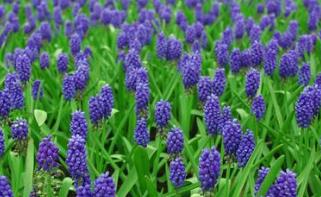
An Introduction to the Blue Hyacinth Flower Language
Blue Hyacinth Flower Language
Life, nobility and richness, constancy, chastity, as happy as seeing you.
Hyacinth is one of the bulbous flowers of the lily family that blooms in early spring. In Greek mythology, there is a legend about the hyacinth: the sun god Apollo was very close to Hyacinthus, the grandson of Zeus, and the west wind god was very jealous. Once, when Apollo was throwing a discus, the west wind god blew the discus toward Hyacinthus's head; blood flowed from Hyacinthus's head and a flower grew from it, which was the hyacinth. Besides being planted in gardens, hyacinths can be cut and placed in a vase indoors, making them suitable both for enjoying the fragrance and for beautifying the room; the fragrance is rich and the colors are varied. Europeans have a special affection for hyacinths: in legend, Venus, the goddess in charge of beauty and love, loved to gather the dew on hyacinth petals to bathe in so as to make her skin more beautiful and smooth. In the United Kingdom, the blue hyacinth has always been an indispensable flower material for bridal bouquets or decorations at weddings; it is a symbol of happiness and also carries the meaning of pure chastity.
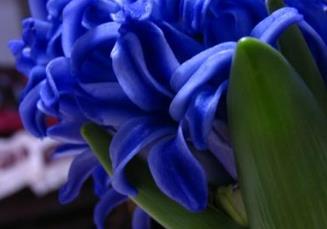
This is the flower chosen to honor a Christian believer of the fourth century AD who defied the emperor's order and refused to carve portraits of pagans, and died for it. He was a stonemason, so the hyacinth is also called the "stonemason's flower." The spirit it represents is a very firm and stubborn adherence to one's own beliefs. Therefore, the flower language of the hyacinth is - stubbornness. People born under the blessing of this flower are particular about their own beliefs and sense of aesthetics, even in love. Once they like someone, even if the people around them try to talk them out of it, they will certainly forge ahead and stop at nothing. Someone like you must carefully choose an honest partner!
The blue hyacinth is one of the representative potted plants deeply loved by Europeans. Through continuous variety improvement, there are now also white, yellow and other colored hyacinths, but the most original variety is blue. In other words, the blue hyacinth is the ancestor of all hyacinths, so its flower language is - life. Anyone born under the blessing of this flower has a life full of vitality. Of course, they also attract a lot of attention from the opposite sex, and their love luck is quite good!
The blue hyacinth is one of the representative potted plants deeply loved by Europeans. There are hyacinths in white, yellow, red, pink, peach and other colors, but the most original variety is blue. In other words, the blue hyacinth is the ancestor of all hyacinths, so its flower language is also - life. Anyone born under the blessing of this flower has a life full of vitality. Of course, they also attract a lot of attention from the opposite sex, and their love luck is quite good!
In the United Kingdom, the blue hyacinth has always been an indispensable part of bridal bouquets or wedding decorations, representing the purity of the newlyweds and the hope of bringing happiness.
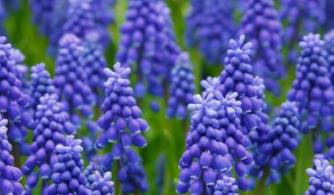
An Introduction to Hyacinth Flower Language
Purple Hyacinth Flower Language
Sorrow, melancholy love. Apology, regret, (if you receive my love, you will surely be happy)
The normal flowering period of the hyacinth is early spring. But like the tulip, hyacinths treated with low temperatures can bloom around the Spring Festival. However, after the hyacinth's flowering period ends, if you want it to bloom again, you need to cut off the previous dying flowers. So the hyacinth also represents reborn love. Forget the sorrow of the past and begin a brand-new love.
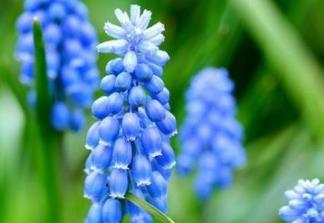
Hyacinth Flower Colors and Flower Language
Purple hyacinth: sorrow, melancholy love. Apology, regret. (If you receive my love, you will surely be happy)
Light purple hyacinth: gentle temperament, romantic feelings. Sorrow.
White hyacinth: secret love. Pure and quiet, or love that one does not dare to reveal.
Red hyacinth: thank you, touching love (your love fills my heart).
Peach hyacinth: represents passion.
Pink hyacinth: admiration, romance.
Yellow hyacinth: I am very happy as long as I have you.
Blue hyacinth: nobility and richness, constancy, chastity, as happy as seeing you.
Dark blue hyacinth: a little melancholy because of love.
Light green hyacinth: if you want to have no secrets, you must first have a kind heart.
Hyacinth Birthday Flower Language
The birthday flower for [January 4] is the white hyacinth (Hyacinth), and its flower language is playing in the world;
The birthday flower for [January 16] is the yellow hyacinth, and its flower language is competition;
The birthday flower for [February 6] is the blue hyacinth (Bluehyacinth), and its flower language is life;
The birthday flower for [April 6] is the hyacinth (CommonHyacinth), and its flower language is rest;
The birthday flower for [November 8] is the hyacinth (CommonHyacinth), and its flower language is stubborn (Stubborn);
The birthday flower for [November 9] is the hyacinth (CommonHyacinth), and its flower language is attention (Attention);
The birthday flower for [November 12] is the hyacinth (CommonHyacinth), and its flower language is morality (Moral).
The Flower Language Legend of the Hyacinth in Ancient Greece
There is such a legend in ancient Greek mythology: Hyacinthus, the grandson of Zeus (also translated as Asintus), was the Greek god of plants, a handsome young man. The sun god Apollo and the west wind god Zephyrus were both very close to him, yet Hyacinthus was only close to Apollo; they went fishing, hunting and engaged in various athletic activities together, and the west wind god was very jealous.
Once, Apollo and Hyacinthus were throwing a discus together. Apollo threw first, and Hyacinthus waited at the side. The west wind god took the opportunity to change the discus's trajectory and blew it toward Hyacinthus, and it struck Hyacinthus's forehead. Apollo tried every possible means to save Hyacinthus's life, but it was of no avail. On the land stained red with blood grew a hyacinth, and the sun god named it Hyacinthus in memory of his good friend.
Yellow hyacinth: I am very happy as long as I have you.
Blue hyacinth: nobility and richness, constancy, chastity, as happy as seeing you.
Dark blue hyacinth: a little melancholy because of love.
Light green hyacinth: if you want to have no secrets, you must first have a kind heart.
Hyacinth Birthday Flower Language
The birthday flower for [January 4] is the white hyacinth (Hyacinth), and its flower language is playing in the world;
The birthday flower for [January 16] is the yellow hyacinth, and its flower language is competition;
The birthday flower for [February 6] is the blue hyacinth (Bluehyacinth), and its flower language is life;
The birthday flower for [April 6] is the hyacinth (CommonHyacinth), and its flower language is rest;
The birthday flower for [November 8] is the hyacinth (CommonHyacinth), and its flower language is stubborn (Stubborn);
The birthday flower for [November 9] is the hyacinth (CommonHyacinth), and its flower language is attention (Attention);
The birthday flower for [November 12] is the hyacinth (CommonHyacinth), and its flower language is morality (Moral).
The Flower Language Legend of the Hyacinth in Ancient Greece
There is such a legend in ancient Greek mythology: Hyacinthus, the grandson of Zeus (also translated as Asintus), was the Greek god of plants, a handsome young man. The sun god Apollo and the west wind god Zephyrus were both very close to him, yet Hyacinthus was only close to Apollo; they went fishing, hunting and engaged in various athletic activities together, and the west wind god was very jealous.
Once, Apollo and Hyacinthus were throwing a discus together. Apollo threw first, and Hyacinthus waited at the side. The west wind god took the opportunity to change the discus's trajectory and blew it toward Hyacinthus, and it struck Hyacinthus's forehead. Apollo tried every possible means to save Hyacinthus's life, but it was of no avail. On the land stained red with blood grew a hyacinth, and the sun god named it Hyacinthus in memory of his good friend.