A Detailed Guide to Gardenia Propagation Methods and Care Precautions
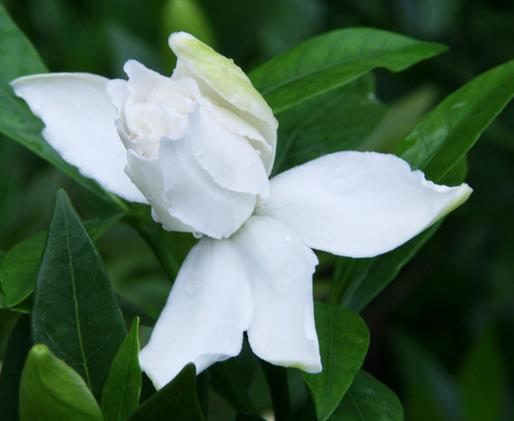
Gardenias are mainly propagated by cuttings and layering; they can also be propagated by seed, division, or water rooting. Let's take a closer look at gardenia propagation methods.
1. Cutting propagation
In the north, cuttings can be taken in a greenhouse from October to November; in the south, cuttings can be taken anytime from April to the beginning of autumn, but the survival rate is highest between summer and autumn. Choose healthy 2-year-old branches for the cuttings, 10-12 cm long, remove the lower leaves, and cut the bottom end into a 45-degree slant. Tie every 20-30 cuttings into small bundles, dip the slanted cut ends into a 0.05% rooting powder solution or 0.05% naphthalene acetic acid solution for 15 seconds, remove and let the solution dry, then insert them into sand at a row spacing of 20-25 cm and a plant spacing of 7-8 cm, inserting the slanted end two-thirds of the way into the soil. Firm the soil and water, then set up a low shade frame for shade.
Under conditions of 80% relative humidity and a temperature of 20-24°C, roots can form in about 15 days. If soaked in 20*10 to the -6th power to 50*10 to the -6th power indolebutyric acid for 24 hours, the effect is even better. When the rooted seedlings begin to grow, transplant them or pot them individually; they can bloom after 2 years. In the north, water propagation can also be used, that is, soaking the base of the cuttings in clean water, changing the water once a day, and placing the water container in a semi-shaded spot; new roots can grow in about 20 days. Cultivation, weeding, and topdressing should be strengthened (see seed propagation). After 1-2 years of cultivation, when the seedlings reach 40-50 cm in height, they can be transplanted. This propagation method not only yields a large number of seedlings, but can also bring earlier flowering and fruiting while maintaining the superior traits of the mother plant.
2. Layering propagation
In April, select vigorous branches 25-30 cm long from a 3-year-old mother plant for layering. If there is a three-pronged branch, layer it at the fork, and three seedlings can be obtained at once. Generally, roots form in 20-30 days, and in June they can be separated from the mother plant; by the following spring they can be planted separately or potted individually.
3. Seed propagation
This is mostly done in spring. Seeds germinate slowly, sprouting about 1 year after sowing, and bloom after 3-4 years. In the north, it is difficult to obtain seeds from potted plants.
1) Seed selection: Choose plump, deep-red ripe fruits, dry them in the shell under the sun or in the shade to use as seed. Before sowing, cut open the fruit skin with scissors, dig out the seeds, rub them apart in hot water, remove floating seeds or impurities, then scoop out the sunken, plump seeds, spread them on a bamboo mat, and place them in a ventilated spot to dry off excess moisture before sowing.
2) Site selection and land preparation: Choose deep, loose, fertile sandy loam, plow 1-1.5 chi deep, make beds 4-5 chi wide with a bed height of 6 cun, and apply 20-30 dan of human and animal manure per mu. After the soil dries, lightly rake the clods and level the bed surface. Open sowing furrows on the bed surface at a row spacing of 6-7 cun, about 1 cun deep, ready for sowing.
3) Sowing and seedling cultivation: Spring sowing or autumn sowing can be used. For spring sowing, sow around the time of Yushui; for autumn sowing, sow around the time of Qiufen. When sowing, mix the seeds with plant ash and sow them evenly in the furrows, then cover the furrows with fine soil or burnt soil, cover with grass, and sprinkle water. Keep the soil moist regularly to promote seedling emergence. Use 4-6 jin of seed per mu.
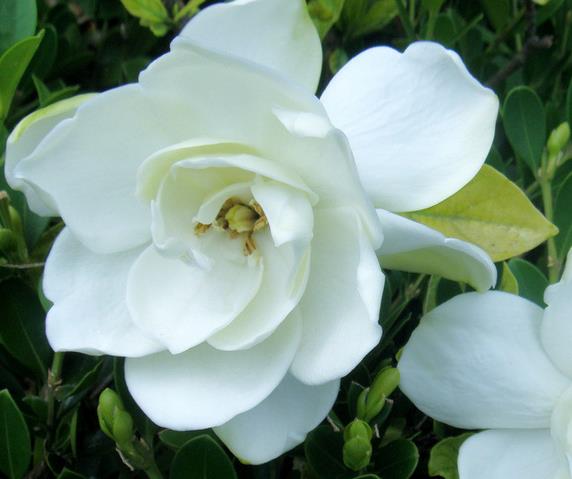
4) Division propagation: Around the root zone of gardenias, many suckers often grow. Every year in early spring or late autumn and early winter, select vigorously growing plants, dig away the surface soil around them, and cut the suckers apart from where they connect to the mother root with a knife, separating them to use as planting stock.
4. Water rooting
Take 1-year-old branches 10-12 cm long and keep 2-4 leaves. Cut the tip of the branch into a horseshoe shape, soak it in a 0.1% potassium permanganate solution for 4-6 hours, then remove it and insert it into clean water, with the submerged length being 1/3 of the total cutting length. Use a brown bottle as the container and change the water every 1-2 days. Alternatively, drill small holes in a wooden board or foam board, insert the cuttings into the holes, and let the board float on the water, with 2/3 of the cutting length remaining above the floating body and 1/3 inserted into the water.
After new roots grow, move them from a darker place to a bright place. When the roots reach 1.5-2 cm and each plant has 6-7 roots, they can be transplanted into pots or planted in the ground.
Care Tips for Gardenia Propagation Methods
First, acidic soil cultivation. Gardenias need scattered light, so they like acidic soil. If the soil is alkaline, gardenias cannot absorb iron well, which greatly affects chlorophyll formation and further causes branches to wither and even die. Therefore, the soil must be loose, fertile, acidic soil, and some substances with this effect can also be added to it.
Gardenia Care Methods: Revealing Why Gardenia Leaves Turn Yellow and Fail to Bloom (Gardenias have excellent decorative value)
Second, place them in a cool spot. Gardenias must never be exposed to blazing sun, otherwise the leaves will turn yellow and wither. But this does not mean placing them in full shade, because they still need some light. It is best to place them where they receive 60% light daily. In addition, after April begins, fertilize twice a month.
a. When you see the soil has dried, tap the flower pot with your hand. If there is a hollow sound, it needs watering; stop when water begins to leak from the bottom of the pot. It is best to add some egg or soybean milk to the water, as this is more beneficial to growth.
Gardenia Care Methods: Revealing Why Gardenia Leaves Turn Yellow and Fail to Bloom (A blooming gardenia, a different kind of beauty)
Fourth, key fertilizing points. Gardenias like fertilizer, but too much fertilizer must not be added at once. Be sure to apply thin fertilizer frequently, and never cut corners, otherwise the branches will become thick, the leaves large and deep green, and the plant will lose its own ornamental appeal.
Fifth, temperature requirements. The growing temperature for gardenias must not be too low, because they like warmth. Generally, the ideal growing season temperature is 18 to 22 degrees, and 5 to 10 degrees in winter. If it falls below minus 10 degrees, they will suffer frost damage, and the north should pay special attention to this.
Sixth, proper pruning. Gardenias grow very easily into lush branches and leaves, creating a dense, airless, and chaotic look. This disperses nutrients and reduces ornamental value, so they need pruning. When pruning, it is best to keep 3 main branches, and remove new shoots sprouting from root suckers at any time. After flowering, the branches should be cut back promptly, so that new shoots will sprout below the cut. When the new shoots grow three nodes, pinch them back to prevent blind growth.
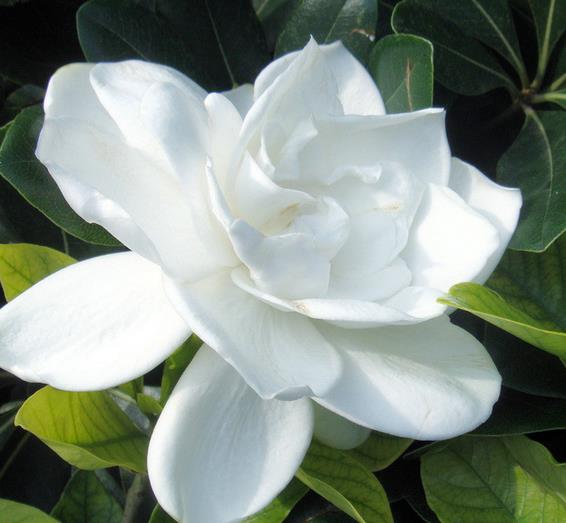
1. Beautiful as a flower, making people unable to put it down.
Gardenias have luxuriant branches and leaves, evergreen foliage in all four seasons, and fragrant, elegant flowers. With green leaves and white flowers, they are especially fresh and lovely, making them excellent landscaping material for courtyards. They are suitable for placement in front of steps, beside ponds, and along roadsides, and can also be used as flower hedges, potted plants, and bonsai for viewing. The flowers can also be used in flower arrangements and worn as decorations.
2. Its medicinal value is something you should not underestimate even more.
The roots, leaves, and fruits of gardenia can all be used as medicine. They have the effects of purging fire and relieving restlessness, reducing inflammation and clearing heat, clearing heat and promoting urination, and cooling blood and detoxifying. In addition, gardenia is resistant to sulfur dioxide and can absorb sulfur to purify the atmosphere; 0.5 kg of leaves can absorb 0.002-0.005 kg of sulfur. Besides ornamental use, gardenia flowers, fruits, leaves, and roots can be used as medicine, generally taken as tea or decocted in water. Gardenia contains gardenoside, dehydroxylated gardenoside, paederoside methyl ester, and a small amount of shanzhiside. It has effects such as clearing heat and promoting urination, cooling blood and detoxifying, and treating jaundice, painful strangury with blood, red swollen painful eyes, fire-toxin sores, and lowering blood pressure. Among these, the gardenia fruit used as medicine mainly treats high fever from febrile disease, restlessness and insomnia, toothache from excess fire, mouth and tongue sores, nosebleeds, vomiting blood, conjunctivitis, sores and swellings, jaundice-type infectious hepatitis, favism, and blood in urine; externally it treats traumatic bleeding and sprains and contusions.
3. When we eat gardenias in daily life, they also have preventive and therapeutic benefits.
1. Clearing heat and cooling blood. Gardenias are bitter and cold, can enter the blood aspect and clear pathogenic heat, and are a supplementary therapeutic food for conditions such as sores and swellings, intestinal wind and dysentery, and reckless bleeding due to blood heat.
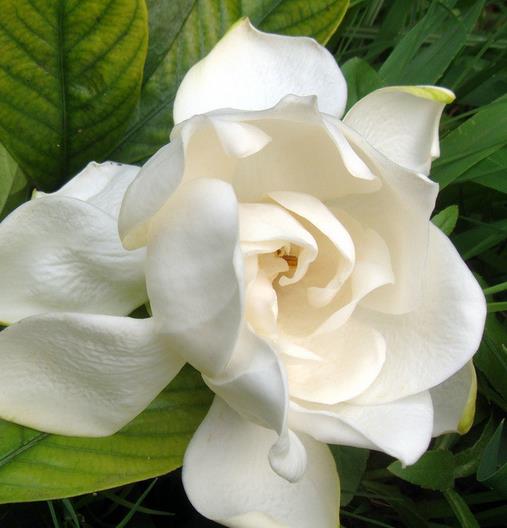
3. Relaxing the intestines and promoting bowel movements, preventing cancer. Gardenias contain cellulose, which can promote large intestinal peristalsis, help with defecation, and prevent the onset of hemorrhoids and the occurrence of rectal tumors.
Third, air humidity. Gardenias like moisture, so the air must not be too dry. According to expert statistics, if the air humidity is below 70%, normal blooming will be affected, but if it is too wet, it will cause root and stem rot and yellowing leaves. So in addition to normal watering, frequently spray clean water nearby. Another very important point is that water must not be applied too much, otherwise growth will also be affected. So how should gardenias be watered?
a. When you see the soil has dried, tap the flower pot with your hand. If there is a hollow sound, it needs watering; stop when water begins to leak from the bottom of the pot. It is best to add some egg or soybean milk to the water, as this is more beneficial to growth.
Gardenia Care Methods: Revealing Why Gardenia Leaves Turn Yellow and Fail to Bloom (A blooming gardenia, a different kind of beauty)
Fourth, key fertilizing points. Gardenias like fertilizer, but too much fertilizer must not be added at once. Be sure to apply thin fertilizer frequently, and never cut corners, otherwise the branches will become thick, the leaves large and deep green, and the plant will lose its own ornamental appeal.
Fifth, temperature requirements. The growing temperature for gardenias must not be too low, because they like warmth. Generally, the ideal growing season temperature is 18 to 22 degrees, and 5 to 10 degrees in winter. If it falls below minus 10 degrees, they will suffer frost damage, and the north should pay special attention to this.
Sixth, proper pruning. Gardenias grow very easily into lush branches and leaves, creating a dense, airless, and chaotic look. This disperses nutrients and reduces ornamental value, so they need pruning. When pruning, it is best to keep 3 main branches, and remove new shoots sprouting from root suckers at any time. After flowering, the branches should be cut back promptly, so that new shoots will sprout below the cut. When the new shoots grow three nodes, pinch them back to prevent blind growth.
1. Beautiful as a flower, making people unable to put it down.
Gardenias have luxuriant branches and leaves, evergreen foliage in all four seasons, and fragrant, elegant flowers. With green leaves and white flowers, they are especially fresh and lovely, making them excellent landscaping material for courtyards. They are suitable for placement in front of steps, beside ponds, and along roadsides, and can also be used as flower hedges, potted plants, and bonsai for viewing. The flowers can also be used in flower arrangements and worn as decorations.
2. Its medicinal value is something you should not underestimate even more.
The roots, leaves, and fruits of gardenia can all be used as medicine. They have the effects of purging fire and relieving restlessness, reducing inflammation and clearing heat, clearing heat and promoting urination, and cooling blood and detoxifying. In addition, gardenia is resistant to sulfur dioxide and can absorb sulfur to purify the atmosphere; 0.5 kg of leaves can absorb 0.002-0.005 kg of sulfur. Besides ornamental use, gardenia flowers, fruits, leaves, and roots can be used as medicine, generally taken as tea or decocted in water. Gardenia contains gardenoside, dehydroxylated gardenoside, paederoside methyl ester, and a small amount of shanzhiside. It has effects such as clearing heat and promoting urination, cooling blood and detoxifying, and treating jaundice, painful strangury with blood, red swollen painful eyes, fire-toxin sores, and lowering blood pressure. Among these, the gardenia fruit used as medicine mainly treats high fever from febrile disease, restlessness and insomnia, toothache from excess fire, mouth and tongue sores, nosebleeds, vomiting blood, conjunctivitis, sores and swellings, jaundice-type infectious hepatitis, favism, and blood in urine; externally it treats traumatic bleeding and sprains and contusions.
3. When we eat gardenias in daily life, they also have preventive and therapeutic benefits.
1. Clearing heat and cooling blood. Gardenias are bitter and cold, can enter the blood aspect and clear pathogenic heat, and are a supplementary therapeutic food for conditions such as sores and swellings, intestinal wind and dysentery, and reckless bleeding due to blood heat.
3. Relaxing the intestines and promoting bowel movements, preventing cancer. Gardenias contain cellulose, which can promote large intestinal peristalsis, help with defecation, and prevent the onset of hemorrhoids and the occurrence of rectal tumors.