How to Grow a Variegated Spider Plant? Care Methods and Precautions
The variegated spider plant is a type of spider plant, a perennial evergreen herbaceous plant, a perennial evergreen herbaceous plant of the genus Chlorophytum in the family Liliaceae. Next, let us take a look at the care of the variegated spider plant.
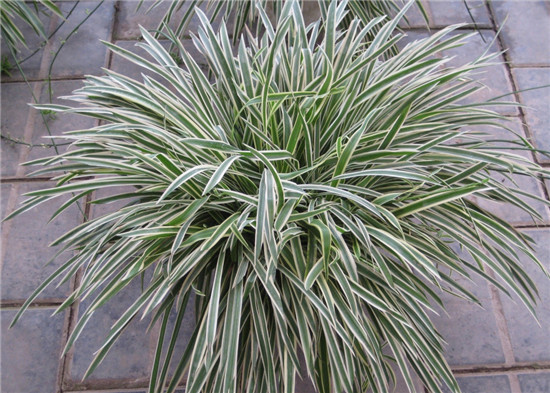
Spider plants are easy to grow and highly adaptable, and are one of the most traditional hanging plants for the home. Its leaves are slender and soft, and small plantlets grow out from the leaf axils, hanging down from the edge of the pot, spreading and trailing gracefully like flowers, evergreen all year round. The spider plant is the "king of formaldehyde removal" among plants.
It can absorb 95% of the carbon monoxide and 85% of the formaldehyde in the air. Spider plants can carry out photosynthesis in weak light, and can absorb toxic and harmful gases from the air. One pot of spider plant in a room of 8-10 sq m is equivalent to an air purifier.
Generally, keeping 1-2 pots of spider plants in a room can release oxygen within 24 hours while absorbing formaldehyde, styrene, carbon monoxide, carbon dioxide and other carcinogenic substances from the air. Spider plants have a particularly strong absorption capacity for certain harmful substances; for example, the carbon monoxide and formaldehyde mixed in the air can be absorbed at 95% and 85% respectively.
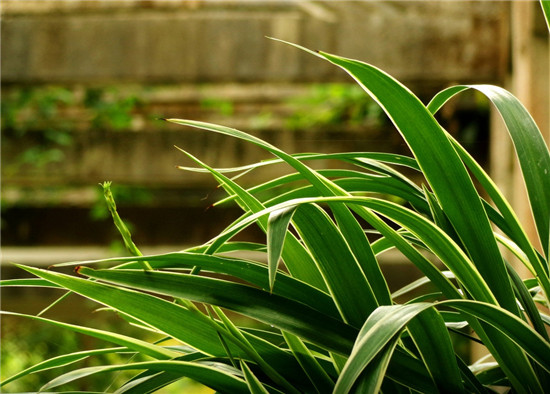
Spider plants can also break down benzene and absorb relatively stable harmful substances such as nicotine in cigarette smoke. In addition, spider plants are also often used indoors, especially in newly renovated interiors, as a "negative ion" purifier, and are believed to have a noticeable effect on reducing the concentration of harmful substances such as formaldehyde and benzene.
Precautions for the Variegated Spider Plant
Temperature for growing the variegated spider plant: Spider plants like to grow in a semi-shady and warm environment. In winter, attention should be paid to protecting them from the cold; spider plants will suffer cold damage when the ambient temperature is below 4°C.
Light for growing the variegated spider plant: Remember never to let direct sunlight fall on the spider plant, otherwise the leaf tips will turn yellow and wither. If the light is too strong, it is recommended to shade it by 50%. In winter, shading can be omitted.
Air humidity for growing the variegated spider plant: In late summer and early autumn, the air is relatively dry, which is not suitable for the growth of spider plants, so during this period the leaves should be sprayed with water frequently to increase humidity.
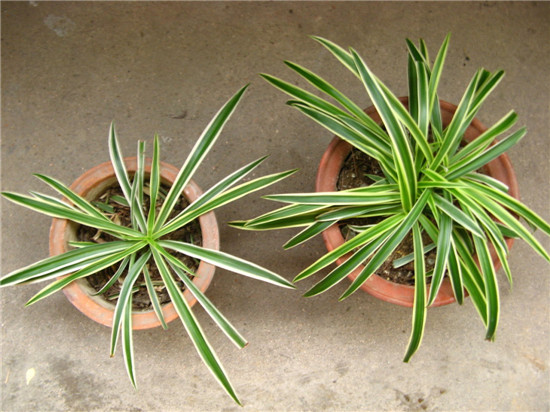
Water for growing the variegated spider plant: Spider plants like moisture, and watering once a day is advisable, but there should not be standing water in the pot. Fertilizer can be applied appropriately when watering, and care should be taken not to apply too much fertilizer.
Propagation for growing the variegated spider plant: Spider plants are plants with a very fast growth rate and can be propagated by cuttings, division, or sowing.
Daily care of the variegated spider plant:
Seed propagation of spider plants can be carried out every March. Because its seeds are not large, the soil covering them after sowing should not be too thick; generally 0.5 cm is sufficient. At a temperature of 15°C, the seeds can sprout in about 2 weeks, and after the seedlings take shape, they can be transplanted for cultivation.
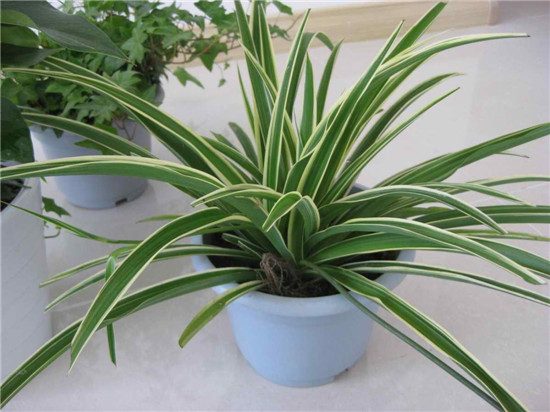
When dividing, the spider plant can be lifted out of the pot, the old soil and rotten roots removed, and the old roots cut apart so that each divided plant retains three stems, then they can be transplanted and cultivated separately. You can also cut off the clustered stems and leaves on the spider plant's stolons (which are actually young new plantlets, with leaves above and aerial roots below) and plant them directly into a flower pot for cultivation.
This plant with grayish-white leaves likes to live in a constant-temperature environment. Placed in small spaces such as bathrooms, windowsills, or shelves, the spider plant is very eye-catching. Its slender, graceful branches and leaves can effectively absorb the formaldehyde released by curtains and even toilet paper, and fully purify the air. The naturally drooping branches and leaves of the spider plant are very beautiful, and when it is lush and leafy, it will occasionally rotate slightly. Moreover, caring for it is not complicated at all.
The above is all the content I have summarized for you on how to care for a variegated spider plant. I hope this article can help everyone. Please also continue to follow us.