A Detailed Guide to the Cultivation Methods and Precautions for Pothos
Pothos is the most common plant to grow, so the cultivation methods for pothos are very important. Next, let us learn about the cultivation methods and precautions for pothos together.
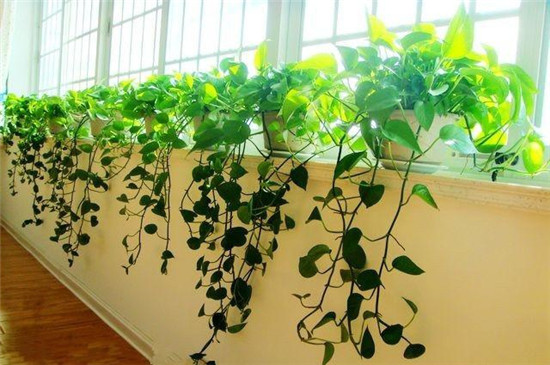
In spring, summer and autumn, pothos can be placed near an east- or north-facing windowsill, while in winter it can be placed at a south-facing window. If it is kept for a long time in an environment with overly dim light, it will not only cause the trailing stems to grow leggy, with longer internodes and a sparse, scattered plant shape, but the yellow-white striped markings on the leaves will also become smaller and paler, and may even fade away completely to green.
If it is grown outdoors, attention must be paid to shading, and especially in summer, care must be taken to prevent direct strong light, otherwise new leaves will become smaller, leaf color will be dull, and the leaf edges will easily be scorched. The suitable temperature for pothos growth is 20°C-30°C, and in winter the room temperature should not be lower than 15°C.
During the growing season, watering should be done so that the potting soil is kept moist most of the time, and the soil must never be allowed to dry out, otherwise yellow leaves and a poor plant shape are likely to result. If too much water is given and water accumulates in the pot, it can easily cause root rot and withered leaves, and especially when winter room temperatures are low, watering must be controlled even more carefully. In summer, while watering thoroughly, also pay attention to spraying water on the leaves regularly. In winter the climate is dry, so the leaves also need to be sprayed and washed once every 4-5 days with warm water to wash away dust on the leaf surface, which helps keep the leaves bright and green.
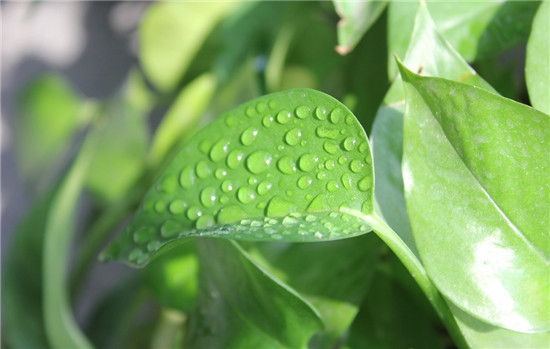
Cultivation Methods for Pothos
1) Soil culture
To grow flowers well, soil is very important. The reason many flower lovers fail to grow flowers well and keep losing them is that soil is a very important part. So when flower lovers cultivate spider plants, if conditions allow, it is recommended to use nutrient soil, or soil with good water permeability of your own.
Having covered soil, next comes the growing environment and watering. From the habits of pothos we can also see that pothos tolerates shade but dislikes direct sunlight, so when choosing a growing environment, a ventilated place with scattered light is best. Watering is a very interesting matter, and many flower lovers cannot get it right. It should be said here that different soils, different pots and different regions all mean different amounts and frequencies of watering. Flower lovers should mainly judge whether to water by the moisture of the soil. A little dryness is not a problem, but do not let water accumulate every day.
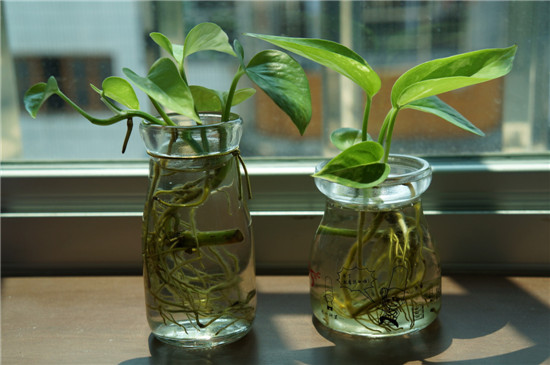
2) Hydroponics
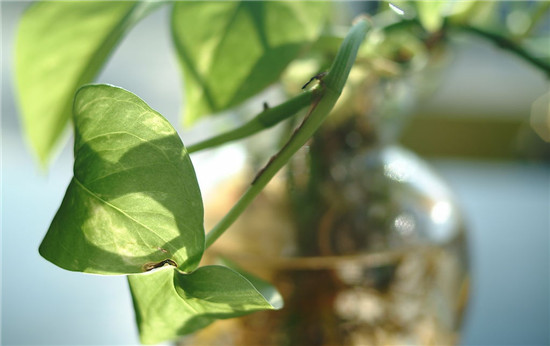
Actually there are two kinds of hydroponics. One is pure hydroponics, and the other is filling a pot or teacup with vermiculite and then filling it with water. Of these two, the vermiculite method is relatively simpler. There is no special trick, mainly it is the environment; you can refer to soil culture, and as for watering, that no longer exists, so flower lovers can water freely.
Precautions for Cultivating Pothos
The precautions are somewhat hard to explain, because the most important precautions are the most basic ones. Here is a brief summary:
1) Soil: It is best to use soil with good air permeability, and do not use garden soil dug from outside.
2) Light: Pothos dislikes direct sunlight, so it can be kept in shade, but not under the sun.
3) Watering: Flower lovers growing in soil can visually check or feel the soil with their hands, and water again if it is dry. Also, you should understand your own soil and see whether it tends to hold water or drains well; this is important for watering.
3) Fertilizing: Fertilizing can make plants grow vigorously, but pothos is generally grown in small pots, so when fertilizing, be sure to use thin fertilizer and apply it frequently.
The above is all the content I have summarized for you on the cultivation methods and precautions for pothos. I hope this article can help everyone. Please also continue to follow us.