Why don't cacti need watering? Master the correct watering techniques
How often should you water a cactus? How to water a cactus is, I think, the question everyone cares about most, so let's find out together!
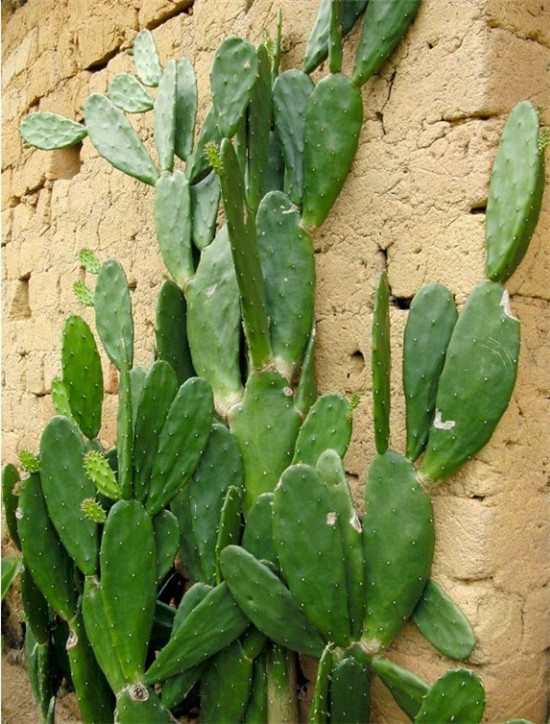
Cacti (including the cactus family) originally grew in water-scarce desert regions. To adapt to their living environment, through long-term evolution, their leaves degenerated into spines to reduce evaporation; their stems became fleshy and can store water, so as long as they absorb enough water once, it can last a very long time, which is why they don't need frequent watering. But that doesn't mean they can survive without any water at all - after all, water is the source of life.
The cactus is one of the most drought-tolerant plants in the world, mainly because of the combined result of its physiological structure and appearance, chiefly the following points:
1. The leaves have mutated into slender spines or white hairs to reduce water transpiration, weaken the harm strong sunlight does to the plant, and also allow moisture to continuously accumulate and condense into water droplets that drip to the ground and are absorbed by the very shallow root system;
2. The stem is thick, fleshy and juicy, with well-developed parenchyma cells and ribs, allowing its body to expand and contract freely: when there is plenty of water in the body it can rapidly swell, and when there is drought and a lack of water it can shrink inward, which both protects the plant's epidermis and has a heat-dissipating and cooling effect.
3. The epidermis of the stem has a thick, hard waxy layer as a protective coating, or grows dense fine hairs, protecting it from strong light and reducing water evaporation.
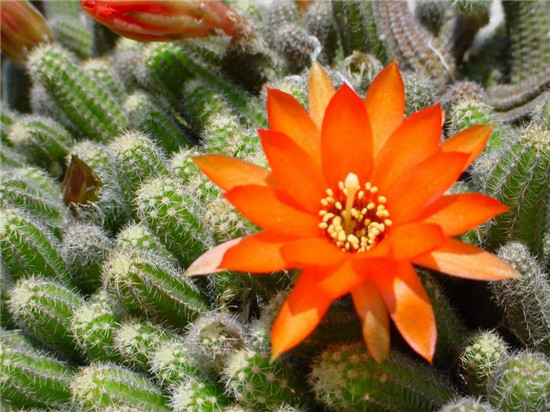
Most people think of the cactus as a "lazy person's plant" that needs no care, but this is actually a misconception. In fact, cacti, like other plants, need people to give them careful attention. According to my own experience, keeping a cactus alive, keeping it well, and getting it to flower and fruit is not an easy thing. First, you must meet the cactus's special requirements for its growing medium; second, there must be sufficient light, as almost all cacti love sunlight; third, you must ensure the cactus's nutrient needs, so fertilizing is essential; fourth, there must be an environment with air circulation - without fresh air, cacti cannot be grown well; fifth, you must supply water, and watering is a particularly important step - watering too much, or not watering at all, both won't do; the key is knowing how to control water and watering according to the plant and the season.
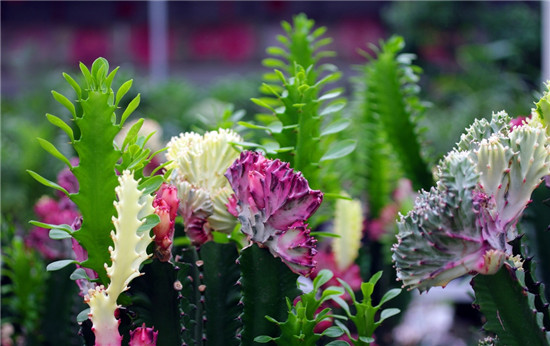
For own-rooted plants versus grafted plants, water control should be a bit stricter for grafted ones. Because the plant is grafted onto a triangular stem (Hylocereus), watering too much easily causes the triangular stem to rot at the roots, while not watering for a long time will also make the triangular stem shrivel, and a plant on a triangular stem is almost "nine deaths to one life."
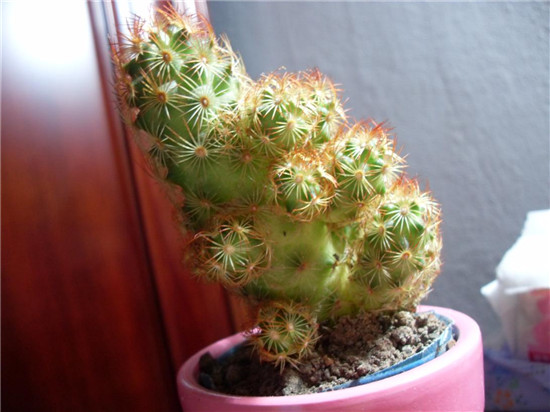
For large plants versus small plants, small plants should be watered more frequently. This is because small plants are grown in relatively smaller pots and the soil dries out easily; large plants hold more water themselves, so their tolerance for water is stronger.
For heavily spined plants versus woolly-haired plants, woolly-haired plants are relatively unsuitable for overhead spraying, as it affects the plant's ornamental value. The spray watering method is generally not used for cacti.
To sum up watering cacti, the following principles should be followed:
The cactus belongs to the cactus family, commonly known as the hedgehog cactus, grows in desert regions, and likes a hot, dry climate. The cactus is native to the grasslands of South America. The cactus is also a plant that flowers, and the flowers it produces come in three colors: white, red and yellow. Giving the cactus appropriate watering helps it bloom. The cactus's flowering period is in summer. Summer weather is relatively dry and hot; to encourage the cactus's flowers to bloom abundantly in summer, you should water the cactus more in summer, generally once a week, and each time just water until the cactus's soil is moist.
Cacti need watering in all four seasons. When watering a cactus in spring and autumn, you only need to water once every half a month, because the weather in these two seasons is relatively warm and the air also carries moisture, and the cactus can absorb moisture from the air through its spines to maintain its water and nutrients. In winter, the cactus does not need watering, because winter weather is relatively cold and the air is filled with fog, so at this time the cactus is not short of water. In the relatively cold winter weather, the cactus is a plant that fears cold but not heat, so in winter you must protect the cactus from the cold.
The above is the entire content of the cactus watering techniques I have summarized for everyone. I hope this article can help you. Please also continue to follow us.
I hope this article can help you. Please also continue to follow us.