Reasons Why Gardenias Don't Bloom and How to Fix Them
Why won't gardenias bloom? What are the causes and how do you solve them?
Cause One: Unsuitable LightGardenias dislike intense light, but they cannot do without light. In summer, gardenias prefer partial shade; in winter, keep them indoors in a spot with ample light. Too much or too little light will both affect blooming in gardenias.
Cause Two: Severe Pests and Diseases
When pests and diseases are severe, the gardenia plant is damaged, and flower buds are attacked by pests and diseases and drop off. Therefore, pest prevention should be a focus during cultivation.
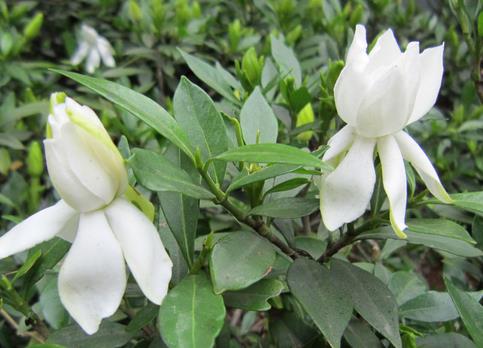
Gardenia branches become tangled and messy. Vigorous long branches and pest-damaged branches also consume large amounts of nutrients. When branches are too dense, the leaves cannot all carry out photosynthesis and instead consume nutrients, which also causes gardenias not to bloom.
Cause Four: Improper Watering and Fertilising
During the growing period of gardenias, excessive water and fertiliser cause the plant to grow leggy, and reproductive growth does not receive enough nutrients, affecting flower bud formation and leading to no blooming or very few blooms; even if it does bloom, it easily drops flowers and buds. Applying too much nitrogen fertiliser while lacking phosphorus and potassium fertiliser will affect flower bud formation. Therefore, during the flower bud differentiation stage, pay attention to applying more flower fertiliser rich in phosphorus and potassium.
Cause Five: High Salt and Alkali Content in the Soil
Gardenias prefer slightly acidic soil. Northern soil has a relatively high salt content, so the soil tends to be alkaline, and growing them in such soil will cause the plant to turn yellow and ultimately affect blooming. So before planting, the soil can be acidified. This is better for gardenia growth.
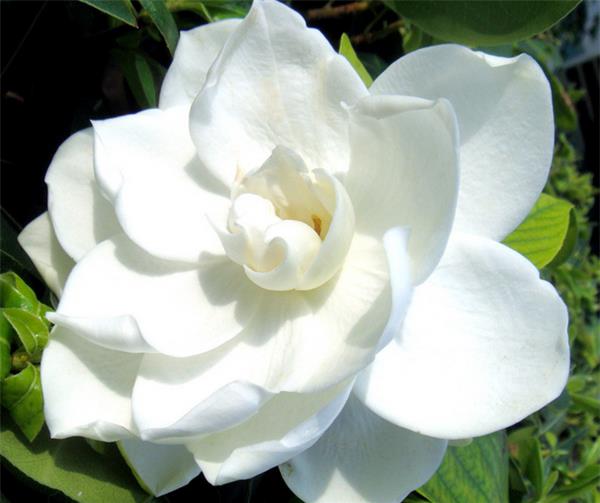
Gardenias are rather fussy plants, with special requirements for soil, sunlight, temperature and water. What most people tend to overlook is that gardenias prefer acid. If the soil is not acidic enough, the roots will have difficulty absorbing nutrients, and no matter how much fertiliser you apply, it will be to no avail. So you must first understand the soil's pH. You might take a soil sample and ask a garden centre to test it for you. Many large garden centres offer this free service. Generally speaking, you can fertilise with an acidic fertiliser, which both supplies nutrients and adjusts the soil's pH. The acidic fertiliser brand Holytone sold at garden centres can meet the needs of gardenias.
The soil for gardenias must be kept at suitable moisture, and especially when the summer blooming season arrives, you must be diligent about watering. The climate where you live in San Diego is relatively dry, so watering requires particular attention. Moreover, gardenias are very demanding about temperature: night temperatures below 60°F and day temperatures above 80°F will both make them listless. In cold regions, gardenias are treated as potted plants and must be moved indoors in winter. Although San Diego allows gardenias to be grown in the yard, it is best to choose a spot with afternoon shade to reduce the harm from intense sun and high temperatures.
At the same time, the timing of pruning gardenias also requires special attention, because the flowers all bloom on new growth produced in the current year. If they are not pruned for years, the old branches become too dense and there are too few new branches, which will also affect the number of blooms. It is best to prune in early spring to stimulate the growth of new shoots.
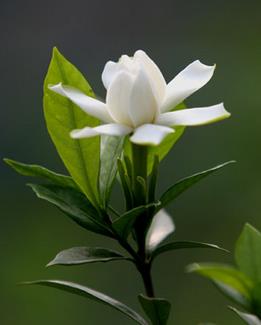
1. Soil: It is best to cultivate them in fertile acidic soil rich in humus, which is the key to successfully growing them in northern households. Generally, you can use leaf mould plus 1 part decomposed soybean cake fertiliser, while mixing in a certain amount of ferrous sulfate, or after potting, drench thoroughly 3 to 5 times with 0.2% ferrous sulfate or alum fertiliser water.
2. Planting: Use cuttings or layer-propagated plants for planting, ensuring the root system is fully spread out, and at the same time fill the gaps among the roots firmly with fine soil. The density of the filling soil should be about 85%, and note that it should be firm below and loose above, with a depth of about 1 cm above the root system. Water thoroughly promptly after planting, generally until water seeps from the bottom of the pot.
3. Gardenias require relatively high air humidity. Northern households can place clear water in a saucer and set a thin board (about 3 cm) on it, with the water in the saucer not exceeding the board; simply place the flower pot on the board, and remember to add water frequently. The principle of watering is to water thoroughly once the soil has dried out. Rainwater, snow water or fermented rice-washing water is best for watering; if using tap water, let it sit for 2 to 3 days before use. During the growing period, water once every 7 to 10 days with water containing 0.2% ferrous sulfate or apply alum fertiliser water once. In summer, gardenias should be kept in a spot with scattered light under tree shade. In spring, summer and early autumn, water frequently and spray the leaves to increase humidity. In winter, place them in a sunny spot, stop fertilising, and do not water too much; you can often rinse the branches and leaves with water close to room temperature to keep the leaf surface clean, especially in rooms with heating in the north. Do not place the flower pot directly in front of a radiator or air conditioner to avoid leaf dehydration.
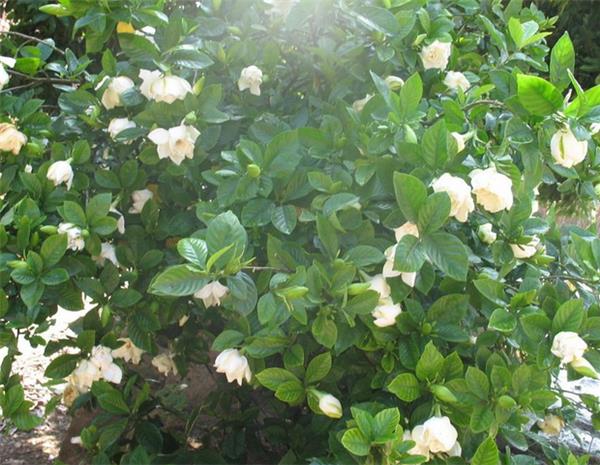
5. Repotting: Generally repot once every 1 to 2 years, best done in spring. To effectively prevent the potting soil from becoming alkaline, you can repot once a year. Before repotting, the pot must be knocked out; do this when the soil is dry and the plant has loosened slightly, generally after stopping watering for about 10 days. When repotting, cut off some roots, such as diseased and pest-damaged roots and overly dense roots, then replant.
6. Generally done in spring, cut off overly long leggy branches, weak branches and other messy branches that affect the plant's shape, to keep the plant looking attractive. Gardenias bear flowers at the top, so during the growing season you can appropriately pinch out the tips to promote the growth of flowering branches and increase the number of blooms.
4. Gardenias are prone to scale insects, red spider mites and sooty mould when summer temperatures are high and ventilation is poor. You can spray 40% dimethoate emulsifiable concentrate at 1000 times dilution to prevent scale insects, and 40% dicofol emulsifiable concentrate at 1000 to 1500 times dilution to control red spider mites, which can also reduce the occurrence of sooty mould. For safety at home, you can spray with washing powder solution, which also has a certain effect.
5. Repotting: Generally repot once every 1 to 2 years, best done in spring. To effectively prevent the potting soil from becoming alkaline, you can repot once a year. Before repotting, the pot must be knocked out; do this when the soil is dry and the plant has loosened slightly, generally after stopping watering for about 10 days. When repotting, cut off some roots, such as diseased and pest-damaged roots and overly dense roots, then replant.
6. Generally done in spring, cut off overly long leggy branches, weak branches and other messy branches that affect the plant's shape, to keep the plant looking attractive. Gardenias bear flowers at the top, so during the growing season you can appropriately pinch out the tips to promote the growth of flowering branches and increase the number of blooms.