The Complete Guide to Cactus Species: How Many of These Varieties Do You Know?
Cactus (ball cactus) is a general term for plants in the Cactaceae family that share a uniform appearance. It belongs to the cactus family, and cactus species can be divided into many varieties according to their attributes. Let's take a look together!
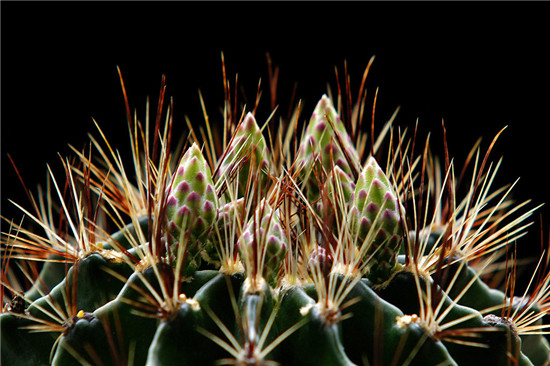
From their appearance, cactus species can be divided into: woolly types, tubercled types, treasure types, hairy columnar types, heavy-spined types, sea urchin types, crown-flowering types, and more. The spines and hairs of cacti also vary in length, shortness, sparseness, and density; the hair colors include red, yellow, golden yellow, and more. Among them, the cactus varieties that can be grafted include Gymnocalycium mihanovichii 'Hibotan' (red cap cactus), Gymnocalycium mihanovichii 'Hibotan' green form, Notocactus magnificus (yellow tower cactus), Ferocactus emoryi (red barrel), Cleistocactus strausii (golden column), Cleistocactus winteri (golden rat tail), Espostoa lanata (white-haired old man cactus), and Schlumbergera (crab claw cactus).
From the perspective of edibility, cacti can be divided into edible and ornamental cacti. The two have some differences: edible cacti have 12-14 ribs, with straight and hard spines; ornamental cacti are not edible, their rib count varies, their shapes are also varied, and their spines are soft and pale yellow. Edible cacti are dark green and the whole plant has a strong cactus scent, while ornamental cacti do not.
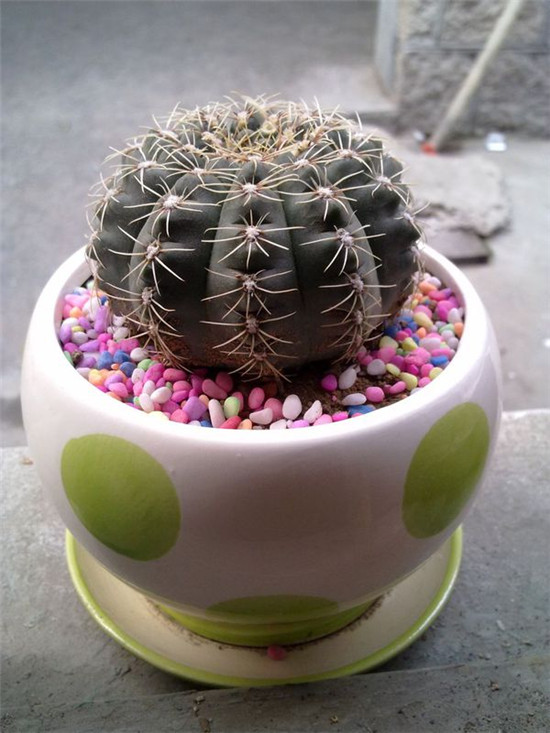
Common Cactus Varieties
The dragon king ball, also called left-right spiral, belongs to the genus Hamatocactus in the Cactaceae family. It is a spherical to cylindrical plant and is an outstanding specimen among cactus flowers. The dragon king ball is native to southern Texas in the United States and northern Mexico, where the climate is hot, there is frost at night in winter, sunlight is intense, and dry periods are long. This special geographical environment has shaped its distinctive morphological characteristics.
Yu Weng (Mammillaria hahniana), a perennial succulent herb, has solitary plants that are round-spherical to oval, with bright green body color. It belongs to the Cactaceae family, genus Mammillaria. Its place of origin is Mexico. It is commonly propagated by sowing, cuttings, and grafting. Its propagation and cultivation methods are the same as those for golden barrel cactus and Gymnocalycium mihanovichii 'Hibotan'. It is a plant for potted ornamental display.
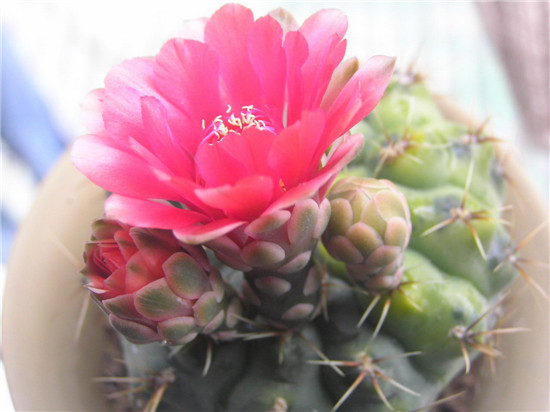
Yingguan Yu (Echinocactus horizonthalonius) is a perennial succulent plant. When young, the stem is spherical, and as it ages it gradually becomes cylindrical, with a diameter of 20cm and a height of more than 5m. It tends to form clusters, the body is blue-green, and the ribs are 11-15cm long. Dense hairs grow at the top of the plant.
Golden fingers is also a type of cactus, shaped like human fingers, with golden-yellow spines. Its appearance is beautiful and charming, making it an ideal home decoration. It can bloom, with common orange and white flowers. The flowering period is generally in late spring and early summer, and if well grown, it will bloom sporadically year-round. It likes light and heat. Special attention should be paid to keeping it warm in winter.
Among cactus species, there is also a cactus called white sandalwood, also known as cactus whip, commonly called golden bull palm gourd fist. It belongs to the genus White Sandalwood in the Cactaceae family, and its place of origin is northern Argentina. It particularly likes environments with ample sunlight, dryness, and good ventilation.
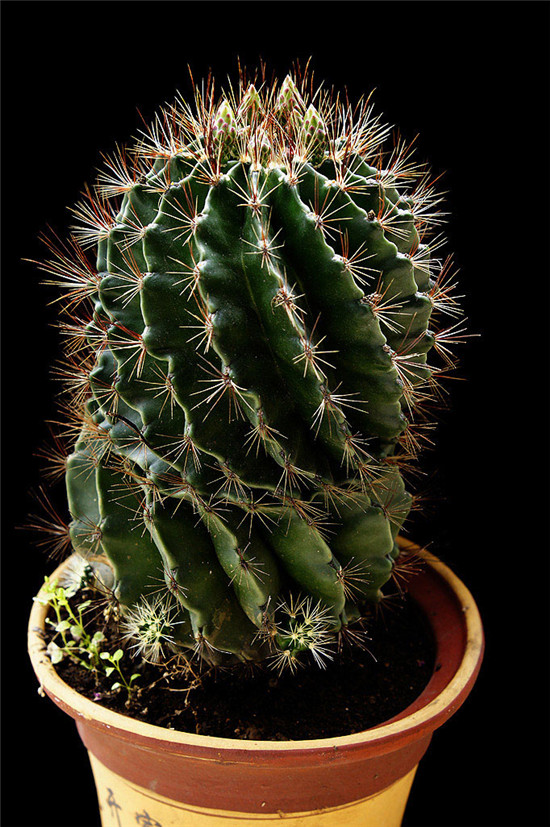
Jin Sheng Qiu, also called glass ball, has a yellow-green body and belongs to clustering types. Its country of origin is Brazil, and it likes light. The requirements for Jin Sheng Qiu to bloom are relatively high. In addition to the plant's age, another very important condition for blooming is receiving an appropriate amount of sufficient light and temperature. The flowers are very beautiful, large, and white.
The above is the complete content of the comprehensive guide to cactus species that I have summarized for everyone. I hope this article can help everyone. Please also continue to follow us.