Is the hyacinth easy to grow? A guide to the specific cultivation methods
The hyacinth is just such a spirit, beautiful yet toxic. When people hear that the hyacinth is poisonous, they may not quite believe it. As a famous flower of love from abroad, it long ago conquered the whole world with its beauty, and conquered love as well. However, the hyacinth bulb really is toxic, and in severe cases of accidental ingestion it can even cause paralysis or death. Is the hyacinth easy to grow? Here we give you a specific introduction to the relevant knowledge.
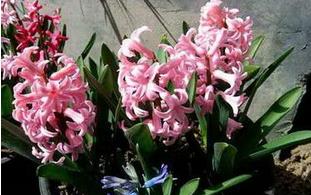
Is the hyacinth easy to grow? An introduction to the specific methods
I. Cultivation methods for hyacinths
The general method for growing hyacinths in pots is to plant the bulbs in nutrient pots in September, place them in sunlight for care, move them into a greenhouse in November, and they can bloom by the following Spring Festival. Below is a detailed explanation of the knowledge and requirements for growing hyacinth flowers.
1. Bulb selection: Since the nutrients needed for a hyacinth to bloom come mainly from the nutrients stored in the scale leaves of the bulb, only by choosing bulbs with an undamaged outer skin, fleshy scales that are not excessively shrunken, and that are fairly hard, heavy and plump, can you get abundant, beautiful flowers.
2. Soil requirements: For growing hyacinth flowers, the soil should be fertile with a high organic matter content; a well-drained sandy soil is best. Before planting, moisten the soil and let it sit for a day before planting. Frequent topdressing is required during the growing period. For plants grown in the ground, loosen the soil promptly after the shoots emerge. You can choose to apply one topdressing in winter, and one each before flowering in spring and after the flowers fade.
3. Light: For growing hyacinths, you must maintain sufficient sunlight to ensure normal growth. If the light is too weak, the hyacinth plants will become spindly, the buds small, the flowers will fade early, and the leaves will turn yellow; in this case you can use an incandescent lamp about 1 m away to supplement light. But light that is too strong can also cause sunburn on the leaves and petals or shorten the flowering period. Before the bulb sprouts, it should not be placed under direct sunlight.
4. Temperature and humidity regulation: Too high a temperature will cause deformed growth in hyacinths and a high rate of blind flowers; it is best to keep it below 15°C. You can increase humidity by misting and sprinkling water on the ground, and you can also use ventilation and air exchange to lower humidity. Too low a temperature, on the other hand, will cause frost damage to the flower buds. During the growth of the hyacinth, the roots grow best when the bulb is at a low temperature of 2-6°C. Soil humidity should be kept between 60-70%; if too high, root respiration is inhibited and rot easily occurs, and if too low, the above-ground parts wilt and may even die.
5. Water culture of hyacinths: There should be a 1-2 cm space between the water surface and the bulb; never submerge the bottom of the bulb in water. Instead, place the bulb on the mouth of the bottle. After roots begin to form, you can lower the water level to just barely touch the roots, so the roots can fully absorb oxygen and root growth is promoted. After the roots have developed, you can cover the container with black cloth to let the roots develop further.
At the same time, keep the water in the bottle clean, changing it once a week. If nutrient solution has been added, decide the frequency of water changes according to how cloudy the water is. When the bulb's sprout has grown to 5 cm, place the whole bottle in a dark place. After the roots have grown out fully, move it to a warm south-facing windowsill with plenty of scattered light, and add water frequently so that the water reaches the bulb.
II. The flowering period of the hyacinth
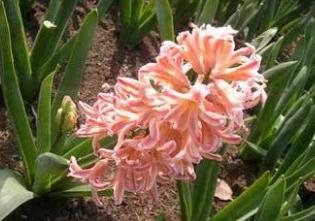
The flowering period of the hyacinth, counted from the opening of the first flower, is generally about two weeks. It usually blooms between March and June. Its growth cycle is: dormancy in summer, rooting in autumn and winter, sprouting in early spring, flowering in March, and the plant withering in early June.
After a hyacinth has bloomed once, cut off the withered roots and leaves, place it in a cool place or plant it in soil, and in September plant it again in the ground or in a pot, applying a base fertilizer and topdressing to encourage the mother bulb to split and help the daughter bulbs grow larger; only when they have grown to a certain size can they bloom again. You can also take it out to plant again the following spring, and it can bloom once more.
III. Is the hyacinth easy to grow?
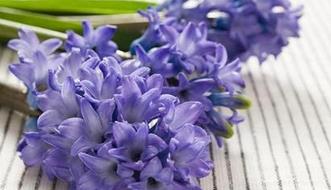
The fragrance of the hyacinth does not harm the human body, but if you have allergic skin, then that cannot be guaranteed. As a famous flower of love from abroad, hyacinths of different colors carry different meanings of love. What everyone notices most are still the purple hyacinth and the blue hyacinth. These two colors are very vivid; although their flowers are not as stunning as peonies when they bloom, they can still fully attract everyone's gaze, and the faintly sorrowful flower language also increases people's tender feelings toward the hyacinth.
As early as several decades ago, hyacinths had already been introduced for indoor planting. After a long period of cultivation, hyacinths can now also be grown simply in water. The hyacinth's requirements for soil and ambient temperature are not considered high. If grown indoors, then as long as the temperature is not too low or too high it is fine; and if grown outdoors, you only need to pay attention to basic cold protection so that frost and snow do not directly harm the hyacinth. It is not a delicate plant, but it still needs our careful care.
How to grow hyacinths well at home
If you have a small potted hyacinth at home, and after a period of careful care, the lovely plant blooms during the Spring Festival, its light, elegant fragrance filling the whole room, then how should you care for a hyacinth:
I. Habits: The hyacinth likes a cool, moist environment with plenty of sunlight. The bulb has the habit of summer dormancy, roots in autumn and winter, sprouts new shoots in early spring, blooms in February, and the plant withers in early June.
II. Cultivation management: For potted hyacinths, choose a 12-15 cm pot, plant 1 bulb per pot, with 1/3 exposed above the soil surface when planting. Use a mix of equal parts leaf mold, potting soil and coarse sand for the potting soil. After planting, water thoroughly and place it at a room temperature of 9°C; after about 45-60 days the bulb grows new roots. Shade it and lower the room temperature for 7-10 days, then adjust the room temperature to 17-18°C during the day and no more than 12°C at night, until it blooms.
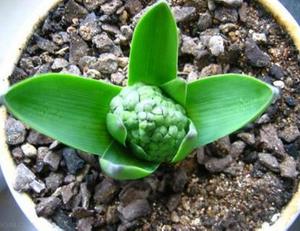
III. Water: The hyacinth's water requirements change with its growth stage. During the bulb rooting stage, slightly moist is best. During the leaf growth stage and the bud-setting and flowering stage, plenty of water is needed. During the full flowering stage, reduce watering, and during the bulb dormancy stage, stop watering and keep it dry.
IV. Light: During the leaf growth stage in early spring, the hyacinth needs plenty of sunlight. After flowering, placing it in partial shade can prolong the viewing period of the flowers. When forcing cultivation, once the leaves have grown to a certain height, plenty of sunlight is needed to promote elongation of the flower stem and speed up flowering.
V. Pest and disease control: There is rot sclerotium disease, which harms seedlings and bulbs, flower-breaking virus disease, which harms flowers, and stem nematode disease, which harms the above-ground parts. Bordeaux mixture or 400-fold carbendazim solution can be sprayed for prevention and control.
How to grow hyacinths well at home
If you have a small potted hyacinth at home, and after a period of careful care, the lovely plant blooms during the Spring Festival, its light, elegant fragrance filling the whole room, then how should you care for a hyacinth:
I. Habits: The hyacinth likes a cool, moist environment with plenty of sunlight. The bulb has the habit of summer dormancy, roots in autumn and winter, sprouts new shoots in early spring, blooms in February, and the plant withers in early June.
II. Cultivation management: For potted hyacinths, choose a 12-15 cm pot, plant 1 bulb per pot, with 1/3 exposed above the soil surface when planting. Use a mix of equal parts leaf mold, potting soil and coarse sand for the potting soil. After planting, water thoroughly and place it at a room temperature of 9°C; after about 45-60 days the bulb grows new roots. Shade it and lower the room temperature for 7-10 days, then adjust the room temperature to 17-18°C during the day and no more than 12°C at night, until it blooms.
III. Water: The hyacinth's water requirements change with its growth stage. During the bulb rooting stage, slightly moist is best. During the leaf growth stage and the bud-setting and flowering stage, plenty of water is needed. During the full flowering stage, reduce watering, and during the bulb dormancy stage, stop watering and keep it dry.
IV. Light: During the leaf growth stage in early spring, the hyacinth needs plenty of sunlight. After flowering, placing it in partial shade can prolong the viewing period of the flowers. When forcing cultivation, once the leaves have grown to a certain height, plenty of sunlight is needed to promote elongation of the flower stem and speed up flowering.
V. Pest and disease control: There is rot sclerotium disease, which harms seedlings and bulbs, flower-breaking virus disease, which harms flowers, and stem nematode disease, which harms the above-ground parts. Bordeaux mixture or 400-fold carbendazim solution can be sprayed for prevention and control.