How to Plant Hyacinths So They Grow Well: A Detailed Guide to Planting Methods
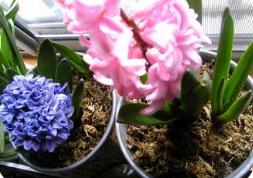
Do you know how to plant hyacinths so they grow well? If you keep hyacinths at home, here is a detailed guide to the specific methods, and I hope it helps you.
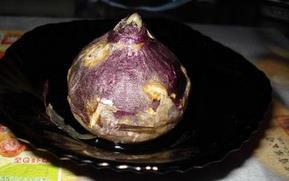
How to Plant Hyacinths So They Grow Well
Hyacinth bulbs - many gardening friends seeing them for the first time often mistake them for little onions, haha. The skin color, shape and appearance of different hyacinth varieties can vary greatly. Some are very round and neat, some have cracked skins, and all of this is normal.
The hyacinth bulb has a layer of skin on the outside that protects the bulb itself, so there is no need to peel it off when planting. Of course there are exceptions: because it has traveled across the ocean, drifting at sea for basically more than a month, hyacinths generally show some mold to some degree. Mold is usually related to the variety - some varieties may have very few mold spots, while others almost all develop mold. If there are a lot of mold spots, you can peel off the outer skin as appropriate, rinse the bulb clean with water, soak it in carbendazim solution to disinfect it, and then plant it. Mold on the outer skin has no effect on normal growth or flowering.
Bulb planting supply kit, including Fafard planting peat, carbendazim for disinfecting bulbs, bone meal with high phosphorus content to promote flower bud differentiation, and Aibeishi slow-release functional fertilizer whose effect lasts through the entire bulb growing period; gloves to prevent allergies - some people are allergic to hyacinths, with symptoms such as itching and red patches, so it is recommended to wear gloves while handling them. If an allergic reaction occurs, seek medical attention immediately.
The root plate at the bottom of the bulb has many dried fibrous roots that need to be cleaned off before planting, so as to expose the root plate and allow new roots to grow. In particular, it is strictly forbidden to use any knife or similar tool to cut or slice it; if the root plate is destroyed or damaged, new roots cannot grow, which will affect the growth and sprouting of the bulb. It is recommended to clean off all these dried old roots by hand, and remember to wear gloves.
This is what it looks like after the root plate has been cleaned. You can clearly see the ring of flesh-colored tissue around it - that is where new roots grow, and it must never be sliced with a knife.
Preparing the flower pot: first place a layer of bottom mesh in the pot to prevent soil from leaking out and, more importantly, to keep various pests from crawling up into the pot through the bottom.
Add a layer of medium-grade pumice on top. Its role is to improve drainage and aeration and prevent root rot and similar problems.
Preparing the planting soil: add an appropriate amount of Aibeishi slow-release functional fertilizer to Fafard Planting No. 1 and mix well.
Then add bone meal and mix well. Bone meal is high in phosphorus, does not burn roots, and helps promote flower bud differentiation in the bulb.
This is what it looks like after planting. Please note that the soil cover depth should leave the bulb slightly exposed above the soil surface, about 1-2 cm.
After planting, water thoroughly - it must be soaked all the way through.
Many people say that hyacinths need to be shaded after initial planting to promote rooting, but this is not entirely correct. Soil-cultured hyacinths do not need any shading treatment; on the contrary, we recommend more sun and good ventilation to prevent the bulb from developing more mold. For water culture, in theory shading can promote root growth, but based on many years of practical comparison trials, there is not much difference, so it is not very meaningful.
Hyacinth is an autumn-planted variety and needs to go through winter cold to undergo flower bud induction before it can bloom normally. So once planted now, basically nothing will happen for a month. What you need to do now is wait patiently.
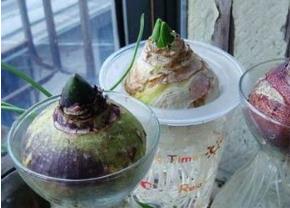
Here are some key points for water-cultured hyacinths:
The initial handling of the bulb is the same as for soil culture, mainly dealing with the old roots on the root plate and disinfecting the bulb, so it will not be repeated.
The water level before rooting is quite critical and must not be too high, otherwise the bulb easily develops mold. As shown in the picture below, the water level is slightly too high; at the red circle, a film of water forms between the bulb and the bottle, which easily causes mold to grow there.
Lower the water level a little so that basically only the root plate is submerged, as shown in the picture below; this ensures normal rooting. It is worth mentioning that too low a water level is also bad, as it causes uneven rooting - for example, only half of the root plate grows roots while the other half does not.
Water culture tools: a special bottle for water-culturing hyacinths, expanded clay pebbles (for decoration), water culture nutrient solution.
Overall view of the water culture setup at the start. Roots generally appear within a few days; once the roots are a little longer, you can lower the water level slightly so that the root plate no longer directly touches the water.
During the first month or so, because the temperature is still a bit high, basically only roots grow and there is no sign of sprouting. What you need to do at this point is wait patiently.
Generally, change the water every 3-5 days, adding a little water culture nutrient solution at the same time; just lift the bulb slightly and pour the water out. Especially after roots have grown, be extra careful when handling it to avoid breaking the roots - its roots cannot regenerate. Of course, even if you accidentally break 1-2 roots, it is nothing to worry about too much.
Another thing worth mentioning is that because the roots break easily and cannot regenerate, once water culture has begun it is generally impossible to switch to soil culture midway.
Now is about the right time to start buying hyacinths. The advantage of buying hyacinths now is that none of them have sprouted yet. If you want to grow hyacinths, you can experience a sense of accomplishment; buying ones that have already sprouted, or even ones where the flower spike is already visible, is really not interesting to grow. And the biggest advantage is that at this time they generally have not yet been divided into pots or rooted - they are all newly arrived hyacinths, so there is plenty of room to choose and pick, and at this time the colors are the most accurate. This basket is blue, that basket is purple, absolutely no mistake; once they have rooted it becomes a mess, and you can only judge by the color of the flower spike and buds. Usually by the time you can see a bit of color, it is not far from blooming, and growing them that way is just too boring.
Chinese New Year is early this year, so the ones for soil culture can go in this week and next week, with a little fertilizer added. Water-cultured ones grow faster, so they can wait a few more days. I used to always water-culture hyacinths, but water culture makes it hard to get them to bloom year after year, as fertilizer and nutrients cannot keep up, so now I have switched to soil culture. For soil culture, it seems Y-chan once had an old post saying to crush multivitamins and put them on the soil so that water carries the nutrients down; I will give it a try.
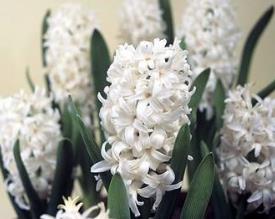
How do you choose bulbs?
I took comparison photos of the bulbs I saved last year and the ones I just bought new. If you saw my post from this May on how to store bulbs, you should still remember the bulbs I saved.
How to Plant Hyacinth Bulbs
1. Planting method: because it is hard to find soil in the city, I chose water culture, which is simple and convenient.
2. Planting container: when you buy hyacinths, they usually come with a special glass bottle, and you can put the hyacinth bulb inside it to grow.
3. Planting method: water-cultured hyacinths rely on water; when you feel like it, change the water once a week. Note that each time you change the water, you should first let the water sit for a while, and then change the hyacinth's water; it is said this can remove toxic substances from the water.
4. Planting time: I bought it in winter, probably in December, and it did not bloom until February of the following year, about two months, which felt a bit long. The most obvious change visible in between was that the white roots in the bottle kept increasing.
5. Growing reflections: seeing the hyacinth bulb grow this big, I kept wondering why it could grow so large without nutrients in the water. I guess all the nutrients the hyacinth needs for growth are stored in the bulb, so no extra nutrients are needed; you just need to provide the environment for it to grow.
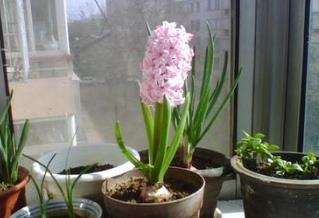
Hyacinth Ecological Habits
It likes a warm, humid winter and a cool, slightly dry summer, and a sunny or semi-shaded environment. It likes fertilizer and prefers fertile, well-drained sandy loam; avoid overly wet or heavy clay soil. The hyacinth bulb has a summer dormancy habit, roots in autumn and winter, sprouts new shoots in early spring, blooms in March, and the plant withers in early June. During the growth of the hyacinth, the root system grows best when the bulb is at a low temperature of 2-6°C. The suitable temperature for bud break is 5-10°C, the suitable temperature for leaf growth is 10-12°C, and 15-18°C is most favorable during the bud appearance and flowering stage. The storage temperature for bulbs is 20-28°C, with 25°C being the most suitable and most ideal for flower bud differentiation.
The water requirements of hyacinths change with their growth stage. During the bulb rooting stage, slightly moist conditions are best, which helps root development; water should be added during drought, but if the soil is too wet and the temperature is low, the roots easily rot. During the leaf growth stage and the bud appearance and flowering stage, sufficient water is needed. During full bloom, watering should be reduced, and during the bulb dormancy stage, watering should stop and the soil should be kept dry.
During the early spring leaf growth stage, hyacinths need plenty of sunlight, and after flowering, placing them in a semi-shaded spot can prolong the viewing period. During forcing cultivation, once the leaves have grown to a certain height, plenty of sunlight is needed to promote flower stem elongation and accelerate flowering. Sandy loam that is loose, fertile and well-drained is ideal; absolutely avoid overly wet and heavy soil. For potted plants, use an equal-volume mix of peat, potting soil and sand.
Especially after roots have grown, be extra careful when handling it to avoid breaking the roots - its roots cannot regenerate. Of course, even if you accidentally break 1-2 roots, it is nothing to worry about too much.Another thing worth mentioning is that because the roots break easily and cannot regenerate, once water culture has begun it is generally impossible to switch to soil culture midway.
Now is about the right time to start buying hyacinths. The advantage of buying hyacinths now is that none of them have sprouted yet. If you want to grow hyacinths, you can experience a sense of accomplishment; buying ones that have already sprouted, or even ones where the flower spike is already visible, is really not interesting to grow. And the biggest advantage is that at this time they generally have not yet been divided into pots or rooted - they are all newly arrived hyacinths, so there is plenty of room to choose and pick, and at this time the colors are the most accurate. This basket is blue, that basket is purple, absolutely no mistake; once they have rooted it becomes a mess, and you can only judge by the color of the flower spike and buds. Usually by the time you can see a bit of color, it is not far from blooming, and growing them that way is just too boring.
Chinese New Year is early this year, so the ones for soil culture can go in this week and next week, with a little fertilizer added. Water-cultured ones grow faster, so they can wait a few more days. I used to always water-culture hyacinths, but water culture makes it hard to get them to bloom year after year, as fertilizer and nutrients cannot keep up, so now I have switched to soil culture. For soil culture, it seems Y-chan once had an old post saying to crush multivitamins and put them on the soil so that water carries the nutrients down; I will give it a try.
How do you choose bulbs?
I took comparison photos of the bulbs I saved last year and the ones I just bought new. If you saw my post from this May on how to store bulbs, you should still remember the bulbs I saved.
How to Plant Hyacinth Bulbs
1. Planting method: because it is hard to find soil in the city, I chose water culture, which is simple and convenient.
2. Planting container: when you buy hyacinths, they usually come with a special glass bottle, and you can put the hyacinth bulb inside it to grow.
3. Planting method: water-cultured hyacinths rely on water; when you feel like it, change the water once a week. Note that each time you change the water, you should first let the water sit for a while, and then change the hyacinth's water; it is said this can remove toxic substances from the water.
4. Planting time: I bought it in winter, probably in December, and it did not bloom until February of the following year, about two months, which felt a bit long. The most obvious change visible in between was that the white roots in the bottle kept increasing.
5. Growing reflections: seeing the hyacinth bulb grow this big, I kept wondering why it could grow so large without nutrients in the water. I guess all the nutrients the hyacinth needs for growth are stored in the bulb, so no extra nutrients are needed; you just need to provide the environment for it to grow.
Hyacinth Ecological Habits
It likes a warm, humid winter and a cool, slightly dry summer, and a sunny or semi-shaded environment. It likes fertilizer and prefers fertile, well-drained sandy loam; avoid overly wet or heavy clay soil. The hyacinth bulb has a summer dormancy habit, roots in autumn and winter, sprouts new shoots in early spring, blooms in March, and the plant withers in early June. During the growth of the hyacinth, the root system grows best when the bulb is at a low temperature of 2-6°C. The suitable temperature for bud break is 5-10°C, the suitable temperature for leaf growth is 10-12°C, and 15-18°C is most favorable during the bud appearance and flowering stage. The storage temperature for bulbs is 20-28°C, with 25°C being the most suitable and most ideal for flower bud differentiation.
The water requirements of hyacinths change with their growth stage. During the bulb rooting stage, slightly moist conditions are best, which helps root development; water should be added during drought, but if the soil is too wet and the temperature is low, the roots easily rot. During the leaf growth stage and the bud appearance and flowering stage, sufficient water is needed. During full bloom, watering should be reduced, and during the bulb dormancy stage, watering should stop and the soil should be kept dry.
During the early spring leaf growth stage, hyacinths need plenty of sunlight, and after flowering, placing them in a semi-shaded spot can prolong the viewing period. During forcing cultivation, once the leaves have grown to a certain height, plenty of sunlight is needed to promote flower stem elongation and accelerate flowering. Sandy loam that is loose, fertile and well-drained is ideal; absolutely avoid overly wet and heavy soil. For potted plants, use an equal-volume mix of peat, potting soil and sand.