How to Propagate Gardenia? Detailed Introduction to Propagation Methods
An Introduction to the Methods of Propagating Gardenia
Gardenia is mainly propagated by cuttings and layering; in addition, it can be propagated by seed and division, and can also be propagated by the water rooting method:
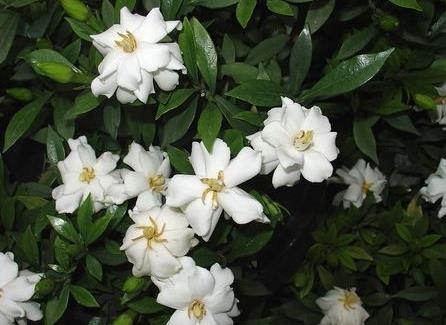
In the north, cuttings can be taken in a greenhouse from October to November; in the south, cuttings can be taken at any time from April to the beginning of autumn, but the survival rate is highest between summer and autumn. Select healthy 2-year-old branches as cuttings, 10-12 cm long, remove the lower leaves, cut the lower end into a 45-degree slant, tie every 20-30 cuttings into a small bundle, dip the slanted cut into a 0.05% rooting powder solution or 0.05% naphthaleneacetic acid solution for 15 seconds, take them out and let the solution dry before taking cuttings, then insert them into sand, with a row spacing of 20-25 cm and a plant spacing of 7-8 cm, insert the slanted end of the cutting into the soil to 2/3 of its depth, firm the soil and water it, and set up a low shade shed for shading.
Under conditions of 80% relative humidity and a temperature of 20-24°C, roots can form in about 15 days. If soaked in 20*10 to the -6th power to 50*10 to the -6th power indolebutyric acid for 24 hours, the effect is even better. When the rooted seedlings begin to grow, transplant them or pot them individually, and they can bloom after 2 years. In the north, the water cutting method can also be used for propagation, that is, soak the base of the cuttings in clean water, change the water once a day, and place the water container in a semi-shaded place; new roots can grow in about 20 days. Cultivation, weeding and topdressing should be strengthened (see seed seedling propagation); after 1-2 years of cultivation, when the seedlings are 40-50 cm tall, they can be transplanted. This propagation method can not only obtain a large number of seedlings, but also allow earlier flowering and fruiting, and maintain the excellent traits of the mother plant.
2. Layering Propagation
In April, select robust branches 25-30 cm long from a 3-year-old mother plant for layering. If there is a three-forked branch, layering can be done at the fork, and three seedlings can be obtained at one time. Generally, roots form after 20-30 days, and in June they can be separated from the mother plant; by the following spring they can be planted separately or potted individually.
3. Seed Propagation
This is mostly carried out in spring. The seeds germinate slowly, sprouting about 1 year after sowing, and blooming after 3-4 years. In the north, it is not easy to harvest seeds from potted plants.
1) Seed selection: Choose plump, dark red ripe fruits, dry them in the shell in the sun or in the shade to use as seeds. Before sowing, cut open the seed fruit skin with scissors, dig out the seeds, rub them apart in hot water, remove floating seeds or impurities, then scoop out the sunken plump seeds, spread them on a bamboo mat, and place them in a ventilated place to dry off excess moisture before sowing.
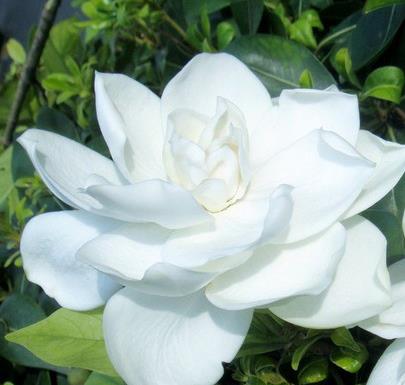
3) Sowing and seedling raising: It can be sown in spring or autumn. For spring sowing, sow around Yushui; for autumn sowing, sow around Qiufen. When sowing, mix the seeds with plant ash and evenly sow them in the sowing furrows, then cover the furrows evenly with fine soil or burnt soil, cover with grass and sprinkle water, and keep the soil moist often to facilitate emergence. Use 4-6 jin of seeds per mu.
Seedling stage management: After sowing, water frequently to keep the bed surface moist; seedlings emerge in about 20 days. After emergence, remove the covering grass on the bed surface, then strengthen management. When the seedlings grow 2-3 true leaves, thin them out, removing overly dense and weak seedlings. When the seedlings grow 5 true leaves, keep seedlings at a spacing of 5-8 cm, and carry out frequent cultivating and weeding to keep the seedling area free of weeds. At the same time, topdressing should be done appropriately. For autumn-sown seedling beds, carry out 2-3 times in the first year, and once each in spring, summer and autumn of the second year; for spring-sown seedling beds, carry out once each in spring, summer, autumn and winter. Combined with cultivating and weeding, apply 1000-1500 kg of human and livestock manure water per mu each time. For autumn sowing, cultivate until late autumn or early winter of the second year, and when the seedlings are more than 30 cm tall, they can be planted out. For spring-sown seedling beds, when the seedlings reach 30 cm tall by the second spring, they can be planted out; if they do not reach 30 cm, continue cultivating until late autumn or early winter for transplanting. This method can obtain a large number of seedlings.
4) Division propagation: Around the root zone of gardenia, many suckers often grow. Every year in early spring or late autumn and early winter, select robustly growing plants, dig away the surface soil around them, and cut off the suckers from where they connect to the mother root with a knife to separate them as seedlings for planting.
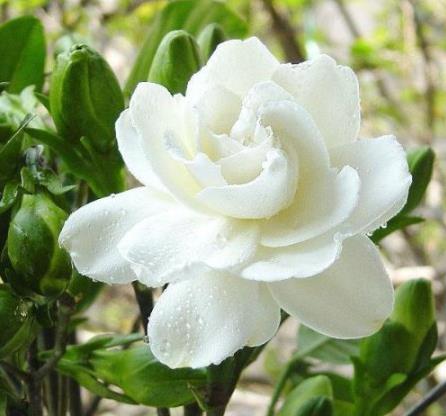
Take 10-12 cm long one-year-old branches and keep 2-4 leaves. Cut the tip of the branch into a horse-ear shape, soak it in 0.1% potassium permanganate solution for 4-6 hours, then take it out and insert it into clean water, with the submerged length being 1/3 of the total length of the cutting. Use a brown bottle as the container and change the water once every 1-2 days; alternatively, drill small holes in a wooden board or foam board, insert the cuttings into the holes, and then float them on the water surface, with 2/3 of the cutting length remaining above the floating body and 1/3 inserted into the water.
After new roots grow, move them from a darker place to a bright place. When the roots grow to 1.5-2 cm and a single plant has 6-7 roots, they can be transplanted into pots or planted in the ground.
Precautions for Gardenia Cutting Propagation
1. Pot soil preparation. Gardenia is suitable for growing in loose, deep soil with good aeration and water retention and a pH value of 5.5 to 6.5. Before cutting, disinfect the soil by spraying it with a 0.125% solution of 50% carbendazim wettable powder, then cover it with plastic film for three or four days. After removing the film, wait one week until the medicinal smell has volatilized before use. For the slightly acidic coniferous humus soil in the south, lime powder can also be used for disinfection.
2. Selecting cuttings. From middle-aged and young trees with fragrant flowers and large blooms, select robustly growing, fully lignified, pest-free one- or two-year-old branches as cuttings. Such branches not only root easily when cut, but also grow into plants of good quality.
3. Treating cuttings. Cut the branches into 10 cm to 15 cm long cuttings, keeping only three or four leaves at the upper part to reduce transpiration intensity. Cut the upper end of the cutting into a flat cut and the lower end into a slanted cut to increase its contact surface with the soil and facilitate water absorption. The upper cut should be one or two cm from the bud, and the lower cut 0.5 cm from the bud. The cuts should be smooth to prevent splitting.
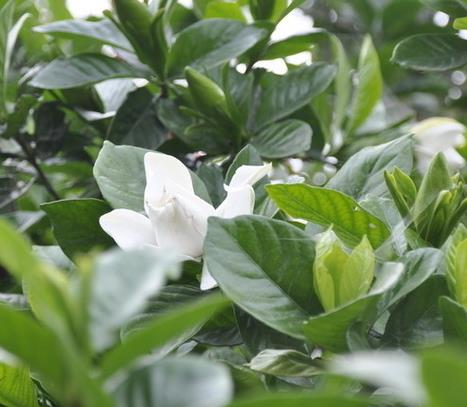
5. Post-cutting management. Set up a plastic shed and cover it with a shade net. The plastic shed can regulate the temperature and humidity of the soil and air, and the shade net can prevent direct sunlight and lower the temperature. The key to the survival rate of gardenia is to control the temperature and humidity of the soil and air so as to provide the best growing conditions. The best environmental conditions for rooting are: ground temperature 20°C to 25°C, relative air humidity 80% to 90%, and soil moisture preferably maintained at about 80% of field capacity. In the early stage of cutting, generally water once every 10 days. After new shoots and leaves appear, water once every 3 to 7 days. Thirty to forty days after cutting, the cuttings can root, and 0.25% to 0.5% urea liquid fertilizer and 0.2% potassium dihydrogen phosphate liquid fertilizer can be sprayed alternately to promote rooting. Six months after cutting, appropriately extend the ventilation and light time to improve the ability of the cuttings to adapt to the external environment. In the second spring, the seedlings can be transplanted for planting.
Precautions for Propagating Gardenia in the South
In the Jiangnan region, softwood cuttings can be used during the plum rain season. From late May to mid-June, select a semi-mature softwood shoot that grew fully and robustly in the current year, together with one node of the previous year's old branch, as the cutting. Cuttings that are too tender rot easily, while those too old root slowly. Use sharp scissors to cut at 1 cm below the node at the base of the selected branch (because fibrous roots grow easily below the node), and cut the branch into 10-15 cm lengths; each cutting must have at least 3-4 buds. Remove the leaves from the lower 1/3 and keep 3-4 leaves on the upper part for assimilation to promote rooting of the cutting. To reduce evaporation and help survival, cut each retained leaf in half. The cutting depth is 1/3 of the cutting length, inserted into a tower pot or an open-air seedbed, and the soil should be loose. After insertion, water thoroughly with a watering can, and afterward keep the soil moist, but not overly wet. To prevent direct sunlight, set up a frame and shade it with a curtain, covering in the morning and removing in the evening. The cuttings can root after about 1 month, and every half month a 10% dilute well-rotted human manure or cake fertilizer water can be applied. After about 3 months, choose a cloudy day to transplant into pots.
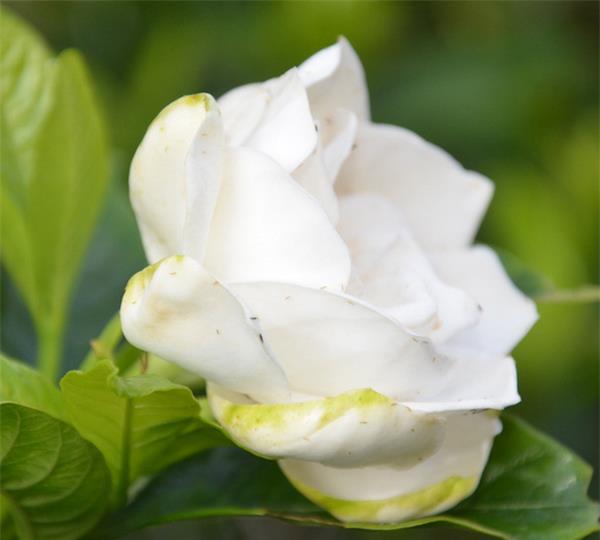
Gardenia can also be propagated by seed, and seed propagation is mostly used in production. Sowing is divided into spring sowing and autumn sowing. Spring sowing is better carried out from Lichun to Yushui. Using pot sowing, it germinates only after one year and can bloom after three or four years. In northern regions, seeds are rarely harvested, so the sowing method is mostly not used.
Such branches not only root easily when cut, but also grow into plants of good quality.
3. Treating cuttings. Cut the branches into 10 cm to 15 cm long cuttings, keeping only three or four leaves at the upper part to reduce transpiration intensity. Cut the upper end of the cutting into a flat cut and the lower end into a slanted cut to increase its contact surface with the soil and facilitate water absorption. The upper cut should be one or two cm from the bud, and the lower cut 0.5 cm from the bud. The cuts should be smooth to prevent splitting.
5. Post-cutting management. Set up a plastic shed and cover it with a shade net. The plastic shed can regulate the temperature and humidity of the soil and air, and the shade net can prevent direct sunlight and lower the temperature. The key to the survival rate of gardenia is to control the temperature and humidity of the soil and air so as to provide the best growing conditions. The best environmental conditions for rooting are: ground temperature 20°C to 25°C, relative air humidity 80% to 90%, and soil moisture preferably maintained at about 80% of field capacity. In the early stage of cutting, generally water once every 10 days. After new shoots and leaves appear, water once every 3 to 7 days. Thirty to forty days after cutting, the cuttings can root, and 0.25% to 0.5% urea liquid fertilizer and 0.2% potassium dihydrogen phosphate liquid fertilizer can be sprayed alternately to promote rooting. Six months after cutting, appropriately extend the ventilation and light time to improve the ability of the cuttings to adapt to the external environment. In the second spring, the seedlings can be transplanted for planting.
Precautions for Propagating Gardenia in the South
In the Jiangnan region, softwood cuttings can be used during the plum rain season. From late May to mid-June, select a semi-mature softwood shoot that grew fully and robustly in the current year, together with one node of the previous year's old branch, as the cutting. Cuttings that are too tender rot easily, while those too old root slowly. Use sharp scissors to cut at 1 cm below the node at the base of the selected branch (because fibrous roots grow easily below the node), and cut the branch into 10-15 cm lengths; each cutting must have at least 3-4 buds. Remove the leaves from the lower 1/3 and keep 3-4 leaves on the upper part for assimilation to promote rooting of the cutting. To reduce evaporation and help survival, cut each retained leaf in half. The cutting depth is 1/3 of the cutting length, inserted into a tower pot or an open-air seedbed, and the soil should be loose. After insertion, water thoroughly with a watering can, and afterward keep the soil moist, but not overly wet. To prevent direct sunlight, set up a frame and shade it with a curtain, covering in the morning and removing in the evening. The cuttings can root after about 1 month, and every half month a 10% dilute well-rotted human manure or cake fertilizer water can be applied. After about 3 months, choose a cloudy day to transplant into pots.
Gardenia can also be propagated by seed, and seed propagation is mostly used in production. Sowing is divided into spring sowing and autumn sowing. Spring sowing is better carried out from Lichun to Yushui. Using pot sowing, it germinates only after one year and can bloom after three or four years. In northern regions, seeds are rarely harvested, so the sowing method is mostly not used.