How to Propagate a ZZ Plant: A Detailed Guide to Propagation Methods
The ZZ plant (Zamioculcas zamiifolia) is a herbaceous plant native to tropical Africa. It belongs to the Araceae family and grows in a tropical savanna climate. It likes sunshine and a relatively high temperature environment, and can withstand drought, but it cannot tolerate cold, and it needs climate conditions with little temperature difference throughout the year. Today let's learn about ZZ plant propagation methods together.
ZZ Plant Propagation Methods
The propagation methods of the ZZ plant share some similarities with those of other flowers and plants, mainly including the division method, the whole-group cultivation method, and the cutting method.
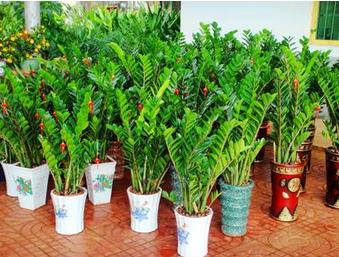
The division method is to separate a relatively strong seed-bearing offshoot of the ZZ plant from the mother plant for propagation, and then place it in soil elsewhere to cultivate. Division is generally best done in spring, when the survival rate is relatively high.
2. Whole-Group Cultivation Method
The whole-group cultivation method is to breed ZZ plant seedlings collectively, with unified lighting, fertilizing, and watering, which can increase the number of plants cultivated.
3. Cutting Method
The cutting method is to separate a branch of the ZZ plant from the mother plant, place it in acidic soil or nutrient soil, give it a certain amount of nutrients, and keep it in a dark place to cultivate. Eventually, once it takes root, the propagation is successful.
How to Grow ZZ Plants
1. It likes a warm, hot and slightly dry, semi-shaded environment with small annual average climate changes. It is relatively drought-tolerant, but it fears cold, avoids strong direct sunlight, and is afraid of heavy clay soil and water accumulation in the pot. Therefore, its growing environment requires a temperature of 20°C to 32°C, loose and fertile soil, good drainage, rich in organic matter, and acidic to slightly acidic. For watering, follow the principle of watering only when the soil is dry, alternating between dry and moist periods.
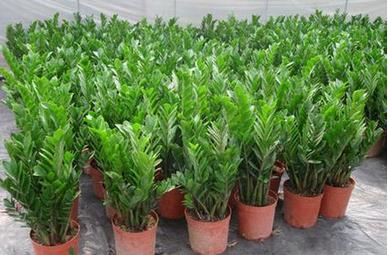
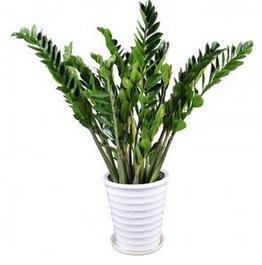
3. ZZ plant leaves inserted into a substrate take root easily and can be used for propagation. Each mature compound leaf has 15-25 leaflets; if used for propagation, this can greatly increase the propagation rate. Please enjoy ZZ plant pictures -- ZZ plant leaves.
ZZ Plant Pest and Disease Control
In terms of pest and disease control for ZZ plant cultivation, for routine sterilization and disinfection and to prevent bulb rot, brown spot disease, and the like, you can alternately use 1500 times diluted thiophanate-methyl suspension concentrate and 1000 times diluted Ridomil. When the ZZ plant grows in a poorly ventilated environment with poor light, its leaves are more likely to suffer from scale insect damage, and you can spray 1000 times diluted 20% buprofezin wettable powder to eliminate the pests.
Cold damage: When the winter temperature drops below 5°C, combined with damp potting soil, it is easy for the plant's tender leaves to be damaged by cold and to collapse. In severe cases, it can cause the tubers to rot, and it is very difficult for the plant to recover.
Sunscald: In the hot summer, or in clear weather after a long period of rain, or for potted plants that have been kept indoors for a long time and have just been moved outdoors for restorative care, direct exposure to sunlight can easily cause their tender, plump leaves to be scalded, causing part of the leaves to lose green color and turn white, or the entire leaf to be scalded, with the necrotic parts later turning brown and black.
Brown spot disease: This disease mostly occurs on the leaves. The lesions are nearly circular, grayish brown to yellowish brown, with the edges slightly darker in color. This disease is prone to occur under conditions of high temperature and high humidity and poor ventilation. Control method: When a small number of diseased leaves are found, remove and destroy them promptly. In the early stage of the disease, use 600 times diluted 50% carbendazim wettable powder or 500 times diluted 40% chlorothalonil suspension, spraying the leaves once every 10 days, for 3-4 consecutive times, for a relatively good control effect. Control method: After summer begins, move the plant to a semi-shaded environment promptly. In late spring and early summer after long rain and then clearing, provide shade for potted plants as early as possible.
Scale insects: In a poorly ventilated environment with poor light, ZZ plant leaves are prone to damage from scale insect feeding.
Control method: During commercial cultivation, you can spray 1000 times diluted 20% buprofezin wettable powder during the peak hatching period of the nymphs, for a good insecticidal effect.
1. The ZZ plant can absorb toxic gases and release oxygen through photosynthesis, bringing you fresh air. When you grow a ZZ plant, during the day it can absorb carbon dioxide in the room and at the same time release oxygen, increasing the concentration of negative ions in the indoor air, and it can even absorb dust that is hard for even a vacuum cleaner to capture. More importantly, it can also absorb harmful gases such as formaldehyde and benzene series compounds, and kill bacteria in the air. In this process, it effectively purifies the air and increases the green atmosphere in the space, making people feel relaxed and happy and spiritually uplifted. It is truly a natural oxygen bar for the home. In addition, the ZZ plant can regulate the surrounding humidity and is especially suitable for placement in air-conditioned rooms. Air conditioning tends to make the air dry, and a pot of ZZ plant can balance the environment and also protect your skin.
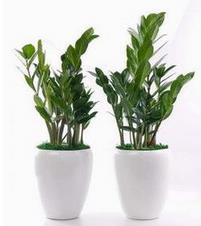
2. The ZZ plant looks clean and beautiful, is easy to care for, and is not prone to pests. It tolerates drought, so even if you go out for a week or two there will be no problem. Placed at home, it looks beautiful and elegant, and especially its color and shape are very lovable. It has no thick, sturdy trunk, no stray side branches, and no airtight dense leaves. It is only an ornamental flower, and although it has never bloomed, it simply shows you green. The green leaves make people feel vigorous vitality and draw them closer. Look at its name, money, gold coins, with a flower language of wealth and honor, bringing you continuous good luck.
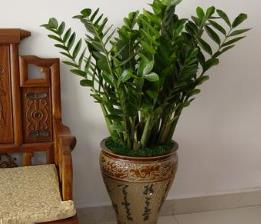
More importantly, it can also absorb harmful gases such as formaldehyde and benzene series compounds, and kill bacteria in the air. In this process, it effectively purifies the air and increases the green atmosphere in the space, making people feel relaxed and happy and spiritually uplifted. It is truly a natural oxygen bar for the home. In addition, the ZZ plant can regulate the surrounding humidity and is especially suitable for placement in air-conditioned rooms. Air conditioning tends to make the air dry, and a pot of ZZ plant can balance the environment and also protect your skin.
2. The ZZ plant looks clean and beautiful, is easy to care for, and is not prone to pests. It tolerates drought, so even if you go out for a week or two there will be no problem. Placed at home, it looks beautiful and elegant, and especially its color and shape are very lovable. It has no thick, sturdy trunk, no stray side branches, and no airtight dense leaves. It is only an ornamental flower, and although it has never bloomed, it simply shows you green. The green leaves make people feel vigorous vitality and draw them closer. Look at its name, money, gold coins, with a flower language of wealth and honor, bringing you continuous good luck.