Which plants are suitable for soilless cultivation?
Soilless cultivation is a technique of growing plants entirely with nutrient solution instead of soil, and it is a major innovation in the way humans grow plants. Soilless cultivation not only brings faster growth, higher yields and better quality, but also frees human growing activities from the constraints of soil, opening up broad prospects for achieving factory-style, automated agricultural and horticultural production. Do you know which plants can be grown with soilless cultivation? Here is a detailed introduction for you.
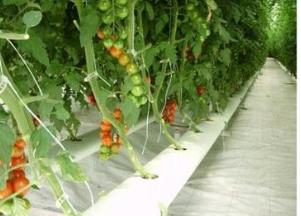
What plants can be grown with soilless cultivation
Many friends ask which plants can be grown with soilless cultivation because they want to grow them. Soilless cultivation covers a very wide range, including flowers as well as vegetables, but it has not yet been comprehensively promoted. Common vegetables for soilless cultivation generally include: lettuce, chicory, Chinese kale, choi sum, rapeseed, pak choi, bolt-resistant Chinese cabbage, large-leaf mustard, kale, Gynura bicolor, watercress, water dropwort, celery, mitsuba, amaranth, chives, potato, and so on. Common flowers generally include: lily, Monstera deliciosa, Orchid Tree, clivia, camellia, Chinese rose, jasmine, azalea, kumquat, lucky bamboo, stock, Phalaenopsis, fuchsia, five-needle pine, banana shrub, rubber fig, Dracaena fragrans, begonias, ferns, palms, and so on.
Generally, water-grown plants have the following advantages: first, because water can evaporate freely, in the same environment they play a more obvious role than soil-potted plants in regulating air humidity; second, water-grown plants can omit some of the management work involved with potting soil, are clean and hygienic, and are simple to care for; third, if plants whose roots can be exposed to light are chosen and matched with a suitable container, the whole plant can be viewed, giving higher ornamental value.
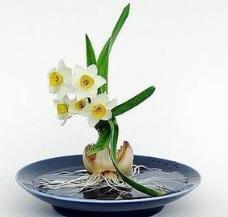
There are two major categories of water-grown plants. One is aquatic flowers, which grow in water in nature, such as the lotus and water lily we are familiar with; the other is flowers that can be hydroponically grown, which generally grow in soil or growing media, such as narcissus and hyacinth. Because indoor light is not sufficient enough, the latter category is more suitable for cultivation. In addition, they have low nutrient requirements and can basically grow in tap water without adding nutrient solution. Suitable species for the home include pothos, hyacinth, lucky bamboo, spider plant, Dieffenbachia seguine, Philodendron cordatum, Dracaena marginata, and so on.
These plants generally do not need special management. Any container of a certain size that allows the roots to spread can be used, and a glass container with an open mouth is more beneficial for maintaining water quality and root growth. When planting, avoid letting the leaves sink into the water, so as to prevent rot; place it under suitable light conditions and it will soon take root; when the water runs low, add some water to prevent the roots from drying out; when the water becomes cloudy, take out the plant, clean the container, and refill with water.
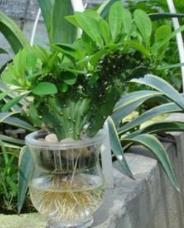
Which plants are suitable for soilless cultivation
Soilless cultivation can make plants grow quickly and robustly, bloom more and earlier, larger and more fragrant, and resist cold and tolerate heat, with fewer pests and diseases. Flowers that are generally easier to grow include: Monstera deliciosa, Orchid Tree, clivia, camellia, Chinese rose, jasmine, azalea, kumquat, lucky bamboo, stock, Phalaenopsis, fuchsia, five-needle pine, banana shrub, rubber fig, Dracaena fragrans, begonias, ferns, palms, and so on. Potted flowers can be converted from soil cultivation to soilless cultivation at any season. The specific procedure is as follows.
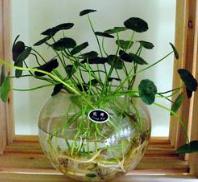
1. Make the nutrient solution. Dilute the soilless cultivation nutrient solution sold on the market with water according to the specified multiple. You can also make the nutrient solution yourself with the following formula. 1. Major elements: potassium nitrate and magnesium sulfate 3 grams each, calcium nitrate 5 grams, ammonium phosphate 2 grams, potassium sulfate and potassium dihydrogen phosphate 1 gram each; 2. Trace elements: (using chemical reagents) disodium ethylenediaminetetraacetate 0.1 grams, ferrous sulfate 75 milligrams, boric acid 30 milligrams, manganese sulfate 20 milligrams, zinc sulfate 5 milligrams, copper sulfate 1 milligram, ammonium molybdate 2 milligrams; 3. Tap water 5 kilograms. Prepare the major elements and trace elements separately into solutions, then mix them together to obtain the nutrient solution. The amount of trace elements used is very small and not easy to weigh, so they can be made at an expanded multiple and then reduced by the same multiple when measuring out the amount. For example, the trace elements can be expanded 100 times by weight to make a solution, and then 1% of that solution is taken, which is the required amount. The nutrient solution is non-toxic, odorless, clean and hygienic, and can be stored for a long time.
2. Remove from the pot. Use your fingers to push the root system together with the soil out through the hole in the bottom of the pot.
3. Wash the roots. Soak the soil-covered root system in water close to the ambient temperature and wash the soil off the roots.
4. Soak in solution. Place the washed roots in the prepared nutrient solution and soak for 10 minutes so they fully absorb nutrients.
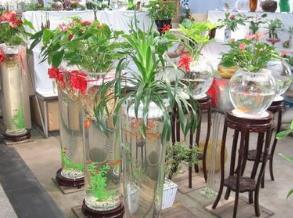
5. Pot and pour in solution. Wash the flower pot, place a tile or fill with plastic gauze at the hole in the bottom of the pot, then put a small amount of perlite and vermiculite into the pot, then place the plant into the pot and hold it upright, and fill perlite, vermiculite and other lightweight minerals around the root system. Gently shake the pot so that the minerals closely contact the root system. Then pour in the prepared nutrient solution until liquid flows out from the hole in the bottom of the pot.
6. Reinforce the root system. Place broken pieces such as fluorite and axinite on top of the root system to reinforce the roots and prevent lodging. At the same time, spray some clean water on the leaves.
7. Routine care. For soilless-cultivated flower bonsai, the requirements for light, temperature and other conditions are no different from soil cultivation. During the plant's growing period, pour nutrient solution once a week, with the amount depending on the size of the plant; for flowers whose leaves grow slowly, reduce the amount as appropriate; in winter or during dormancy, pour once every 15-30 days. Indoor foliage plants can survive under weak light, so the amount of nutrient solution should be reduced, and the nutrient solution can also be used for foliar spraying. Normally, pay attention to watering in good time.
2. Remove from the pot. Use your fingers to push the root system together with the soil out through the hole in the bottom of the pot.
3. Wash the roots. Soak the soil-covered root system in water close to the ambient temperature and wash the soil off the roots.
4. Soak in solution. Place the washed roots in the prepared nutrient solution and soak for 10 minutes so they fully absorb nutrients.
5. Pot and pour in solution. Wash the flower pot, place a tile or fill with plastic gauze at the hole in the bottom of the pot, then put a small amount of perlite and vermiculite into the pot, then place the plant into the pot and hold it upright, and fill perlite, vermiculite and other lightweight minerals around the root system. Gently shake the pot so that the minerals closely contact the root system. Then pour in the prepared nutrient solution until liquid flows out from the hole in the bottom of the pot.
6. Reinforce the root system. Place broken pieces such as fluorite and axinite on top of the root system to reinforce the roots and prevent lodging. At the same time, spray some clean water on the leaves.
7. Routine care. For soilless-cultivated flower bonsai, the requirements for light, temperature and other conditions are no different from soil cultivation. During the plant's growing period, pour nutrient solution once a week, with the amount depending on the size of the plant; for flowers whose leaves grow slowly, reduce the amount as appropriate; in winter or during dormancy, pour once every 15-30 days. Indoor foliage plants can survive under weak light, so the amount of nutrient solution should be reduced, and the nutrient solution can also be used for foliar spraying. Normally, pay attention to watering in good time.