A Detailed Guide to Rose Cultivation Methods and Key Technical Points
The rose is a thorny shrub, or it may be trailing or climbing. It is an evergreen or deciduous shrub, upright, with a brown stem bearing hooked thorns or no thorns, and some are almost thornless. The young branches are green, the leaves are dark green, mostly pinnately compound, broadly ovate or ovate-oblong, 2.5-6 cm long, with a tapering tip, sharp teeth, and serrated leaf margins. So what should be noted when cultivating roses? Today let's look at rose cultivation methods and techniques.
Rose Cultivation Techniques
Rose cultivation is divided into protected cultivation and open-field cultivation.
Protected cultivation (pot culture)
Roses are light-loving plants, but excessively strong light is unfavorable for flower bud development, while growth in insufficient sunlight results in slender branches. Roses take about 45 days from budding to flowering, with an optimum growth temperature of 15-25°C; within this temperature range the flowers are large and beautiful, at 30°C growth slows, and above 30°C the flowers become smaller and the flower color fades. When potting 2-3 year old seedlings, the roots should be trimmed, cutting the old roots short to encourage new root growth, but root trimming should not be too severe. When planting, take care that the root system is spread out and the plant is upright, and the potting soil should not be filled to the brim. Potting is generally done during the dormant period. Roses grow vigorously and need plenty of fertilizer, so repot once a year or every other year, repotting during the dormant period, and after repotting water thoroughly twice. In spring, summer and autumn, they should be placed in a site with ample sunlight, good ventilation and no water accumulation.
Potted roses are not watered unless dry, and when watered, water thoroughly. In summer the weather is hot and evaporation is high, so potted plants should be watered more, especially the evening watering, which should be sufficient. When the temperature exceeds 30°C, roses grow poorly and bloom less; some people think it is due to insufficient fertility and apply more topdressing, which actually makes things worse. In midsummer, topdressing is generally not applied; only for robustly growing branches and plants, apply light fertilizer frequently, 1-2 times a week. If possible, provide appropriate shade after 11 a.m. and let them get sun again after 4 p.m., avoiding the hot midday temperature while allowing them to receive the weaker sunlight before and after noon, which benefits photosynthesis and accumulates nutrients for the next flush of flowers. Fertilizer can be applied right after pruning, using 50% human manure and urine mixed with 2% superphosphate. In mid-February, apply topdressing with 3% human manure and urine or 1% urea, or sprinkle urea before or after rain. Fertilizer should not be applied when the new shoots are red; applying fertilizer at this time damages the young roots, causing the plant to wilt or stop growing, so special attention must be paid to this.
Roses also need one pruning before overwintering, but not too early. When pruning roses, not only should strong branches be selected and kept, but attention should also be paid to even distribution of main and secondary branches. Large-flowered varieties keep 4-6 strong branches, and on each branch select one strong lateral bud at 30-40 cm, cutting off the middle and upper branches. For trailing and climbing varieties, remove old branches, weak branches and diseased or pest-damaged branches to train the main trunk.
Open-field cultivation
Roses planted in the open field have well-developed root systems, grow rapidly, are robust, and bear slightly larger flowers with high ornamental value. In management, cultivation measures should be chosen according to different types, growth habits and geographical conditions. Choose a cultivation site with higher terrain, ample sunlight, good air circulation and slightly acidic soil. When planting, plow the soil deeply and apply organic fertilizer as base fertilizer. The planting density is 75 cm x 75 cm for upright varieties, 100 cm x 100 cm for spreading varieties, 40 cm x 50 cm for vertical-growing varieties, and 200 cm x 200 cm for climbing varieties.
First, choose good pots and prepare good soil. Clay pots should be used for planting roses; ceramic pots, plastic pots and the like are generally not suitable because of poor air permeability. For one- to two-year-old rose seedlings, a 20 cm clay pot is generally more suitable; when growing roses on a balcony, it can be appropriately larger. The soil used for potting should be loose and well aerated; when conditions permit, use humus soil, horse manure soil, etc. When needed urgently, sandy loam mixed with sand, coal ash, sawdust and other loosening materials can also be used to facilitate drainage; garden soil should not be used directly.
The bottom of the pot should be covered with tile pieces and base fertilizer applied. Slow-release fertilizers should be used as base fertilizer, such as horse hoof, animal hooves and horns, etc.; bone meal is also a very good base fertilizer. Never apply chemical fertilizers, fish guts, chicken intestines, sesame residue, soybeans or other quick-acting and insufficiently decomposed fertilizers in the potting soil, lest the rapid fertility affect the growth of new roots. When potting, the soil should not be filled too full; leave about 3 cm of margin between the soil surface and the pot rim to facilitate watering.
After potting, water thoroughly, and place the pot in a warm, sunny place. After potting, special attention should be paid to wind protection.
After potting, spray once with pesticide to prevent and control diseases and pests. Lime sulfur mixture and Bordeaux mixture can be sprayed to prevent disease, and fenpropathrin, dicofol, etc. can be used to control aphids, red spider mites and other pests.
Watering should follow "wet then dry": after potting, since the roots and leaves have not yet opened up, moisture should be appropriately controlled to encourage new bud growth. Topdressing should not be done too early; after buds appear, some sesame residue or liquid fertilizer may be applied. By May, the roses will bloom with bright flowers.
Introduction to the Main Types of Roses
The main types of roses include edible roses, climbing roses (CI series), large-flowered hybrid tea roses (cut-flower roses) (HT series), floribunda roses (polyantha roses) (F/FI series), miniature roses (Min series), tree roses, grandiflora roses (Gr series), shrub roses (sh series), ground-cover roses (Gc series), etc.
Edible Rose
Damask rose has a pure rose fragrance and high oil yield; after drying and processing it can be made into rose-scented tea (it can also be used to scent tea). Among the many flower varieties used for food, medicine, health care and beauty, it is the best.
Large-Flowered Hybrid Tea Rose (HT series)
There are numerous varieties, and it is the main body of modern roses. Its characteristics are: robust plants, single or clustered flowers, large blooms, elegant and beautiful flower form, many flower colors that are bright and lively, fragrant scent, and strong ornamental value.
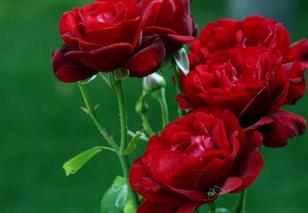
A rising star in landscaping - the climbing rose, a climbing growth type, with well-developed roots and extremely strong resistance. Its branches sprout rapidly and grow vigorously; one plant sprouts 7-8 main branches per year, and each main branch branches out openly, with annual maximum growth reaching 5 m, and it has a very strong ability to resist diseases. It is easy to manage, tolerant of pruning, rich in flower forms, and blooms continuously through the four seasons (some are also once-blooming or twice-blooming types), with brilliant, unrestrained flower colors, a long flowering period and a rich fragrance. Flower colors include vermilion, bright red, fresh red, pink, golden yellow, orange yellow, bicolors, pure white, etc. It sprouts from the nodes in the second year, blooming all over the plant with numerous flower heads, and can form landscapes such as flower balls, flower columns, flower walls, flower seas, flower waterfalls, arch shapes and corridor shapes.
Floribunda Rose (F/FI series)
The floribunda rose has a spreading growth habit, with flower heads in clusters. It is cold-tolerant, heat-tolerant, drought-resistant, waterlogging-resistant and disease-resistant, with extremely strong adaptability to the environment. It is widely used in urban environmental greening, landscaping flower beds, expressways, etc.
Miniature Rose (Min series)
A new variety in the rose family, with a short, spherical plant type and numerous flower heads; because of its unique character it is also called "diamond rose." It is mainly used for potted ornamental display, embellishing lawns and arranging flower color patterns.
Tree Rose
Tree rose, also called rose tree or rose standard, achieves a standard upright trunk and crown through more than two grafting procedures. Current tree rose specifications (height 0.4-2.0 m, trunk diameter 1-5 cm).
Advantages: good ornamental effect, unique shape, noble and elegant, with distinct layers, visually refreshing; diverse forms, including round ball type, fan type, waterfall type, miniature type, etc.; it retains the advantages of general roses such as strong fragrance, long flowering period and diverse flower colors, while appearing more novel, more noble and more passionate, and therefore has higher aesthetic value.
Wide landscaping use: in ring roads, parks, scenic areas, community courtyards and all places with green space, tree roses can play a finishing touch in beautification.
Strong adaptability: the flower crown of the tree rose is farther from the ground than that of general flowers, making it less likely to be infected by soil-borne diseases and pests; the trunk is derived from Rosa multiflora, with well-developed roots and extremely strong vitality. Especially in areas with relatively high alkalinity, where planting ordinary roses is difficult, tree roses fill the gap.
Lest the rapid fertility affect the growth of new roots, the soil should not be filled too full when potting; leave about 3 cm of margin between the soil surface and the pot rim to facilitate watering.
After potting, water thoroughly, and place the pot in a warm, sunny place. After potting, special attention should be paid to wind protection.
After potting, spray once with pesticide to prevent and control diseases and pests. Lime sulfur mixture and Bordeaux mixture can be sprayed to prevent disease, and fenpropathrin, dicofol, etc. can be used to control aphids, red spider mites and other pests.
Watering should follow "wet then dry": after potting, since the roots and leaves have not yet opened up, moisture should be appropriately controlled to encourage new bud growth. Topdressing should not be done too early; after buds appear, some sesame residue or liquid fertilizer may be applied. By May, the roses will bloom with bright flowers.
Introduction to the Main Types of Roses
The main types of roses include edible roses, climbing roses (CI series), large-flowered hybrid tea roses (cut-flower roses) (HT series), floribunda roses (polyantha roses) (F/FI series), miniature roses (Min series), tree roses, grandiflora roses (Gr series), shrub roses (sh series), ground-cover roses (Gc series), etc.
Edible Rose
Damask rose has a pure rose fragrance and high oil yield; after drying and processing it can be made into rose-scented tea (it can also be used to scent tea). Among the many flower varieties used for food, medicine, health care and beauty, it is the best.
Large-Flowered Hybrid Tea Rose (HT series)
There are numerous varieties, and it is the main body of modern roses. Its characteristics are: robust plants, single or clustered flowers, large blooms, elegant and beautiful flower form, many flower colors that are bright and lively, fragrant scent, and strong ornamental value.
A rising star in landscaping - the climbing rose, a climbing growth type, with well-developed roots and extremely strong resistance. Its branches sprout rapidly and grow vigorously; one plant sprouts 7-8 main branches per year, and each main branch branches out openly, with annual maximum growth reaching 5 m, and it has a very strong ability to resist diseases. It is easy to manage, tolerant of pruning, rich in flower forms, and blooms continuously through the four seasons (some are also once-blooming or twice-blooming types), with brilliant, unrestrained flower colors, a long flowering period and a rich fragrance. Flower colors include vermilion, bright red, fresh red, pink, golden yellow, orange yellow, bicolors, pure white, etc. It sprouts from the nodes in the second year, blooming all over the plant with numerous flower heads, and can form landscapes such as flower balls, flower columns, flower walls, flower seas, flower waterfalls, arch shapes and corridor shapes.
Floribunda Rose (F/FI series)
The floribunda rose has a spreading growth habit, with flower heads in clusters. It is cold-tolerant, heat-tolerant, drought-resistant, waterlogging-resistant and disease-resistant, with extremely strong adaptability to the environment. It is widely used in urban environmental greening, landscaping flower beds, expressways, etc.
Miniature Rose (Min series)
A new variety in the rose family, with a short, spherical plant type and numerous flower heads; because of its unique character it is also called "diamond rose." It is mainly used for potted ornamental display, embellishing lawns and arranging flower color patterns.
Tree Rose
Tree rose, also called rose tree or rose standard, achieves a standard upright trunk and crown through more than two grafting procedures. Current tree rose specifications (height 0.4-2.0 m, trunk diameter 1-5 cm).
Advantages: good ornamental effect, unique shape, noble and elegant, with distinct layers, visually refreshing; diverse forms, including round ball type, fan type, waterfall type, miniature type, etc.; it retains the advantages of general roses such as strong fragrance, long flowering period and diverse flower colors, while appearing more novel, more noble and more passionate, and therefore has higher aesthetic value.
Wide landscaping use: in ring roads, parks, scenic areas, community courtyards and all places with green space, tree roses can play a finishing touch in beautification.
Strong adaptability: the flower crown of the tree rose is farther from the ground than that of general flowers, making it less likely to be infected by soil-borne diseases and pests; the trunk is derived from Rosa multiflora, with well-developed roots and extremely strong vitality. Especially in areas with relatively high alkalinity, where planting ordinary roses is difficult, tree roses fill the gap.