Is Asparagus Fern Toxic? A Detailed Guide on Whether You Can Grow It at Home
Asparagus fern, also known as cloud pine, spiny asparagus, and cloud bamboo, Latin name: Asparagussetaceus, is a perennial evergreen vine ornamental stem plant and a famous ornamental plant. Asparagus fern is a highly ornamental and beautiful green plant, also grown indoors, and can clean the air, kill bacteria, and help regulate indoor air. The surface of asparagus fern is yellowish-white, with wrinkles of varying depth, and has slender branch roots. So is asparagus fern toxic? Can it be grown at home? Let me introduce it to you now.
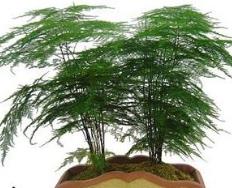
Is Asparagus Fern Toxic? Can You Grow It at Home?
Asparagus fern is a purifying plant and completely non-toxic, so please cultivate it with confidence!
Asparagus fern, elegant and evergreen, can decorate and beautify indoor environments, delight the mood, and help you feel relaxed in body and mind. It can also absorb harmful gases and purify the air, making it beneficial rather than harmful. At night, besides absorbing harmful gases such as sulfur dioxide, nitrogen dioxide, and chlorine, asparagus fern can also secrete gases that kill bacteria, reducing the occurrence of infectious diseases such as colds, typhoid, and laryngitis, which is greatly beneficial to human health. And flowering is not very harmful to the human body either. Placing asparagus fern in the bedroom at night is not a problem for the plant itself, but plants respire at night, absorbing oxygen and releasing carbon dioxide, so placing plants in a room at night will reduce indoor oxygen levels. Therefore, plants should not be placed in the bedroom at night. Especially if you sleep with the windows closed, this is very unfavorable for your sleep, and you may feel dizzy, stuffy, and weak. So it is recommended not to put plants in the bedroom at night; putting them in the living room is fine.
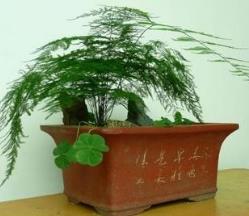
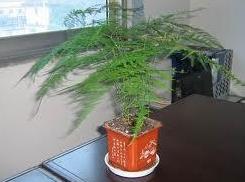
Place asparagus fern on a coffee table or desk, with its green leaf-like branches bearing a few sparkling water droplets, and how lively it looks. Green and slender, new shoots like spring bamboo shoots drill out of the soil, carrying a touch of tenderness, a touch of childlike charm, and a touch of hope. Closing your eyes and daydreaming about it is such a pleasant feeling.
In summer, this is a perfect plant to hang on a sunny porch. In a suitable location, asparagus fern plants can grow to more than 2-3 feet. The bright green asparagus fern with tiny needle-like leaves grows elegant vines, covered with an extra bonus of small white flowers that eventually turn into red berries. Be careful of the small sharp thorns hidden among the dense branches and leaves; the unsightly red berries are toxic. In a suitable location, asparagus fern plants grow to more than 2-3 feet.
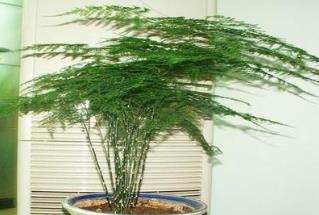
How to Grow Asparagus Fern
How to grow asparagus fern - light: asparagus fern plants grow best in bright indirect light, from east-, west-, and north-facing windows. In weaker light, plants grow very slowly and may develop yellow leaf-like bodies.
Water: allow the top 50% of the soil to dry out before watering again. If in doubt, allow the light green asparagus fern to dry before watering. An asparagus fern needs more water in hot summer, in cold winter, and in dry soil. Asparagus fern is very drought-tolerant, but yellow stems and brown stems indicate it needs more watering; it needs more water.
Fertilizer: feed asparagus fern weekly with a water-soluble plant fertilizer during the active summer period, and monthly for the rest of the year. Be sure to dilute to 1/2 the recommended strength of the fertilizer.
Temperature: for asparagus fern plants, the temperature should be kept at 50-75°F/10-24°C.
Humidity: because this asparagus fern is not a true fern, it does fine in normal low humidity.
Flowering: asparagus fern produces small white flowers that become toxic red berries.
Pests: asparagus fern can get mealybugs, spider mites, aphids, scale, and thrips. These plants do not like pesticides, so please try to use gentle solutions, such as insecticidal soap, if there is a problem.
Soil: use a well-aerated, fast-draining potting soil. If the soil seems too heavy, add some sand, perlite, or sphagnum moss.
Pot diameter size: keep asparagus fern roots constricted in a small pot to encourage graceful long stem growth.
Pruning: an asparagus fern rarely needs pruning. If yellow stems appear due to some stress, just cut them off as close to the soil surface as possible.
Propagation: asparagus fern is propagated by plant division. Try to propagate new plants in spring before they begin producing new growth. Root balls are often difficult to divide, so have many strong tools available.
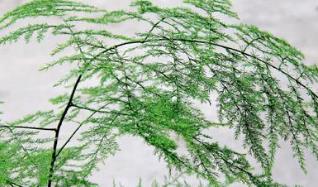
Introduction to Common Problems with Asparagus Fern
Some Common Questions About Asparagus Fern
1. My asparagus fern has white flowers and red berries. Should I cut them off?
Congratulations, the berries and flowers develop when the asparagus fern is doing what it needs to do. Flowers and berries will not harm the plant, but may slow the development of new green growth. Remember that the red berries are toxic and can cause digestive problems if eaten.
2. When I returned from vacation, my asparagus fern plant had become hard and straw-like.
The soil of your asparagus fern may have dried out completely, and then some. Cut the plant and dead vines close to the soil and water it well. When the soil is very dry, do not use any fertilizer.
3. I have my asparagus fern in my bedroom across from a north-facing window. It is not dead, but it is not getting any new growth.
Your plant may not be getting enough bright light. Directly in front of a north-facing window is better, but try moving your asparagus fern plant and move it to a west or east exposure.
4. How do I know when to repot my asparagus fern?
A asparagus fern literally tells you when the root ball has become too large and it needs a new pot. The roots are so strong that they may break a plastic grower pot or begin forcing soil over the edge of any pot it is in. If that does not happen, you can still consider that the pot is too small; gently pull the asparagus fern plant from its pot. If the root shape is still in the pot and has not spilled above the soil, then it does not need repotting.
Some Common Questions About Asparagus Fern
1. My asparagus fern has white flowers and red berries. Should I cut them off?
Congratulations, the berries and flowers develop when the asparagus fern is doing what it needs to do. Flowers and berries will not harm the plant, but may slow the development of new green growth. Remember that the red berries are toxic and can cause digestive problems if eaten.
2. When I returned from vacation, my asparagus fern plant had become hard and straw-like.
The soil of your asparagus fern may have dried out completely, and then some. Cut the plant and dead vines close to the soil and water it well. When the soil is very dry, do not use any fertilizer.
3. I have my asparagus fern in my bedroom across from a north-facing window. It is not dead, but it is not getting any new growth.
Your plant may not be getting enough bright light. Directly in front of a north-facing window is better, but try moving your asparagus fern plant and move it to a west or east exposure.
4. How do I know when to repot my asparagus fern?
A asparagus fern literally tells you when the root ball has become too large and it needs a new pot. The roots are so strong that they may break a plastic grower pot or begin forcing soil over the edge of any pot it is in. If that does not happen, you can still consider that the pot is too small; gently pull the asparagus fern plant from its pot. If the root shape is still in the pot and has not spilled above the soil, then it does not need repotting.