What to Do When Asparagus Fern Leaves Turn Yellow? Causes and Growing Methods Explained
Asparagus fern (Asparagus plumosus) is a highly ornamental and beautiful green plant. It is also grown indoors, where it can purify the air, kill bacteria, and help regulate indoor air quality. Its leaves are soft and dense, but during cultivation the leaves very easily turn yellow. Too much light, improper watering, and other factors can all cause its leaves to yellow. To solve the problem of yellowing asparagus fern leaves, you first need to pinpoint the cause. So what should you do when asparagus fern leaves turn yellow? Here we explain the causes and the growing methods.
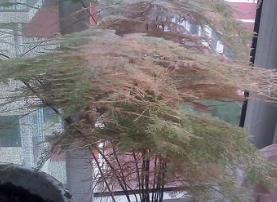
What to Do When Your Asparagus Fern's Leaves Turn Yellow at Home: Causes and Growing Methods Explained
Asparagus fern leaves are slender and elegant, densely packed like feathers, with a graceful plant shape and a distinctive charm. It is deeply loved by people and is a fairly common indoor foliage plant. Friends who have grown asparagus fern will find that its leaves yellow very easily during cultivation. When asparagus fern leaves turn yellow, what should you do? Find the root of the problem and "treat the disease accordingly."
Causes of yellowing asparagus fern leaves:
1. Temperature too high. Although asparagus fern likes warmth, it should not be placed near a fire for long periods, otherwise the entire fronds will turn yellow and drop off, and the stems will also dry up.
2. Direct scorching sun. Asparagus fern cannot be exposed to strong direct sunlight, as this will cause the branches and leaves to wither and yellow. In addition, if the asparagus fern is exposed to strong light for too long, the plant will first stop growing, and then the leaves will yellow and fall.
3. Improper watering. Asparagus fern likes moisture. If you neglect watering, or only water the surface layer of the potting soil, the roots will not absorb enough water and the stems and leaves will slowly turn yellow. But never let water accumulate in the pot either; too much water easily causes root rot and yellow, withered leaves.
4. Not enough light. Asparagus fern likes warmth. If it is placed in a shaded environment for a long time, the plant will grow weak and then turn yellow. In winter, it is best to put it in a sunny spot. If it is placed in a place with insufficient light, plus poor ventilation and cold, the branches and leaves will easily wither and yellow. If this happens, you should replace the asparagus fern with new potting soil.
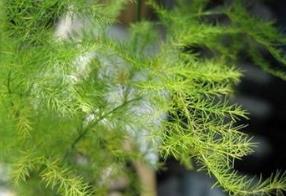
5. Improper fertilizing. Fertilize the asparagus fern regularly so it has enough nutrients. If the nutrient supply falls short of demand, the branches and leaves will turn yellow. If the concentration is too high or undecomposed fertilizer is used, it can easily burn the seedlings and even cause them to dry up. If no fertilizer is applied for a long time, it will also become nutrient-deficient and turn yellow.
6. Suffering cold damage. Asparagus fern likes warmth. In winter, when temperatures are lower, if the indoor temperature is below 5°C, use a plastic cover to protect it from the cold, otherwise it can easily freeze and wither.
7. Infection by pests and diseases. Once asparagus fern is infected by pests such as scale insects, it will also cause the branches and leaves to wither and yellow, and it should be controlled promptly.
8. Improper placement. If asparagus fern is placed next to a television, the leaf tips will gradually dry up.
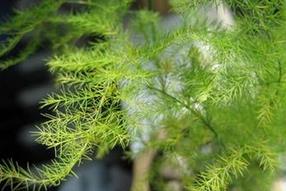
There are two main reasons asparagus fern leaves turn yellow: one is low temperature, and the other is overly dry potting soil. Asparagus fern can only grow well at 18-28°C. So what should you do when asparagus fern leaves turn yellow? In winter, let the asparagus fern see more sunlight; if conditions allow, households can place it on a south-facing balcony. In summer, avoid sunlight and provide diffused light only, placing it in a shaded spot.
In addition, another cause of yellowing asparagus fern leaves may be: placing the asparagus fern pot next to a radiator, air conditioner, television, or other electrical items. Because these items emit strong radiation, they can also cause the asparagus fern's leaves to yellow and drop, and over time can even cause the stems to dry up. So pay attention to this when deciding where to place the asparagus fern pot.
The main reasons asparagus fern leaves turn yellow are generally no more than the factors above. At the same time, you need to take a little care in daily maintenance and not simply ignore it. If the yellowing of asparagus fern leaves is due to insufficient nutrients, here the editor teaches you a folk method to improve the asparagus fern's nutrition: water the asparagus fern with white sugar water, which is guaranteed to make your asparagus fern grow very lush.
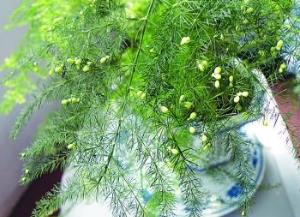
Growing methods:
In winter, when the heating is on, the home is relatively dry, which is unfavorable for asparagus fern growth, so spray water on the asparagus fern's leaves every day to increase humidity. Asparagus fern should not be watered when conditions are too dry or too wet; both situations will cause its leaves to turn yellow. Observe whether the potting soil is dry or wet. If the top 1-2 cm of potting soil is already dry, that indicates it is time to water.
If the asparagus fern is not growing very lushly, it should be fertilized. Here is a folk method: watering the asparagus fern with white sugar water can also help increase nutrition. Watering the asparagus fern with 5-10% white sugar water every 20 days is enough to make it grow lushly.
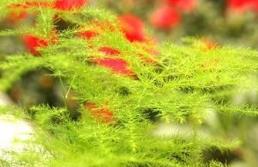
Potted asparagus fern, if improperly cared for, often develops yellowing branches and leaves. The causes of yellowing asparagus fern branches and leaves and the preventive methods are summarized as follows: (1) Too much light. Asparagus fern likes half shade and half sun, and avoids strong direct sunlight, otherwise it will cause the branches and leaves to turn yellow. So asparagus fern should be shaded. (2) Improper watering. Asparagus fern likes moisture but fears waterlogging, so it is best to use a sandy soil with good aeration and drainage for cultivation. Watering should be appropriate; too much will rot the roots, while too little will make the leaves wither and yellow. When the weather is hot and dry, spray clear water on the branches and leaves every day to increase environmental humidity and compensate for water evaporation from the branches and leaves. (3) Insufficient nutrients. For potted asparagus fern, if it is not repotted for many years, the soil nutrients will become insufficient. If usually only clear water is poured and no fertilizer is applied, it will also cause nutrient deficiency. For potted asparagus fern, apply a dilute decomposed liquid fertilizer once a week, and water and loosen the soil promptly. (4) Improper fertilizing. If fertilizer that is too concentrated or not decomposed is applied, it will damage the roots and cause the leaves to turn yellow and drop. Use water to flush the potting soil, dilute the fertilizer concentration, or immediately change the soil to rescue it. (5) Poor winter care. Asparagus fern likes warmth and fears cold. In winter it should be placed in a sunny, warm indoor spot, with the room temperature kept above 8-12°C. If it is kept in shade for a long time and at a room temperature below 8°C, the branches and leaves will turn yellow. Watering must also be controlled. (6) Smoke and dust pollution. Asparagus fern fears smoke, dust, and toxic gases, so it should be placed in a well-ventilated area to avoid pollution. Also frequently spray water on the branches and leaves to wash away dust.
Potted asparagus fern, if improperly cared for, often develops yellowing branches and leaves. The causes of yellowing asparagus fern branches and leaves and the preventive methods are summarized as follows: (1) Too much light. Asparagus fern likes half shade and half sun, and avoids strong direct sunlight, otherwise it will cause the branches and leaves to turn yellow. So asparagus fern should be shaded. (2) Improper watering. Asparagus fern likes moisture but fears waterlogging, so it is best to use a sandy soil with good aeration and drainage for cultivation. Watering should be appropriate; too much will rot the roots, while too little will make the leaves wither and yellow. When the weather is hot and dry, spray clear water on the branches and leaves every day to increase environmental humidity and compensate for water evaporation from the branches and leaves. (3) Insufficient nutrients. For potted asparagus fern, if it is not repotted for many years, the soil nutrients will become insufficient. If usually only clear water is poured and no fertilizer is applied, it will also cause nutrient deficiency. For potted asparagus fern, apply a dilute decomposed liquid fertilizer once a week, and water and loosen the soil promptly. (4) Improper fertilizing. If fertilizer that is too concentrated or not decomposed is applied, it will damage the roots and cause the leaves to turn yellow and drop. Use water to flush the potting soil, dilute the fertilizer concentration, or immediately change the soil to rescue it. (5) Poor winter care. Asparagus fern likes warmth and fears cold. In winter it should be placed in a sunny, warm indoor spot, with the room temperature kept above 8-12°C. If it is kept in shade for a long time and at a room temperature below 8°C, the branches and leaves will turn yellow. Watering must also be controlled. (6) Smoke and dust pollution. Asparagus fern fears smoke, dust, and toxic gases, so it should be placed in a well-ventilated area to avoid pollution. Also frequently spray water on the branches and leaves to wash away dust.