What plant is the large-leaf Aeonium? A comprehensive guide
The large-leaf Aeonium, also known as a member of the order Saxifragales, family Crassulaceae, genus Aeonium, is an ideal indoor foliage plant. Let us learn more about it together!
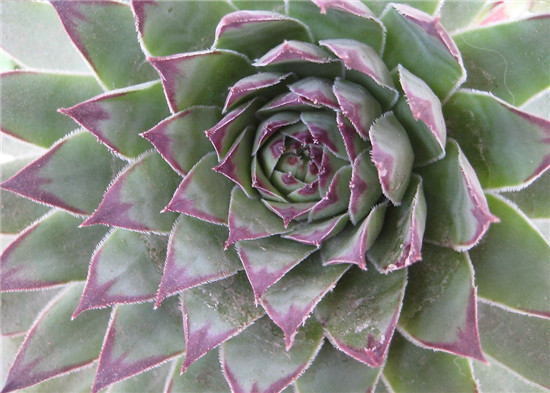
Aeonium is a perennial stemless herbaceous succulent plant. The rhizome is thick and sturdy, with many long filamentous aerial roots. The leaves are blue-gray, nearly round or obovate, with a rounded to nearly truncate apex, red, and without petioles. The inflorescence is a simple raceme-like cyme, the flowering stem is 20-30 cm tall, with 8-12 flowers, pink or red on the outside and yellow on the inside; the flowering period is June to August. It has a certain ornamental value and can be used to decorate interiors.
Aeonium is a perennial succulent herbaceous plant that can grow up to 60 cm tall, with stolons. The leaf rosette is compact, upright and rosette-shaped; the leaves are obovate, fleshy, hairless, covered with a white powdery bloom on the surface, mainly emerald green, with a few being powdery blue or dark green. The flower stalks emerge from the leaf rosette; the flowering stems are soft, with bracts and a white frosty coating. There are 8-24 flowers in a cyme; the corolla is red, and the petals are lanceolate and do not open; the flowering period is June to October.
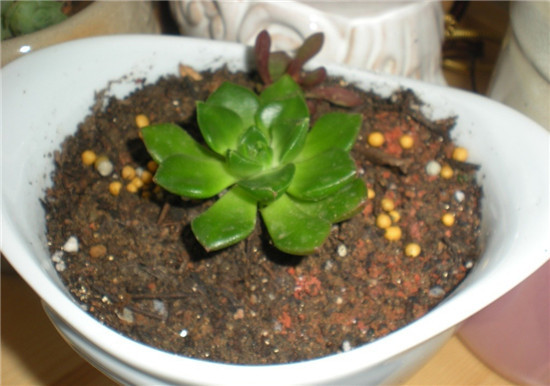
Distribution and growing habits of the large-leaf Aeonium
Distribution of the large-leaf Aeonium: native to Tenerife in the Canary Islands in the Atlantic Ocean.
Growing habits of the large-leaf Aeonium: it prefers a humid environment and requires high air humidity. However, the potting soil must not be overly wet. In warm seasons it can be placed outdoors under a shade canopy. In winter, place it in a cool location, with the temperature not exceeding 10°C.
Plant morphology of the large-leaf Aeonium: the large-leaf Aeonium has few stem branches and many aerial roots; the branches grow from the base and curve outward. The rosette disc is 20-25 cm in diameter; the leaves are oblong-spatulate, with clearly red or violet leaf margins, and the leaves are blue-green. The flowers are greenish-white to pale pink.
The large-leaf Aeonium is native to Tenerife in the Canary Islands in the Atlantic Ocean. It has few stem branches and many aerial roots; the branches grow from the base and curve outward. The rosette disc is 20-25 cm in diameter; the leaves are oblong-spatulate, with clearly red or violet leaf margins, and the leaves are blue-green. The flowers are greenish-white to pale pink.
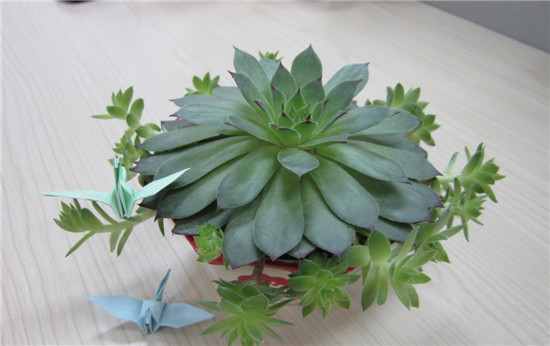
Aeonium is a common succulent plant. Its leaves are arranged in a rosette, thick and plump like jade, with a graceful posture and a shape like a lotus in a pond, giving it high ornamental value. Potted plants are excellent for indoor green decoration. They can also be planted in the ground for use as accents in flower borders.
In earlier times, people lived more frugally and ate less meat, so uric acid and gout were seldom heard of. Nowadays, many people frequently attend social engagements, and with fine wine plus lavish meals of fish and meat, uric acid cases have surged. There are not many medicinal herbs for treating uric acid, and "Aeonium" is one of them.
Aeonium gets its name because it resembles a lotus, and it is also shaped like a windmill, so it is also called "windmill plant." Also, because the lotus is the lotus pedestal and Buddha's seat in Buddhism, it is additionally called "deity plant." As a succulent plant, it has long been used by the horticultural world as a potted foliage plant. It can survive by placing leaves on the soil surface, and it must be planted in well-drained sandy soil. The key to cultivation is that it must not be overly moist. It is an excellent potted medicinal plant.
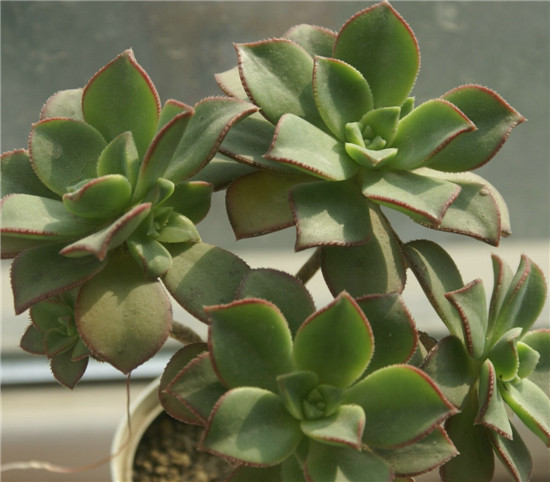
Aeonium is sweet and bland in taste and cool in nature, mainly entering the liver and kidney meridians. It has the effects of calming the liver and cooling the blood, so it can treat liver disease, cirrhosis, and high blood pressure. As mentioned earlier, its special feature is that it can treat uric acid and gout. In addition, it has significant therapeutic effects on women's conditions such as leukorrhea and on dark spots and liver spots.
The above is the full content of my summary of what the large-leaf Aeonium is. I hope this article can help everyone. Please also continue to follow us.