A Detailed Guide to the Planting Methods and Techniques of the Elephant Bush
Potted elephant bushes not only grow relatively quickly, but their fleshy, variegated leaves make people adore them. So, do you know what the cultivation methods for the elephant bush are? Let's take a look together!
Basic Information on the Elephant Bush
Aliases: Portulacaria afra, elephant bush, mini jade, rainbow bush, spekboom, jade plant, small-leaf glass verdure, jade leaf.
Family and genus: Portulacaceae, Portulacaria.
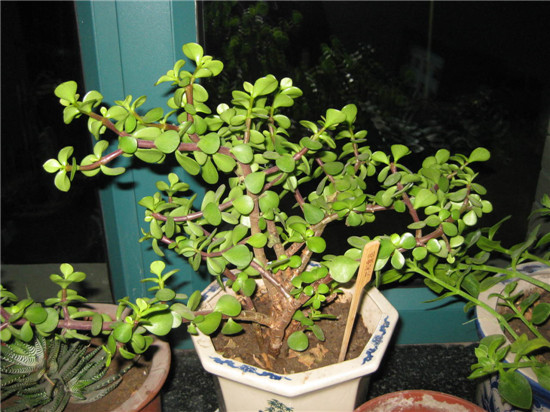
A fleshy evergreen subshrub, reaching up to 4 m in height. The stem is fleshy, slightly woody at the base, much branched, growing nearly horizontally, with new stems reddish-brown and old stems grayish-white, and distinct internodes. Leaves are simple, opposite, obovate, about 1.2 cm long and about 1 cm wide, with entire margins, bright green, and fleshy. It flowers from May to July, with small, pale pink flowers.
The elephant bush has a thick, swollen stem and small, interesting leaves that closely resemble those of purslane, and it is full of the vigorous, quaint charm of an ancient tree; it is robust in habit and easy to care for. Besides being grown as a potted ornamental, it is also an excellent plant species for making tree-stump bonsai. Because florists gave it a luxurious and colorful commercial name - "Golden Branch and Jade Leaf" - it has become even more popular.
How to Grow Portulacaria afra
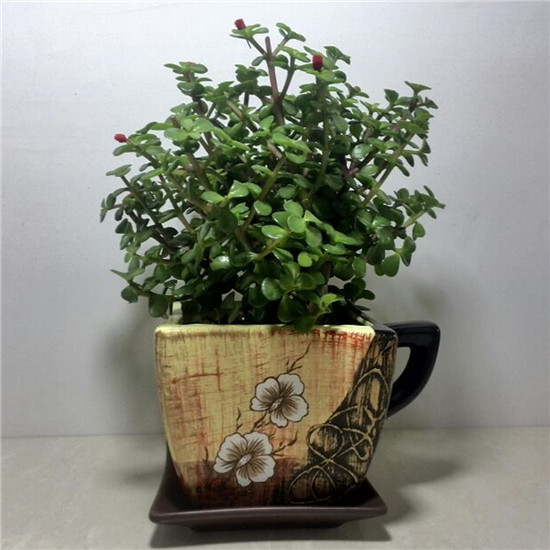
Portulacaria afra is commonly propagated by cuttings. The elephant bush is warm-loving by nature and likes sun but is not tolerant of shade. It is highly drought-tolerant. The potting soil should be well-draining, and each watering should soak through, watering again only once the soil has dried out completely. Avoid keeping the potting soil constantly too wet. During the growing season, water according to the rule "don't water until dry, and when you water, soak it through," avoiding waterlogged potting soil, otherwise root rot will occur.
In winter, place it indoors in a spot with ample sunlight, stop fertilizing, control watering, and keep the temperature preferably above 10°C; at around 5°C the plant will not die, but a large number of leaves will drop. Repot once every 2 to 3 years in spring, using a sandy soil of medium fertility with good drainage and aeration. When repotting, give the plant one heavy pruning, cutting off weak branches and other branches that affect the tree's shape.
The elephant bush is mainly grown for its foliage, can be planted in hanging baskets, and is also good material for making bonsai.
Is the elephant bush toxic? The elephant bush is a plant used both as medicine and as food. The whole plant is used medicinally and has the effects of clearing heat and draining dampness, detoxifying and reducing swelling, reducing inflammation, and promoting urination. Its seeds also have the special effect of improving eyesight.
Cultivation Methods for the Elephant Bush
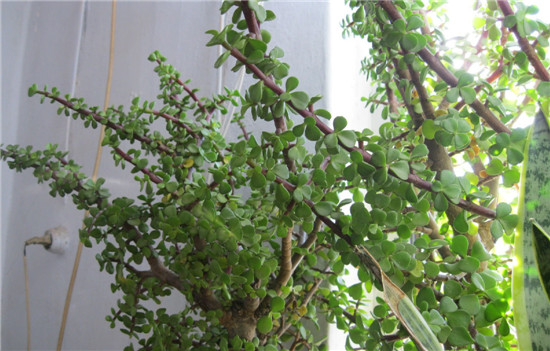
The elephant bush, also known as Portulacaria afra, mini jade, is a perennial fleshy shrub of the genus Portulacaria in the family Portulacaceae. The young stems of the elephant bush are green, and the small flowers are pale pink. Potted elephant bushes grow relatively quickly, and the stems branch irregularly; under semi-shaded conditions, although the stems grow vigorously, they tend to become leggy.
Temperature: The elephant bush likes warmth, and the most suitable temperature for growth is 20-25°C. It is not tolerant of low temperatures, and the overwintering temperature should be maintained above 10°C; when the temperature is low, leaf drop will occur. It is also not tolerant of severe heat; during high summer temperatures the plant enters a semi-dormant state, so ventilation should be strengthened and water sprayed into the environment more often to lower the temperature. At the same time, avoid a stuffy, hot, and humid environment, otherwise leaves will drop due to root rot.
Light: The elephant bush likes ample sunlight, and even in the hot summer it needs to receive direct sunlight, preferably more than 4 hours of direct light each day. Under sufficient sunlight, the plant has a compact shape and small, thick leaves with high ornamental value. It is tolerant of semi-shade; under semi-shaded conditions, although the branches and leaves grow more luxuriantly, they tend to become leggy, with loose and non-compact branches and leaves, elongated stem nodes, and large, thin leaves, resulting in an unattractive plant shape, and the young branches turn green; the variegation on the leaves of the variegated elephant bush will fade, reducing its ornamental value. If the placement location has insufficient light, 12 hours of artificial supplemental light can be given, which also allows the plant to grow normally. The variegated elephant bush, however, likes a slightly shaded environment and needs appropriate shading in summer.
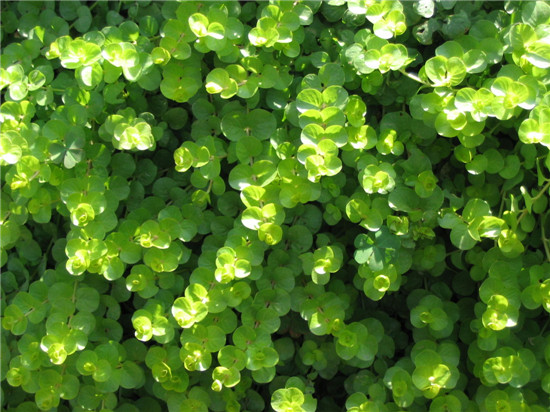
Watering: Because the branches and leaves of the elephant bush are fleshy, the plant stores a relatively large amount of water in its tissues, so it likes a relatively dry soil environment. When watering, master the principle of "alternating dry and wet, better dry than wet"; potting soil that is too wet easily leads to root rot. May to June is the period of vigorous growth for the plant, so it should be watered thoroughly, keeping the potting soil moist, but preventing the potting soil from becoming too wet. During the plum rain season, check promptly after rain and pour off any accumulated water in the pot. During the summer semi-dormant period, watering should be controlled, as high temperature and high humidity very easily cause root rot. In autumn, when the weather turns cool, this is again a suitable growing period for the plant, so water should be supplied adequately, keeping the potting soil moist but not overly wet. In winter, watering must be restrained, keeping the potting soil relatively dry.
Fertilizing: The elephant bush does not like heavy fertilizer. During the spring and autumn growing periods, apply 1 dilute nitrogen fertilizer every 15-20 days. Varieties with markings on the leaves should be given extra phosphorus and potassium fertilizer to make the leaf color more vivid. When the variegated elephant bush receives too much nitrogen fertilizer, the green portions of the leaves will increase, reducing its ornamental value.
Pruning: Because the elephant bush grows relatively quickly, the stem has many branches, and the growth of the branches is very irregular, so during the growing process it can be pruned and shaped at any time to maintain a graceful plant shape.
The above is all the content I have summarized for you on how to grow the elephant bush. I hope this article can help everyone. Please also continue to follow us.