How does the garden balsam disperse its seeds?
The garden balsam is a slow-growing plant, and you need to start the seedlings about three months before the last spring frost. Garden balsam seeds can take up to 21 days to germinate, with germination occurring within the first two weeks. So how does the garden balsam disperse its seeds?
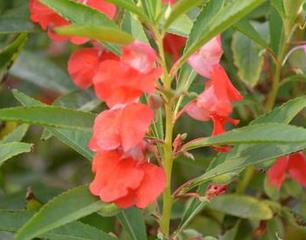
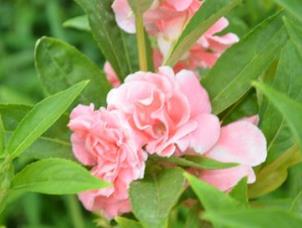
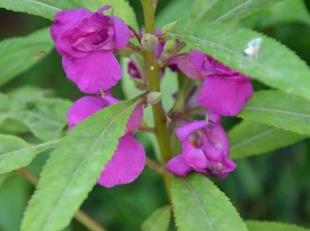
How does the garden balsam disperse its seedsThe garden balsam disperses its seeds not by wind, not by animals, and not by water, but by "self-reliance." When its fruit splits open, the pericarp curls inward and then suddenly extends outward, flinging the seeds out. There is also a plant called the squirting cucumber: when the fruit is about to ripen, a lot of mucilage forms inside it, and once the fruit drops from the stalk, the pericarp immediately contracts, generating great pressure, and the mucilage together with the seeds is ejected from the stalk end, able to shoot as far as 5 to 6 m away!
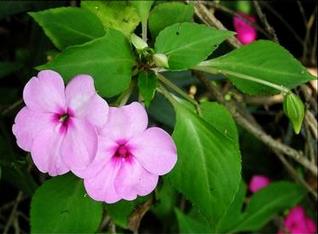
Planting garden balsam seeds is a slow process, but a simple one. Fill moist commercial seed-starting mix, stirring it, leaving half an inch of space between the top of the soil and the rim of the planter in each cell. Place the cells on a tray, and fill the tray with water. Allow the combination to absorb water from the bottom until the top of the mix is moist. Remove and pour off the remaining water from the tray.
Place two seeds on the soil in each cell, and sprinkle a dusting of the mix lightly over them. Mist the top of the cells with clean water. Cover the cells with plastic to retain moisture, and place it in a bright spot to germinate.
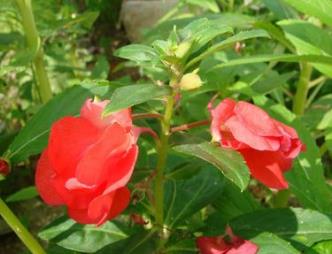
Some gardening experts believe that garden balsam seeds really need an initial burst of sunlight to wake up the seeds when dispersing, and that they grow stocky if you then move them to a dark area. Experiment with this theory by leaving the seeds in a sunny window for the first two days. Then, sprinkle the seeds, stir the mix, cover with plastic wrap, and move them to a dark place to germinate.
How do plants disperse their seeds
1. Self-dispersal So-called self-dispersal means dispersal by the plant body itself, not relying on any other dispersal agent. The fruit or seed itself has weight, and after maturing, the fruit or seed will fall directly to the ground due to gravity, such as the velvet apple and the big-leaf sapote; while some capsules and siliques, when the fruit matures and splits open, produce an ejection force that flings the seeds out, such as the Taiwanese Michelia. The dispersal distance of self-dispersed seeds is limited, but some self-dispersed seeds, after falling to the ground, undergo a phenomenon of secondary dispersal, and birds, ants, and mammals are all possible secondary dispersers.
3. Water dispersal The surface of water-dispersed seeds is waxy and does not get wet (such as the water lily), the pericarp contains air chambers, and the specific gravity is lower than water, so they can float on the water surface and be dispersed via streams or ocean currents. The seed coat of such seeds often has abundant fibrous tissue, which can prevent the seeds from rotting or sinking due to soaking and water absorption. Seaside plants, such as the box fruit, the lantern tree, and the tropical almond, have typical water-dispersed seeds.
4. Bird dispersal Most seeds dispersed by birds are fleshy fruits, such as berries, drupes, and syconia. Birds peck at the seeds of Lauraceae plants and then spit the seeds out. After the fruit is eaten, the seeds pass through the digestive tract and are excreted at random. Plants that rely on birds to disperse their seeds are a relatively advanced group, because the distance over which birds disperse seeds is the farthest of all methods.
5. Ant dispersal Ants usually play the role of secondary dispersers in seed dispersal. Some birds eat and disperse seeds but do not consume all the nutrients, and the seeds that fall on the ground still have some residual nutrients on their surface for ants to feed on; at this point the ants become secondary dispersers. The above phenomenon also occurs with self-dispersed seeds or seeds dispersed by mammals.
Plants that disperse their seeds in different ways
1. Dispersal by water Coconut: dispersed by water; after the coconut matures, the coconut fruit falls into the sea and drifts far away with the seawater. Water lily: after the fruit of the water lily matures, it sinks to the bottom of the water. After the pericarp rots, the seeds wrapped in a spongy outer seed coat float up and drift to other places.
2. Dispersal by small birds or other animals Cherry, wild grape, wild mountain ginseng: small birds or other animals eat the seeds into their stomachs, and since they cannot be digested, they are excreted with the droppings and dispersed in all directions. Pine nut: it is carried away by squirrels when they store food for the winter.
3. Dispersal by wind Red-stemmed willow: it is by the drifting of the willow catkins that the seeds are dispersed far away.
The seeds that fall on the ground still have some residual nutrients on their surface for ants to feed on; at this point the ants become secondary dispersers. The above phenomenon also occurs with self-dispersed seeds or seeds dispersed by mammals.
Plants that disperse their seeds in different ways
1. Dispersal by water Coconut: dispersed by water; after the coconut matures, the coconut fruit falls into the sea and drifts far away with the seawater. Water lily: after the fruit of the water lily matures, it sinks to the bottom of the water. After the pericarp rots, the seeds wrapped in a spongy outer seed coat float up and drift to other places.
2. Dispersal by small birds or other animals Cherry, wild grape, wild mountain ginseng: small birds or other animals eat the seeds into their stomachs, and since they cannot be digested, they are excreted with the droppings and dispersed in all directions. Pine nut: it is carried away by squirrels when they store food for the winter.
3. Dispersal by wind Red-stemmed willow: it is by the drifting of the willow catkins that the seeds are dispersed far away.