Differences Between Sedum pachyphyllum 'Yatsugatake' and Sedum pachyphyllum 'Otomekokoro' and How to Tell Them Apart
Does the name Yatsugatake sound unfamiliar? Yatsugatake is a very cute-looking plant. Let's take a look at the differences between Yatsugatake and Otomekokoro.
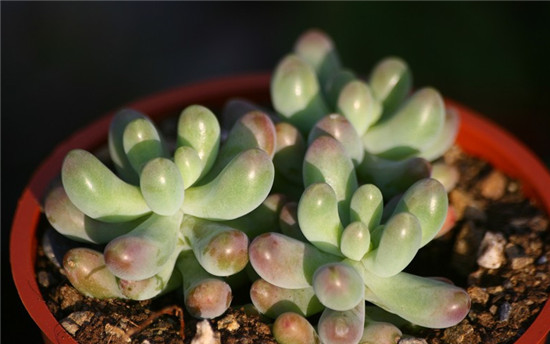
Yatsugatake belongs to the Crassulaceae family and is a perennial succulent plant. Its place of origin is Mexico. The plant forms a small shrub with many branches. The leaves are fleshy, cylindrical, with a smooth, even surface, curving slightly upward and inward, about 4 cm long, and some are grayish-green while others are light blue-green in color. Under conditions of ample sunlight, the leaf tips turn yellow or orange. In cold seasons with insufficient sunlight, growth becomes poor, and the stem leaves shrink or fall off. It produces yellow flowers in spring.
How to Grow Yatsugatake
Propagation Methods
Yatsugatake is relatively easy to grow; both stem cuttings and leaf cuttings taken during the growing season root easily. For leaf cuttings, however, choose healthy, plump, intact leaves, let the wounds dry slightly, place them in a cool, dry, ventilated spot, keep the soil moist, and wait for them to sprout.
Management and Care
The suitable growing temperature for Yatsugatake is 15-25 degrees, and in winter it should not go below 3 degrees. Apply fertilizer once a month. During the growing period, it can be placed outdoors in a spot with ample sunlight for care. Do not water too much at ordinary times; keeping the potting soil slightly dry is best. Once the leaves grow larger, the amount of water can be increased appropriately.
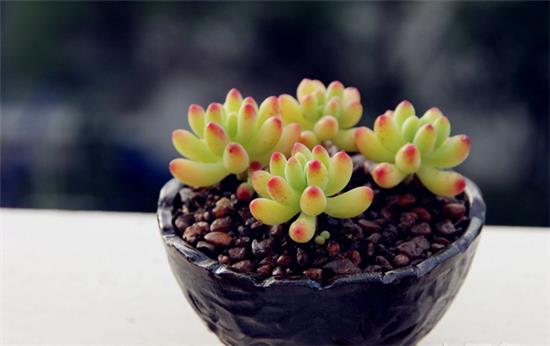
Differences Between Yatsugatake and Otomekokoro
1. Look at the stem! This is the most important way to distinguish Yatsugatake from Otomekokoro. Some earlier articles talked about big heads versus small heads, or whether there is powder or not, but none of that is as obvious as looking at the stem! No matter how Otomekokoro grows, its stem is fleshy, while Yatsugatake has a distinctly woody stem, and the texture on the stem is very obvious! The stem of Otomekokoro is tender and green; the stem of Yatsugatake is like tree bark, old and yellow.
2. Newly sprouted small plants can also be clearly distinguished! The small plant of Otomekokoro typically has leaves with a big head and a small tail, and the color leans toward blue-green! Even a newly sprouted Yatsugatake has a woody stem! And its leaves have a small head and a big tail, with a color that leans toward yellow.
3. The leaf curvature is also different. This is harder to describe; experience it for yourself. The leaf shape of Otomekokoro is like a banana, while the leaf shape of Yatsugatake is like a cucumber; Otomekokoro's leaves lean blue-green and turn red when sunned; Yatsugatake's leaves lean yellow-green and turn yellow, or slightly orange-yellow, when sunned.
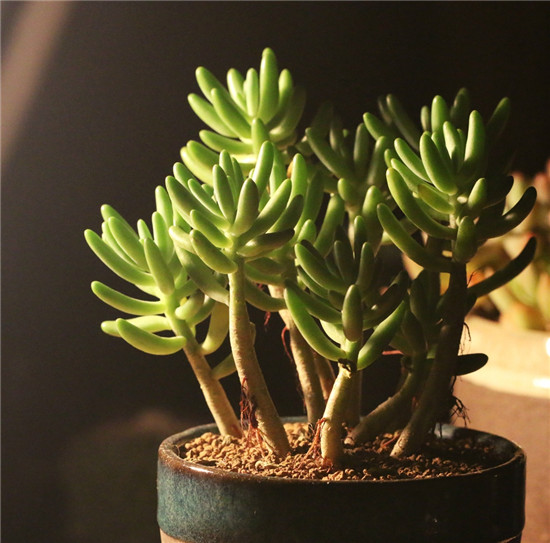
4. Otomekokoro loves to burst with side shoots and easily develops many little pups; newly grown side shoots are pinkish-white. Yatsugatake basically does not burst, and its side shoots come out basically green.
5. Otomekokoro loves to cluster, often growing in clusters that fill pot after pot; Yatsugatake, by contrast, stands alone, its stem always very upright, straight as can be, not clustering, and it rarely produces side shoots.
The Value of Yatsugatake
Yatsugatake has a graceful plant shape and round, cute leaves, and is often used as a small potted plant, generally placed on desks, windowsills and other places, serving to beautify the environment, elegant and distinctive, small and cute. It has a certain ornamental value.
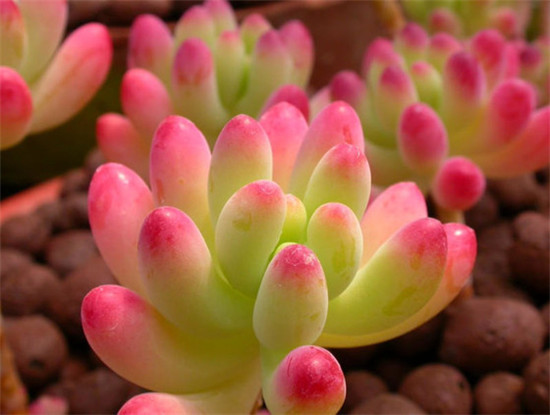
A Warm Little Tip: Some people have always thought that Yatsugatake and Otomekokoro are the same plant, because they are very similar, but in fact they are not; they merely both belong to the Sedum genus of succulent plants, so they are easily mistaken for the same species. How to tell them apart: Yatsugatake is generally emerald green in color, while Otomekokoro's color is somewhat bluish; Yatsugatake's leaves are thick at the base and thin at the tip, exactly the opposite of Otomekokoro.
The above is the full content of the differences between Yatsugatake and Otomekokoro that I have summarized for everyone. I hope this article can help you. Please also continue to follow us.