A Detailed Guide to String of Pearls Propagation Methods and Care Tips
String of Pearls (Senecio rowleyanus) has a unique appearance and lovely alternative names such as Buddhist beads, green grapes, green bells and lover's tears. Next, let us take a look at the propagation and care of String of Pearls.
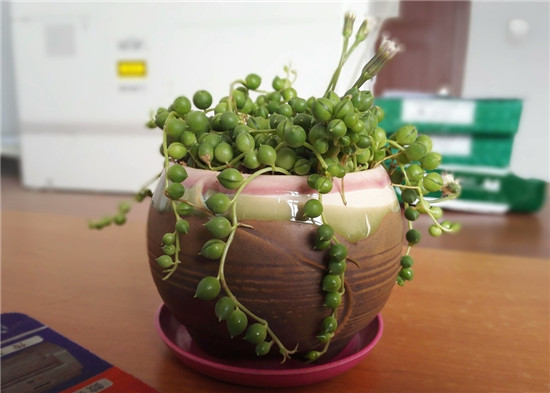
Because String of Pearls is made up of strings of plump, full, emerald-green oval little leaves, it is also known as jade beads, lover's tears, Buddhist beads string of pearls, emerald beads, green bells and green bell. Its flowering period is generally from December of the current year to January of the following year.
String of Pearls prefers soil rich in organic matter that is loose and fertile. It grows best in a warm environment with fairly high air humidity and strong diffused light. In summer, high temperatures and high humidity should be avoided, otherwise the stems rot very easily and the plant dies; the potted plant can be placed in a rain-sheltered, shaded spot for cultivation. After autumn begins, the plant resumes growth, so light should be increased and a liquid fertilizer applied as a top dressing.
String of Pearls is an ordinary flowering plant variety, so its price is not expensive either. Generally, String of Pearls with a flower pot costs only within 20 yuan, while String of Pearls alone costs even less than 10 yuan, making it a very inexpensive flowering plant.
String of Pearls, also called lover's tears and emerald beads. The plant is small and delicate, and its strings of plump emerald-green leaves sway like wind chimes. The emerald green is also like hanging green Buddhist beads, always giving people a feeling of tranquility and simple elegance. Its flower language is plainness and understated elegance, innocence and tranquility.
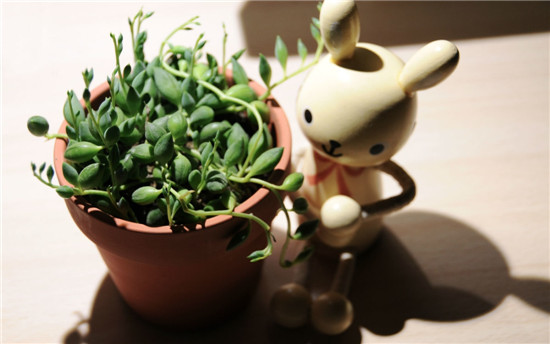
How to grow String of Pearls: Soil
String of Pearls loves fertile soil, and it grows better in a warm and humid environment. When preparing to cultivate String of Pearls, you can use fully decomposed cow manure and coconut coir as the growing medium, mixing the two thoroughly in a 4:6 ratio. In autumn, String of Pearls also needs one supplementary application of liquid fertilizer.
How to grow String of Pearls: Cuttings
String of Pearls is generally grown by the cutting method. When cutting the stems, be careful to select healthy and sturdy ones, and make the cut beside the raised points on the stem. Bury the cut portion directly in the soil. Then water the soil with an appropriate amount so that the soil can stick to the cut String of Pearls. Do not water it again over the following month. Generally speaking, if the temperature is kept at 15°C, String of Pearls can sprout new shoots in two to three weeks.
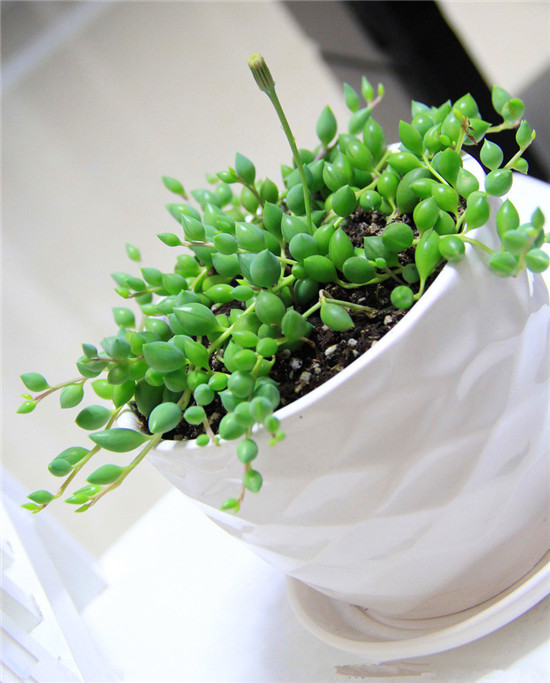
Precautions for Growing String of Pearls
To grow a good-looking String of Pearls, the following four points need attention:
1. Because String of Pearls is very succulent and rich in sap, it is relatively cold-tolerant. Therefore, during cultivation, it should be watered less. In hot and dry seasons, you can frequently spray water on the leaves and stem tendrils of the plant to keep the whole plant fresh and green. Because String of Pearls likes a semi-shaded environment, a good growing environment should be created for it.
2. Because the root system of String of Pearls is relatively shallow, it should be planted in a shallow pot. To increase air permeability and drainage in the pot, you can place a piece of coarse pottery at the bottom of the pot and spread a layer of coarse sand or fine coal cinder over the coarse pottery. Some leaf mold and sand can also be added to the growing medium of String of Pearls to improve air permeability.
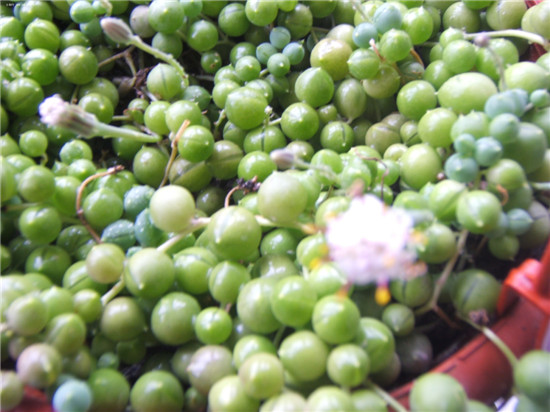
3. String of Pearls is cold-tolerant and loves a humid, warm climate, so the temperature can be kept between 20°C-28°C, avoiding temperatures that are too high or too low. In particular, when the temperature reaches above 30°C, String of Pearls stops growing, and at this time the frequency of watering and fertilizing should be reduced to avoid root rot.
4. In spring and autumn, the two seasons when String of Pearls grows vigorously, attention should be paid to applying thin fertilizer multiple times, and frequently spraying the leaf surface of String of Pearls with nitrogen fertilizer and potassium dihydrogen phosphate at a concentration of 1-3‰, thereby making the beads of String of Pearls plumper and giving it greater ornamental value.
The above is all the content I have summarized for you on the propagation and care of String of Pearls, and I hope this article can help everyone. Please also continue to follow us.